
Get all your news in one place.
100's of premium titles.
One app.
Start reading
LiveScience
LiveScience
Tom Metcalfe

1,700-year-old Roman ruins discovered atop much older Neolithic sacred spring

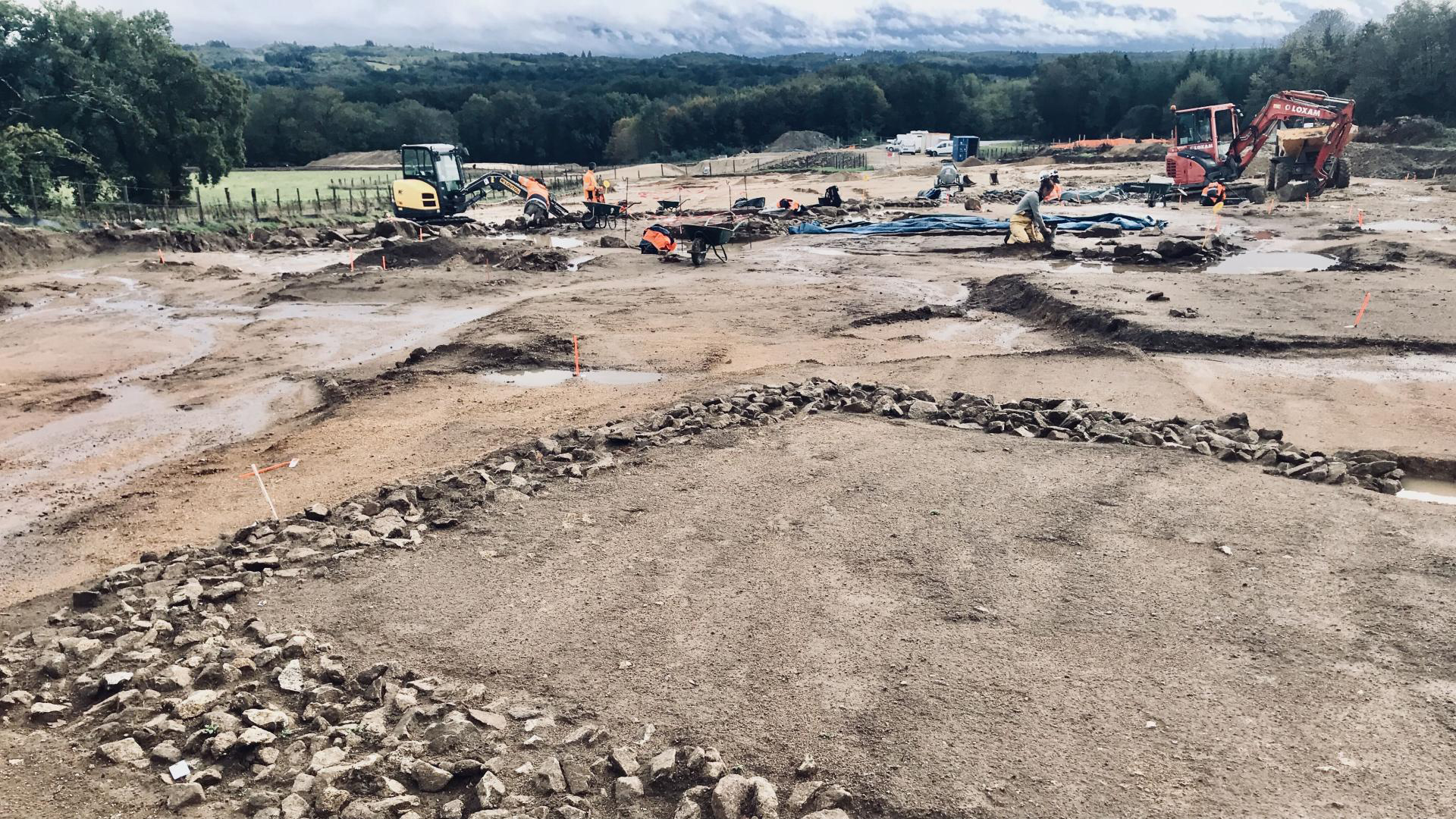
A team from the French national archaeological agency INRAP discovered the site near the village of Chamborêt, about 12 miles north of Limoges.

Archaeologists in France have unearthed the Roman-era remains of a landscaped pool and wall around a natural freshwater spring; and they think it was built on the ruins of a much older, probably sacred site that may date back 4,500 to 6,000 years, to the Neolithic period.

The Roman ruins are thought to date to the third century, during the Late Empire period, and the artifacts found there include the ceramic face of a deity or Medusa that was placed near the water source. The site also contains ceramic shards and coins from the late Roman Empire, as well as pieces of flint, including a fragment of a dagger, that are thought to have been offered there in Neolithic times.

Sign up to read this article
Read news from 100's of titles, curated specifically for you.
Already a member? Sign in here
Related Stories
Top stories on inkl right now
One subscription that gives you access to news from hundreds of sites
Already a member? Sign in here
Our Picks
Fourteen days free
Download the app
One app. One membership.
100+ trusted global sources.







