The Trump administration has sued Harvard University, alleging the Ivy League school failed to stop or punish widespread campus antisemitism in the wake of the Israel-Gaza war.
“Jewish and Israeli students at Harvard University were harassed, physically assaulted, stalked and spat upon,” the suit, filed in Massachusetts federal court Friday, reads. “For several years, Jewish and Israeli students endured a hostile educational environment. Harvard’s response to this: do nothing.”
The complaint alleges that Harvard’s response to campus demonstrations, which included building occupations and a 2024 protest encampment, violated Title VI of the Civil Rights Act, which bars identity discrimination at federally funded institutions.
The federal government details a litany of concerning antisemitism allegations, including people yelling “Heil Hitler” at Jewish students and blocking Jews and Israelis on campus from entering certain buildings during demonstrations. The suit also seeks to classify widely used protest chants in the Palestine solidarity movement such as “from the river to the sea, Palestine will be free,” as calls to kill Jewish people. The suit does not note that numerous Jewish students have taken part in pro-Palestine protests at Harvard and beyond.
Campus protests have died down since their high point in 2023 and 2024, but the lawsuit alleges alarming conduct has continued, including with a 2025 incident where protesters breached barricades during an appearance from former Israeli Prime Minister Naftali Bennett.
The suit seeks to rescind federal grants to Harvard, impose an outside monitor, and require the university to work with law enforcement to arrest protesters.
Unlike other top universities that saw large Israel-related protests, such as UCLA and Columbia, Harvard did not pursue a mass police response.
“Harvard has taken substantive, proactive steps to address the root causes of antisemitism and actively enforces anti-harassment and anti-discrimination rules and policies on campus,” a university spokesperson told The Independent in a statement. “We also have enhanced training and education on antisemitism for students, faculty, and staff and launched programs to promote civil dialogue and respectful disagreement inside and outside the classroom. Harvard’s efforts demonstrate the very opposite of deliberate indifference.”
The university called the suit “yet another pretextual and retaliatory action by the administration for refusing to turn over control of Harvard to the federal government.”
The lawsuit is the latest in a series of legal battles between the school and the administration.
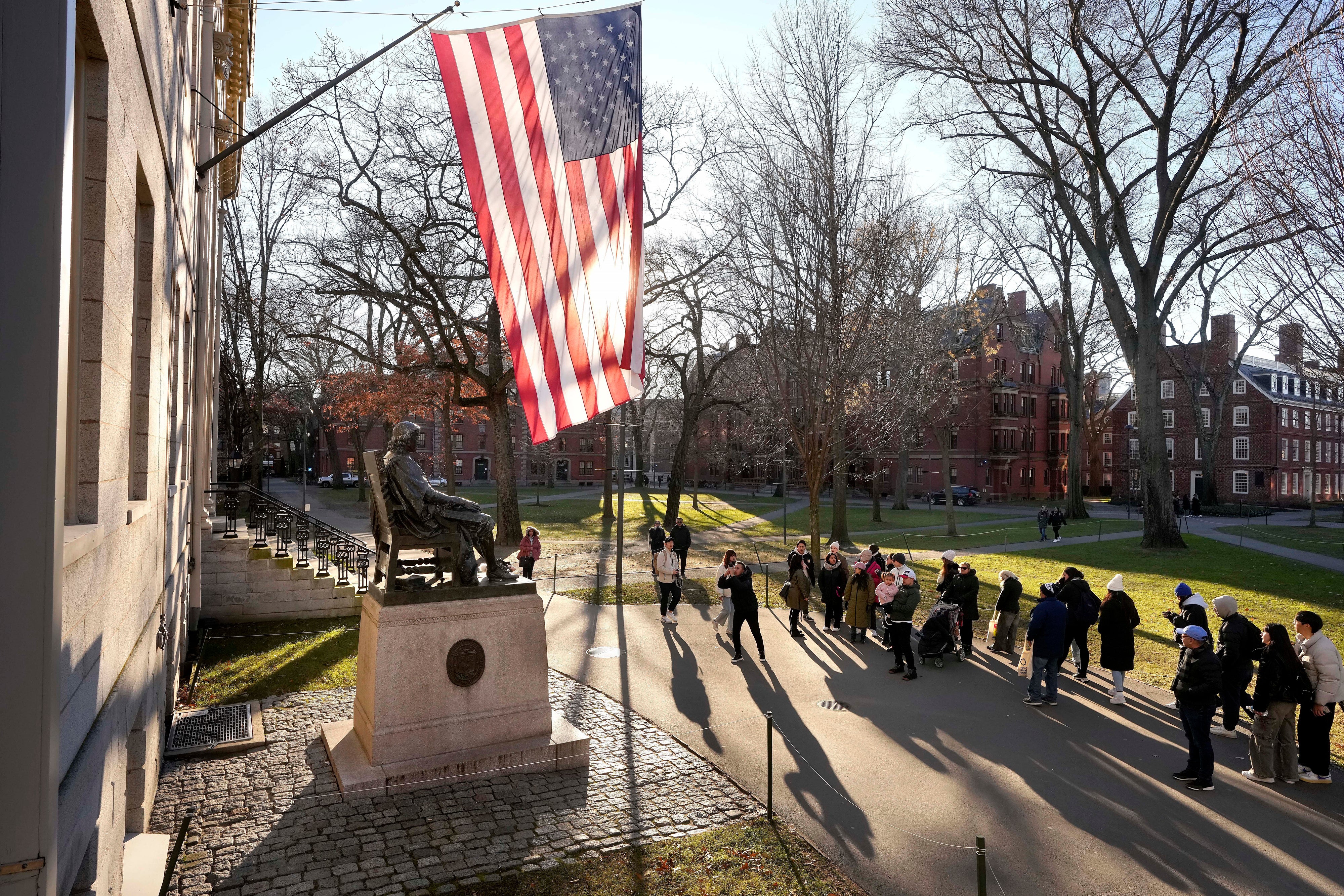
In the wake of campus protests, the university conducted a presidential task force on combating antisemitism and anti-Israel bias, which included an in-depth investigation of campus antisemitism and campus policy reforms. The move came after Harvard president Claudine Gay resigned in early 2024 following testimony to Congress that was blasted by critics.
This February, the administration sued Harvard for its admissions records, alleging the university was failing to turn over documents to ensure it was complying with a recent Supreme Court ruling ending affirmative action, the same month the Defense Department cut ties with the school over its “woke” curriculum.
Last year, Harvard sued the administration for freezing more than $2.5 billion in research funding over allegations the university had allowed campus antisemitism.
In September, a federal judge sided with the university, writing that the White House “used antisemitism as a smokescreen for a targeted, ideologically-motivated assault on this country’s premier universities.”
The Trump administration has appealed the decision.
Since taking office, the Trump administration has launched investigations and funding freezes against numerous top universities over antisemitism allegations, though Harvard has declined to reach a negotiated settlement with the White House like its peers at Columbia or Northwestern did.
Harvard balked at Trump administration proposals that were floated during negotiations, including a push for the university to adopt an outside “viewpoint diversity” audit of the student body and faculty.