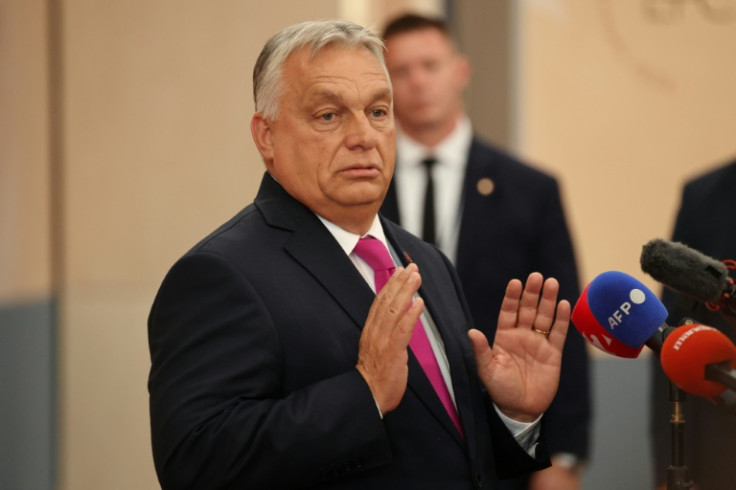
Leaders in the European Union have condemned Hungarian Prime Minister Viktor Orbán after he blocked implementation of a €90 billion loan package for Ukraine, with some accusing him of disloyalty, hostage-taking, and political blackmail.
The clash erupted at a Brussels summit where leaders failed to persuade Orbán to lift his veto on funding they say is essential to keep Ukraine's government functioning and its defenses intact. The most pointed criticism came from German Chancellor Friedrich Merz, who, Reuters reported, called Orbán's move an act of "gross disloyalty."
Merz said the veto violated the principle of loyalty among EU member states and damaged the bloc's standing at a time when unity is critical. European Council President Antonio Costa was equally blunt, saying, "A deal is a deal," and adding that "no one can blackmail the European Council." Costa also described Hungary's conduct as "completely unacceptable."
At issue is a loan package agreed in principle by EU leaders in December to help Ukraine cover urgent wartime needs. Reuters reported that one step in the implementation process requires unanimity among all 27 member states, giving Orbán leverage even though Hungary was not expected to bear the loan's financial burden.
In fact, Hungary, Slovakia, and the Czech Republic had already secured an opt-out from contributing to the costs, which made Budapest's decision to hold up the process especially infuriating to many officials in Brussels. Orbán has justified the blockade by pointing to a dispute over the Druzhba pipeline, which carries Russian oil through Ukraine to Hungary and Slovakia.
The pipeline was damaged in a Russian strike in January, according to Ukrainian and EU officials. Ukraine says repairs will take several more weeks, while Hungary argues the line is already functional and accuses Kyiv of withholding supply. Orbán later posted on X that as long as Ukrainian President Volodymyr Zelenskyy did not lift what he called the "oil blockade," Ukraine would receive no money from Brussels. Costa pushed back hard, saying only Russia could guarantee the pipeline would not be attacked again and that the issue was not Ukraine's responsibility.
📍 Brussels. Situation report.
— Orbán Viktor (@PM_ViktorOrban) March 19, 2026
It was a tough debate, but we stood our ground. We have the right to say no to the Ukrainian war loan. As long as @ZelenskyyUa does not lift the oil blockade, they will not receive any money from Brussels.
No oil = no money. pic.twitter.com/2tCWJms5kx
The financial stakes are high. EU officials have warned that Kyiv could run short of money within weeks if fresh assistance does not arrive. Ukraine relies heavily on foreign aid to pay for pensions, public sector wages, and other non-military spending because so much of its domestic revenue is being directed toward defense.
In a video address to EU leaders, Zelenskyy said the loan was "critical" and described it as "a resource to protect lives." Reuters also reported that political analysts believe Ukraine could be forced into severe spending cuts or even money-printing if the loan is delayed much longer.
Even so, Brussels is signaling that Orbán may not have the last word. European Commission President Ursula von der Leyen said after the summit that the EU would still get the funds to Ukraine "one way or the other." She said the bloc would "deliver," despite Hungary's resistance. Merz likewise said EU leaders had asked the European Commission to examine possible workarounds to bypass Orbán's blockade.
Orbán, who has long been criticized for maintaining closer ties to Moscow than most of his European counterparts, is running for re-election next month, and several officials have suggested his Ukraine stance is driven at least in part by domestic politics.