The South Carolina state house is a microcosm of the US’s contradictions. Outside there are memorials to the Confederate war dead and African American history. Below a statue of Strom Thurmond, a longtime US senator and racial segregationist, are the names of his five children including Essie Mae, whose mother, a Black maid, was 15 when Thurmond impregnated her.
Thurmond died at the age of 100 in 2003; his successor, Lindsey Graham, a lifelong bachelor who never had children, died last Saturday at 71. His sudden exit leaves a void not just in Washington but the state that molded Graham, elected him to the Senate four times and wrestled with his shape-shifting journey from Ronald Reagan Republican to Donald Trump sycophant.
“I was shocked,” said Caleb Davis, 21, an air force enlistment candidate wandering in the state house grounds in Columbia on Tuesday. “He was our senator longer than I’ve been alive. He served us in the legacy of the great Strom Thurmond and whether I liked the man or his politics hasn’t got much to do with it. He was truly great and his shoes are gonna be some big ones to fill.”
Republicans have only a month to organise a primary to find a candidate to replace Graham in November’s midterm elections. In the meantime, South Carolina is left to mourn a vivid character who reflected its own complexities. A conservative who championed bipartisan immigration reform; a foreign policy hawk who compromised his independence to stroke the ego of an isolationist president; a man without a “traditional” family who spent his life taking care of his sister; a globetrotting statesman who never lost the salty charm of a small-town pool hall.
Graham was a larger than life gift to political satirists who cast him as a fan-fluttering southern dandy from the pages of a Tennessee Williams play. It was an identity forged in a state described as “too small for a republic but too large for an insane asylum” when it became the first to secede from the Union in 1860.
He was born to Millie and Florence James Graham of Central, South Carolina, in 1955. The couple owned a restaurant, bar and pool hall in the small town. Graham, his parents and younger sister all lived in one room in the back of the building.
Jennifer Berry Hawes, who writes about the south for ProPublica and was a longtime local newspaper reporter in South Carolina, said the state “was absolutely the backbone of who he is. He grew up in a bar. The bar’s bathroom was the family’s bathroom and its kitchen was their kitchen. It was not glamorous at all.”
When the shift changed at the local textile mill, the workers would pour into the bar. The young Graham liked to entertain them and make himself the centre of attention. He would dress up as a cowboy, walk up and down the bar and, when customers went to the toilet, steal their beer and poach their cigarettes from ashtrays – earning the nickname “Stinkball”.
Hawes, who interviewed Graham for a profile, added: “Back in the day he could entertain people because he was a little salty, like you can imagine the humour in a bar. It wasn’t hugely inappropriate but he would throw in some profanity and the things that would later tell you, ‘I’m like a regular person, I’m not the stuffy senator.’”
The young Graham could read – and work – a room. Hawes commented: “He learned there are a lot of different kinds of people in the world and you are gonna be like some of them and you’re gonna be unlike some of them. Especially earlier in his career, you could see where that played out. He was much more apt to work across the aisle. He was seemingly a lot more interested in policies that targeted the little guy. He struck me as much more of someone from that world who knew a lot of people who struggled.”
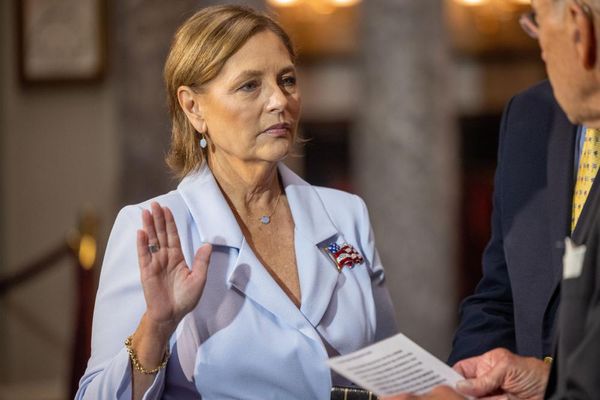
Graham was a C student in high school and became the first member of his family to attend college at the University of South Carolina. His mother died of Hodgkin’s lymphoma and months later his father was diagnosed with prostate cancer and died of a heart attack. Graham became the guardian for his sister Darline, nearly nine years his junior, and later in life often extolled the benefits of social security that helped keep them financially afloat. On Tuesday, Darline was officially sworn in to serve out the rest of her brother’s unexpired Senate term.
Armed with a law degree, Graham served as a judge advocate general in the air force, starting as a defence attorney for accused troops and eventually rising to the air force’s chief prosecutor in Europe. He remained a reserve or national guard member for decades.
He translated that military pedigree into a political career, entering the US House of Representatives in the 1994 “Republican Revolution”. By 2002 he was facing the most daunting task in South Carolina politics: replacing Thurmond, who served in the Senate for nearly half a century until his retirement. That meant mastering constituent service and retail politics.
Bakari Sellers, a political commentator and former member of the South Carolina house of representatives, observed: “Anything from a federal military issue to a passport issue to a letter of recommendation for a kid trying to go to the military, you go to two people in South Carolina. You go to [Congressman] Jim Clyburn or you go to Lindsey Graham. We’re going to miss him for that, truly.”
Sellers also recalled Graham’s unpretentious dress code in a state where men often wear a blazer and khakis rather than a formal suit. “He never had his shirt buttoned all the way up. His tie was always hanging down. He would always ask me about my dad and be like, ‘You running against Clyburn yet?’, and then he would laugh and walk away. He was always a funny type of individual who kept his pulse on the heartbeat of South Carolina.”
Graham’s political ascent was fuelled by communications savvy. Danielle Vinson, a politics professor at Furman University in Greenville, studied his early career and found a politician who perfectly understood the media landscape.
She said: “He very quickly figured out, even as a House member, that media could compensate for a lack of institutional power in some situations. This was a man who was willing to sit down on the Sunday morning talkshows, any Sunday. ‘Christmas Eve? Fine, I’ll be there. Thanksgiving weekend? I’ll be there.’ He told me, I’ve learned that it’s one way to get my message out and gain credibility.”
Vinson added: “He was so quotable – that part was just his personality. He’s somebody who enjoyed dealing with people. He liked to talk. He could tell a good story. He didn’t mind making self-deprecating jokes and putting people at ease in that way.”
Yet the Rosebud of Graham’s legacy remains a political transformation that embodies the Republican party’s own. For the first half of his Senate career, he was a fiercely independent maverick willing to work across the aisle. Alongside senators Joe Lieberman and John McCain he formed “the three amigos”, a hawkish, bipartisan trio that traveled the globe and frequently bucked the establishment.
Then came Trump.
During the 2016 Republican presidential primaries Graham ran against Trump and denounced him. “You know, run for president, but don’t be the world’s biggest jackass,” he declared, furious over the businessman and reality TV star’s attacks on McCain. He called Trump a “race-baiting, xenophobic, religious bigot”.
But as Trump won the White House, Graham underwent a head-spinning metamorphosis from a “Never Trump” critic into one of the president’s most loyal allies and frequent golfing partners. In 2018, it was Graham who delivered a furious, impassioned defence of Trump’s supreme court nominee, Brett Kavanaugh, helping to save the embattled judge’s confirmation.
Antjuan Seawright, a Democratic strategist in South Carolina, views it as a tragic capitulation. “There was Lindsey Graham before Donald Trump, and then there was Lindsey Graham after Donald Trump.”
Seawright added: “He felt like he had to remain relevant and remain at the forefront of the conversation at top of mind. He had to, in some cases, strengthen his position within the party, but also with the leaders in charge, and in many ways he served as a translator for Trump, like a liaison, if you will.”
South Carolina has voted Republican in every presidential election since Reagan in 1980. Katon Dawson, a former chairman of the state Republican party, rejects the notion that Graham betrayed himself. “Lindsey didn’t sell his principles. Lindsey went to do business to help the state of South Carolina, and that was always my argument with Lindsey: why don’t you tell them why you’re doing these deals? Because at the end of every one of those deals was something for our state.”
Some here accept it was the ultimate expression of Graham’s political pragmatism. Mark Sanford, a former South Carolina governor, whose son Blake was Graham’s godson, said: “I don’t think it was a change. He would tell you to your face, look, to wield power, you gotta be close to power. He had a real political nose for where power was, where it resided, and so he got close to McCain because that was a power node. He got close to Trump because that power node.
“A lot of that was based on his growing up in a very simple setting, a pool hall, and so he got a nose for people and who was the alpha in the room and where was the power and how do you disarm this person, how do you calm the situation? I don’t think that that was a case of two different people. It was a continuation of his desire to be relevant.”
Many voters in South Carolina understood and respected the manoeuvre, especially as the state embraced Trump. Miriam Rhett, a 72-year-old retired estate agent, said: “He knew how to play the game. Politics, that’s the game, so he did what he had to do. He believed in the Republican party and Donald Trump was leading the Republican party so he knew where the bread was buttered.”
Endlessly travelling, talking in TV studios or golfing with Trump, Graham was married to his job and loved every minute of it. He said he had “been close once” to marrying a woman. But his personal life was the subject of quiet, insistent speculation, not least in the south, where evangelical Christianity dominates and family values are central to political branding.
Davis, the Republican voter who stopped by the South Carolina state house on Tuesday, remarked: “It definitely bothered people. I remember my old supervisor would say Lindsey’s gay and a lot people did. People would call him Lady Lindsey. Of course, there’s no doubt in my mind that he was a true man.”
Vinson believes that Graham’s lifelong devotion to his sister did provide some political cover. She said: “There was all kinds of speculation but he always countered it by reminding people of his close relationship with his sister and the fact that he had taken over as her guardian and took care of her after their parents passed away when she was quite a bit younger than him.
“The only time we saw her was out on the campaign trail or in campaign ads reminding people that he might not have the traditional wife and kids that so many of our elected officials have but he understood the responsibilities of a family and therefore it inoculated him a bit.”
Asked once who would serve as first lady if he were elected president, he quipped: “Well, I’ve got a sister.” That sister now takes the helm at a volatile time for American politics, and its impact on the world. In South Carolina, however, it’s much more personal.
Walking by Thurmond’s statue on Tuesday, Roger Kirby, 66, a state representative wearing a blazer, khakis and colourful bow tie, said of Graham: “He was always a mixed bag of politics. You loved him and you hated him and it could all be in the same month. But although I’m a Democrat and Lindsey was a Republican, I was always impressed with his constituent services. It’s amazing to think how much time he actually spent on the job. He was 100% a senator for the state of South Carolina.”