Chaplains in Schools Test the Boundaries of the First Amendment When public school counselors are in short supply, should chaplains be allowed to fill the gap? From law expert Charles J. Russo. Texas Observer · Oct 30, 2023
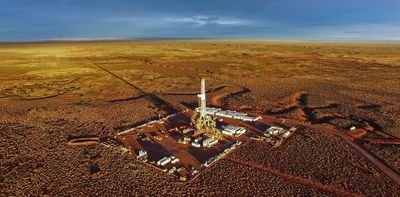
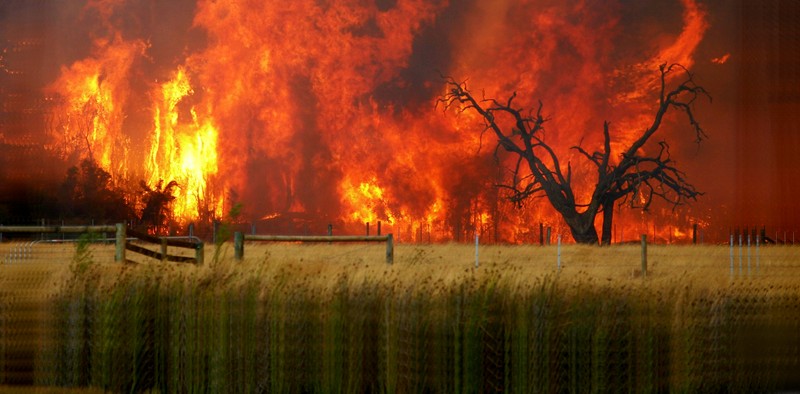
The Beetaloo gas field is a climate bomb. How did CSIRO modelling make it look otherwise? Even as Australia braces for a summer of projected extreme heatwaves and bushfires amid the intensifying climate crisis, the fossil gas industry is gearing up for a truly enormous new fracking project in the Northern Territory’s Beetaloo Basin. The Conversation · Oct 30, 2023
This course uses big data to examine how American newspapers covered lynchings Uncommon Courses is an occasional series from The Conversation U.S. highlighting unconventional approaches to teaching. The Conversation · Oct 30, 2023
Australia's new dawn: becoming a green superpower with a big role in cutting global emissions This article is part of a series by The Conversation, Getting to Zero, examining Australia’s energy transition. The Conversation · Oct 29, 2023
Worried economists call for a carbon price, a tax on coal exports, and 'green tariffs' to get Australia on the path to net zero Australia’s top economists have overwhelmingly backed the reintroduction of the carbon price that helped cut Australia’s emissions between 2012 and 2014. The Conversation · Oct 29, 2023
How apps and influencers are changing the way we sleep, for better or for worse This is the final article in The Conversation’s six-part series on insomnia, which charts the rise of insomnia during industrialisation to sleep apps today. Read other articles in the series here. The Conversation · Oct 27, 2023
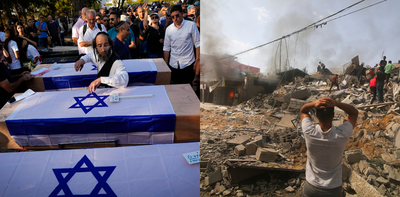
'I see no happy ending' − a former national security leader on the Gaza hostage situation Hamas took more than 200 people hostage during its deadly rampage in Israeli border towns on Oct. 7, 2023. Among the hostages are children and the elderly. While four of them have been released, the fate of the rest is unknown, as Qatar serves as an intermediary in working to… The Conversation · Oct 26, 2023
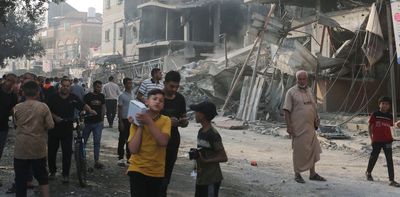
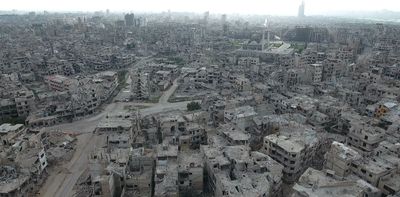
Domicide: the destruction of homes in Gaza reminds me of what happened to my city, Homs This article accompanies an episode of The Conversation Weekly podcast featuring an interview with the author, Ammar Azzouz. The Conversation · Oct 26, 2023
Why the Israel-Gaza conflict is so hard to talk about With the intensification of war in the Middle East comes an intense polarization within our institutions. A historian whose family was taken hostage by Hamas, and a geographer with family in the West Bank, get together to discuss a way forward. The Conversation · Oct 26, 2023
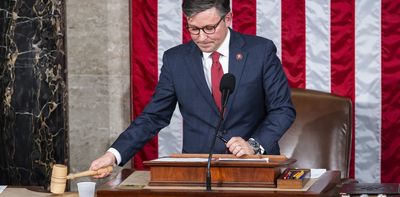
Ukraine recap: future of US support for Kyiv in question as Israel conflict reshapes Washington's priorities There was some worrying news for Volodymyr Zelensky this week when the US House of Representatives finally elected a new speaker. Mike Johnson, a Republican congressman from Louisiana, has consistently opposed US funding for the Ukrainian war effort. Now he’s the second most powerful man in US politics behind the… The Conversation · Oct 26, 2023
To better understand addiction, students in this course take a close look at liquor in literature Uncommon Courses is an occasional series from The Conversation U.S. highlighting unconventional approaches to teaching. The Conversation · Oct 26, 2023
Domicide: a view from Homs in Syria on what the deliberate destruction of homes does to those displaced by conflict – podcast Homs was once the centre of the Syrian revolution. Today, 12 years on, much of the city remains scarred and deserted after years of siege and heavy bombardment. The Conversation · Oct 26, 2023
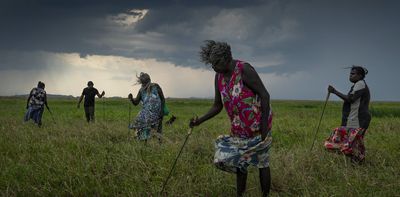
Beyond Juukan Gorge: how First Nations people are taking charge of clean energy projects on their land This article is part of a series by The Conversation, Getting to Zero, examining Australia’s energy transition. The Conversation · Oct 25, 2023
How can I get some sleep? Which treatments actually work? This article is the next in The Conversation’s six-part series on insomnia, which charts the rise of insomnia during industrialisation to sleep apps today. Read other articles in the series here. The Conversation · Oct 25, 2023
The Conversation · Oct 24, 2023 TCUS senior editor Kalpana Jain explores Indigenous communities in Indonesia − and learns about their struggles to reclaim land Kalpana Jain, senior religion and ethics editor at The Conversation, spent part of 2023 on a trip spanning over 20,000 miles, covering seven cities in three countries, as an East-West Center 2023 Senior Journalists Fellow to pursue issues around the role of religion and identity in the public sphere. On…
The Conversation · Oct 24, 2023 If you're 65 or over and want to work, you're far better off in New Zealand than Australia Want to keep working after you’ve reached pension age?
The Conversation · Oct 23, 2023 How Australian companies can fudge their numbers to show social and environmental progress What’s the easiest way to improve a company’s social and environmental performance? The unfortunate answer, from our analysis of Australian public companies, is to change the way you measure it. In particular, by changing what you said last year to make this year’s performance look better.
The Conversation · Oct 23, 2023 Biological sex is far from binary − this college course examines the science of sex diversity in people, fungi and across the animal kingdom Uncommon Courses is an occasional series from The Conversation U.S. highlighting unconventional approaches to teaching.
The Conversation · Oct 22, 2023 How to beat 'rollout rage': the environment-versus-climate battle dividing regional Australia This article is part of a series by The Conversation, Getting to Zero, examining Australia’s energy transition.
The Conversation · Oct 20, 2023 Quantum dots − a new Nobel laureate describes the development of these nanoparticles from basic research to industry application The Nobel Prize in chemistry for 2023 goes to three scientists “for the discovery and synthesis of quantum dots.” The Conversation Weekly podcast caught up with one of this trio, physical chemist Louis Brus, who did foundational work figuring out that the properties of these nanoparticles depend on their size.…
The Conversation · Oct 19, 2023 Insomnia and mental disorders are linked. But exactly how is still a mystery This article is the next in The Conversation’s six-part series on insomnia, which charts the rise of insomnia during industrialisation to sleep apps today. Read other articles in the series here.
The Conversation · Oct 19, 2023 Israel and Palestine: views of students and youth activists shouldn't be dismissed – they have shaped the conversation for years University campuses have long been hubs of political activism. As young people form their own opinions away from their parents, many act passionately for causes they believe in. This includes the situation in Israel and Palestine, a regular feature of student debate in the US, UK and across Europe for…
The Conversation · Oct 19, 2023 How corporate landlords are eroding affordable housing — and prioritizing profits over human rights One factor driving the housing crisis across the country is a shift away from publicly built housing toward large corporate-owned buildings where, as today’s guest Prof. Nemoy Lewis puts it, “housing is treated as a commodity, not a human right.”
The Conversation · Oct 19, 2023 Bird flu in South Africa: expert explains what's behind the chicken crisis and what must be done about it An outbreak of avian flu – a highly contagious viral infection that affects wild birds as well as poultry – has hit poultry farms in South Africa. Two different strains are causing outbreaks in the country – A(H5N1) and influenza A(H7N6). A specialist in poultry health, Shahn Bisschop, answers some…
The Conversation · Oct 19, 2023 Becoming a Nobel laureate: Louis Brus on his discovery of quantum dots – podcast Imagine a particle so small that it’s the same relative size to a football as that ball is to the planet Earth. That’s the size of a quantum dot – a type of nanocrystal that changes colour depending on its size, and was once thought impossible to actually produce.













 The Conversation
 LiveScience
 Medical Daily
 The Economic Times
 Bored Panda
 International Business Times
 Latin Times
 Space
Space
 We Got This Covered
