Australian university brings in AI chatbot to help teach psychology classes Academics say using AI for teaching may create ‘damaging issues’ The Independent UK · Sep 2
If Blue Is Your Favorite Color, Here's What It Probably Says About How You Want Your Home to Feel, According to a Color Psychology Expert If you keep returning to blue in your home, this is what it might mean about the experiences you value and how you want your home to support them Livingetc · Sep 2
The Stress Test That Reliably Spikes Cortisol Is Also Wearing on the People in the Lab Coats Forty six scientists who run psychology's best known stress test describe what the procedure costs the panel, not just the volunteers. Medical Daily · Sep 2
The Stone Faced Panel in Psychology's Best Known Stress Test Carries a Burden Nobody Has Measured Forty-six researchers described what really happens inside the Trier Social Stress Test, and the burden falls on both sides of the table. Medical Daily · Sep 1
AI chatbot helps teach online-only psychology classes at Macquarie University University’s move is part of trend that critics within academia say will lead to further staff cuts and loss of ‘everything that makes the job worth doing’ The Guardian - AU · Sep 1
Psychology says parents who hang their kids’ awards, medals or paintings on the refrigerator may be doing more than showing off Parents are rarely emotionally neutral when it comes to their children’s accomplishments. A child’s success can evoke pride, happiness and even a sense of shared achievement. A refrigerator covered with drawings, certificates and other reminders of a child’s accomplishments may therefore reflect more than simple decoration. It can be an… The Economic Times · Sep 1
Psychology says people who thrive in chaos may actually be seeking stimulation, not stress Some people experience uncertainty as particularly uncomfortable, which can make them seek answers, structure and predictability as quickly as possible. Others are more comfortable with ambiguity and can tolerate not knowing how a situation will unfold without feeling the same degree of distress. The Economic Times · Sep 1
Psychology says if you cannot put a book down mid-chapter, your brain may hate leaving stories unfinished Psychology says this behavior may have less to do with discipline or obsessiveness than it appears. For some readers, stopping at an arbitrary point can create a sense of incompleteness, making it more satisfying to finish a chapter, section or natural break before putting the book down. The Economic Times · Sep 1
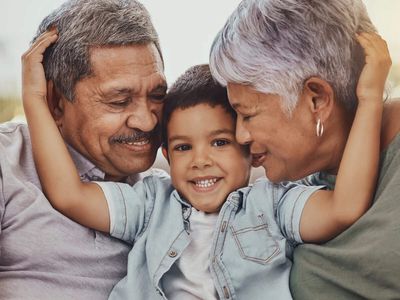
Grandparents love grandkids more than their children? A 2021 psychology study explains why they shower their grandchildren with more affection, attention and warmth Psychology behind grandparents loving their grandchildren more than their children: Grandmothers' brains show heightened emotional empathy when they look at their grandchildren, while viewing their adult children triggers greater activity in areas associated with cognitive empathy. Neuroscience suggests this difference may help explain why grandparents often appear more relaxed and… The Economic Times · Sep 1
Psychology says people who break eye contact while explaining something complicated may be protecting their attention Eye contact carries powerful social information. When you look directly at someone, your brain is taking in more than their eyes, it is also reading their facial expressions, emotional reactions and other subtle cues that help you understand the interaction. The Economic Times · Aug 31
Psychology says people who save screenshots they never look at may be collecting a sense of future security People may save screenshots for all kinds of reasons: they expect the information could be useful later, don't want to risk forgetting it, worry they might need it again, feel emotionally attached to the content, or simply find comfort in knowing it's safely stored for future access. The Economic Times · Aug 31
Psychology says people who avoid listening to voice notes may not dislike the person sending them The next time someone leaves your voice note unopened, it may have far less to do with rejection than you think. They could be caught up with work, somewhere they can't listen comfortably, or simply waiting until they have the mental space to focus. Some people process written words more… The Economic Times · Aug 31
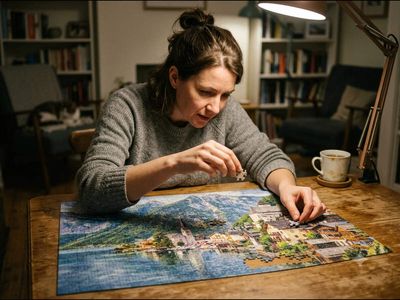
Psychology says people who feel compelled to finish every puzzle they start may be responding to the same psychological desire for resolution that researchers call the need for cognitive closure The need for cognitive closure describes a psychological trait driving task completion. This trait influences how individuals approach uncertain situations and make decisions. Research shows higher need for closure leads to greater effort when tasks require sustained mental work. Completing puzzles and solving problems provides a satisfying sense of resolution.… The Economic Times · Aug 31
Psychology reveals why some people rarely initiate conversations - These personality traits may explain their quiet behavior Some individuals feel more at ease allowing others to initiate discussions, a preference that is not inherently unfriendly. This tendency can be rooted in introversion and a yearning for deeper relationships. Personal caution and introspective tendencies also shape their timing in conversations. Research has highlighted that personality traits significantly affect… The Economic Times · Aug 31
Times Life · Aug 31 Amavasya and the New Moon: What Hindu Ritual About Ancestors Teaches the Living About Grief The night that asks nothing of the skyThe new moon gives you nothing to look at. That is the first thing Amavasya asks of you: to sit with a sky that offers no light back. Every other Hindu observance has something to orient toward, the full Kartik moon, the rising…
Grocery Coupon Guide · Aug 30 Why Does the Grocery Store Put Milk So Far From the Front Door? Walking all the way to the back of the supermarket to grab a single gallon of milk feels like a workout. Grocery store floor plans are not organized by accident or convenience. Instead, supermarket layouts are meticulously engineered using a careful mix of consumer psychology, store design strategy, and heavy-duty…
The Economic Times · Aug 30 Psychology says people who talk about themselves in the third person may be doing something surprisingly smart People who regularly use third-person self-talk may be using a surprisingly sophisticated psychological strategy without realizing it.By referring to themselves by name or as “he” or “she,” they can create a small mental distance between the person experiencing an emotion and the person reflecting on it.
The Economic Times · Aug 30 Psychology says people who recognize friends by their footsteps may have highly tuned social memory Recognizing a friend by the sound of their footsteps is a small example of a broader psychological ability: the brain can build detailed representations of familiar people using information from multiple sensory cues. The rhythm of their steps, the sound of their movement and subtle patterns in the way they…
Salon · Aug 30 The psychology of content creator fame The pursuit of fame for fame’s sake has become an almost banal pursuit in the attention economy
The Economic Times · Aug 30 Psychology says if you keep reaching for snacks on the table without thinking, your brain may be following a habit loop People who repeatedly snack from a bowl sitting on the table are not necessarily hungrier than others or lacking self-control. Their behavior may instead reflect the combined influence of food cues, proximity, attention, habits and reward. This is why changing the environment can sometimes make a bigger difference than relying…
The Economic Times · Aug 30 Psychology says happiness from shared joy may reduce stress hormone levels to protect long-term heart health Engaging in positive shared experiences serves as a protective barrier for the cardiovascular system. Joy and contentment trigger the release of brain chemicals that actively diminish inflammation. The connections we foster enhance our health, significantly increasing immunity and longevity. Studies indicate that experiencing shared happiness leads to lower production of…
The Economic Times · Aug 29 Psychology says siblings who constantly compete may be responding to these hidden feelings - and it starts in childhood Sibling rivalry often unveils complex childhood feelings and unmet needs that children possess. As children engage in competitions for attention, they gauge their self-worth against their siblings. When parents exhibit favoritism, it can deeply affect sibling bonds and personal growth. Underlying jealousy may stem from a child's craving for parental…
The Economic Times · Aug 28 Quote of the Day by Seneca: ‘We suffer more often in imagination than in reality’ — a reminder to not let imagined fears overwhelm us, but instead focus on facts and face problems as they actually unfold Quote of the Day by Seneca: Ancient Roman philosopher Seneca noted we suffer more in imagination than reality. His ancient wisdom highlights how our minds create distress over potential future problems. Modern psychology, especially CBT, confirms this link between thought patterns and emotional suffering. This principle applies to everyday situations…
The Economic Times · Aug 28 Quote of the day by Khalil Gibran, 'If you reveal your secrets to the wind, you should not blame the wind for revealing them to the trees' teaches powerful timeless wisdom about secrets, trust and consequences of sharing, shows psychology of maturity, mindset, healthy habits Quote of the day by Khalil Gibran remains memorable because it turns a complicated lesson about communication into a vivid natural metaphor. Words may begin as private thoughts, but once released, they can travel in unexpected directions. The modern world has only amplified that reality. Whether through face-to-face conversations or…
The Economic Times · Aug 28 Psychology explains why some employees struggle to say 'No' to their boss - The hidden personality traits, fears and need for approval behind this workplace behavior For many employees, the act of refusing work requests proves surprisingly challenging. This difficulty is often rooted in a fear of being judged negatively and the innate desire for validation. The dynamics of power in the workplace, along with distinct personality traits, further complicate things. Consistently saying 'yes' can lead…






















 The Economic Times
 MyLifeXP
 Times Life
 Bored Panda
 The Conversation
 The Independent UK
 The Times of India
 Livingetc
 Grocery Coupon Guide
 The Guardian - UK
 Foreign Policy
 Medical Daily
