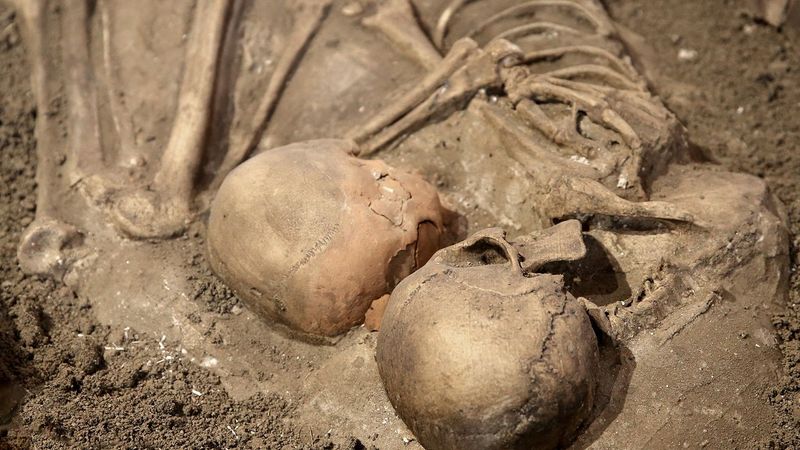
If humans are getting smarter, why are our brains shrinking? Human brains have been shrinking since prehistoric times, some studies suggest. Whether this is true and why it has happened are debated. LiveScience · May 9
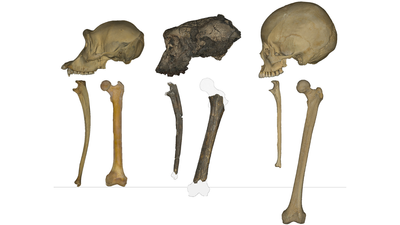
Tiny bump on 7 million-year-old fossil suggests ancient ape walked upright — and might even be a human ancestor The way Sahelanthropus tchadensis moved has long been debated. The discovery of a small bump on the front of the thigh bone is "beyond convincing" evidence this ape was bipedal. LiveScience · Jan 9
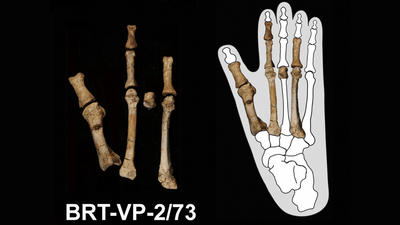
A fossilized foot found 15 years ago belonged to enigmatic human relative that lived alongside Lucy, scientists say Freshly unearthed jaw bones and teeth that were found close to a previously discovered foot suggest human relatives tried several ways of walking before honing in on one strategy. LiveScience · Nov 26, 2025
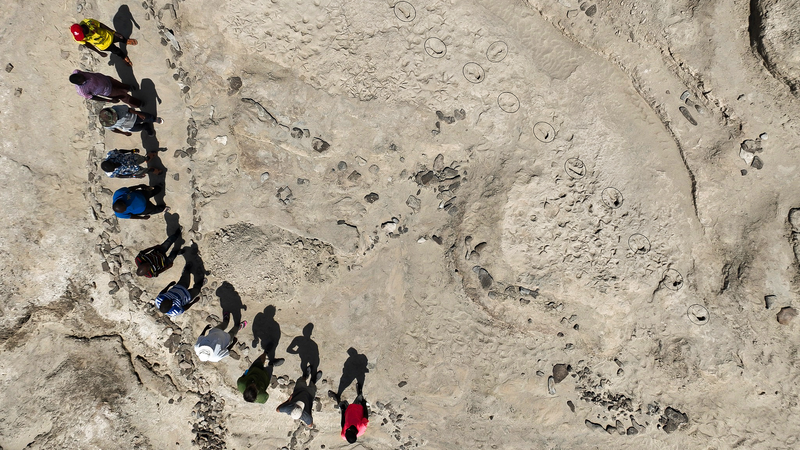
1.5 million-year-old footprints reveal our Homo erectus ancestors lived with a 2nd proto-human species A set of footprints found at the site of Koobi Fora in Kenya reveals that our ancestor Homo erectus coexisted with a now-extinct bipedal hominin, Paranthropus boisei, 1.5 million years ago. LiveScience · Nov 28, 2024
Lucy's last day: What the iconic fossil reveals about our ancient ancestor's last hours Fifty years after a fossil skeleton of Australopithecus afarensis was unearthed in Ethiopia, we know so much more about how this iconic species lived and died. LiveScience · Nov 20, 2024
Native American remains discovered at Dartmouth College spark calls for accountability Dartmouth College says it has found the partial skeletal remains of 15 Native Americans housed in its anthropology department The Independent UK · May 15, 2023







 LiveScience
 The Independent UK
