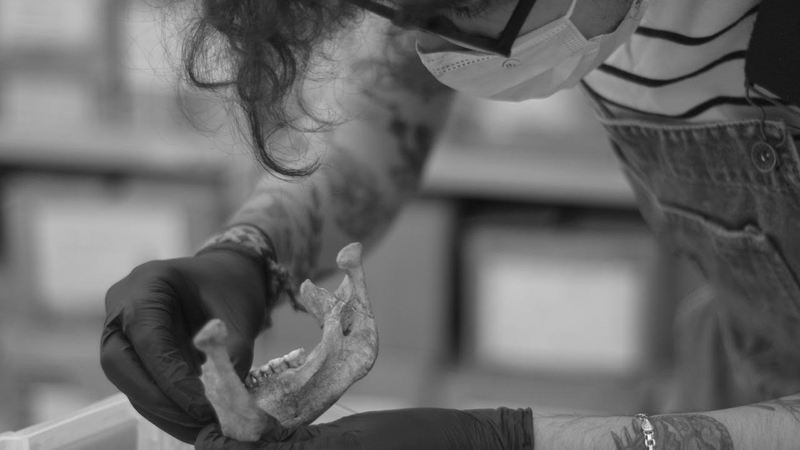
The first Americans had Denisovan DNA. And it may have helped them survive. People with Indigenous American ancestry carry Denisovan genes that Neanderthals passed on when they mated with modern humans. LiveScience · Aug 21, 2025
How does 'getting your tubes tied' work? Tubal ligation — the procedure that blocks eggs from traveling through the fallopian tubes — is an extremely effective way to lower one's chances of pregnancy to almost zero. Here's how it works. LiveScience · Aug 21, 2025
A 'crescent sunrise' solar eclipse is coming this weekend. Here's where to see it. This Sunday, a partial solar eclipse is taking place just hours before the September equinox flips Earth's seasons. Here's where a few lucky humans will be able to see it. LiveScience · Aug 21, 2025
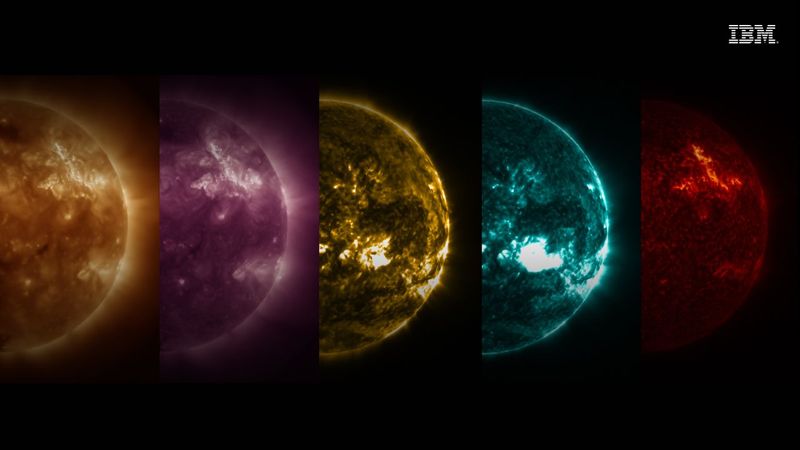
IBM and NASA create first-of-its-kind AI that can accurately predict violent solar flares The new open-source AI model, Surya, is trained on nine years of satellite imagery data and can accurately predict the sun's activity up to two hours into the future. It's 16% more effective than any other tool currently available. LiveScience · Aug 21, 2025
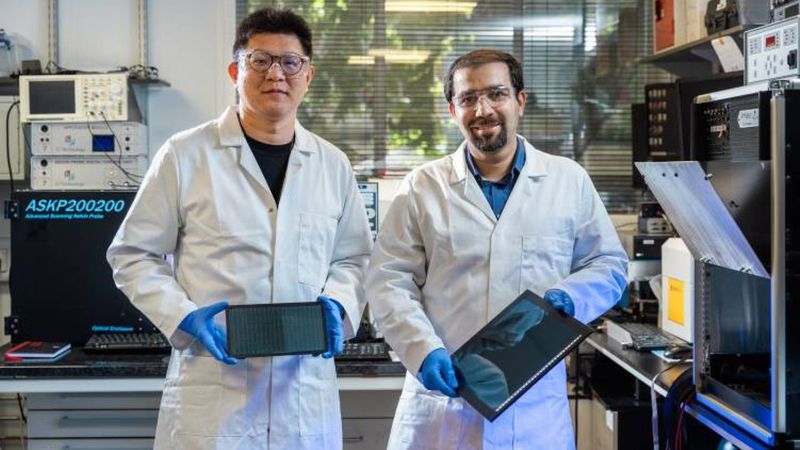
Your household gadgets could soon be battery-free — scientists create tiny solar cells that can be powered by indoor light Researchers said the breakthrough "paves the way for electronics powered by the ambient light already present in our lives." LiveScience · Aug 21, 2025
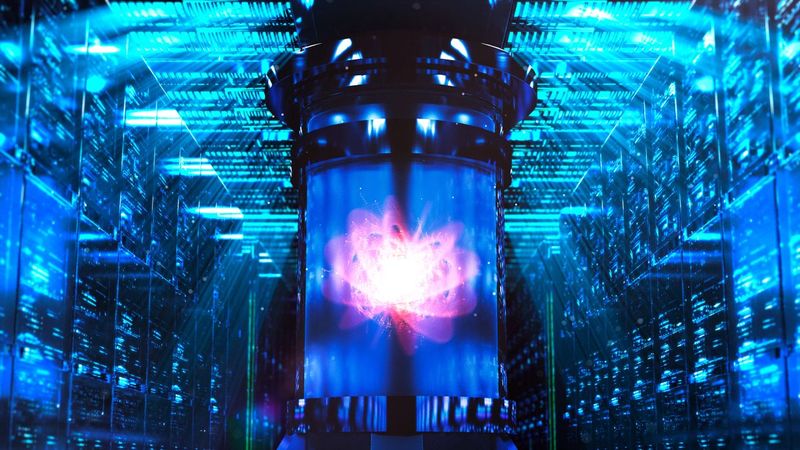
'This technology is possible today': Nuclear waste could be future power source and increase access to a rare fuel One physicist says his design to use nuclear waste as fuel for nuclear fusion could help the U.S. be a leader in the fusion economy. LiveScience · Aug 21, 2025
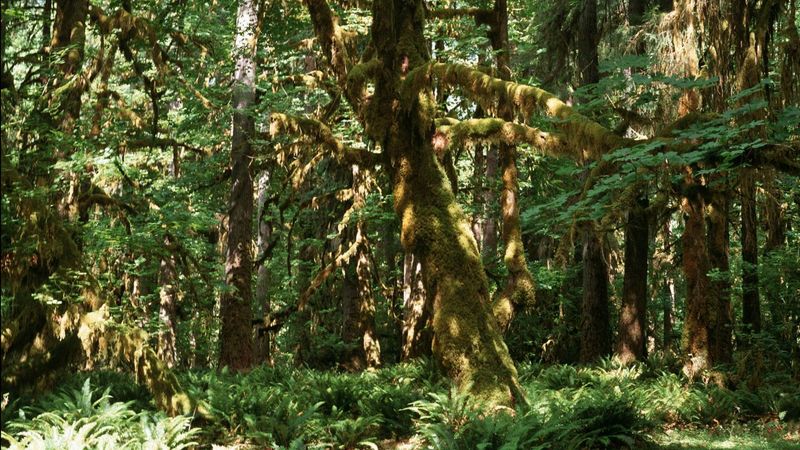
One of the world’s tallest trees — the centuries-old 'Doerner Fir' — is on fire in Oregon. Oregon's tallest fir tree is on fire, and firefighters are racing to save it. LiveScience · Aug 21, 2025
Jaw-dropping photo captures solar tornado and gigantic plasma eruption raging on the sun at the same time There's a giant solar tornado raging on the sun's surface, and a researcher captured it — plus a massive plasma eruption — in one spectacular image. LiveScience · Aug 20, 2025
6,300 years ago, dozens of people were murdered in grisly victory celebrations in France More than 6,000 years ago, invaders were captured in northeastern France before being tortured and mutilated. LiveScience · Aug 20, 2025
'Why would you even want to go?': Readers react to the hypothetical 400-year voyage to Alpha Centauri Would you leave Earth behind to travel to our nearest star system? Live Science readers reveal their thoughts about life among the stars. LiveScience · Aug 20, 2025
Can cannabis raise the risk of cancer? Scientists are piecing together how cannabis smoke may disarm the body's immune arsenal while activating cancer-linked pathways. But the potential links aren't yet completely understood. LiveScience · Aug 20, 2025
Uranus has a new, hidden moon, James Webb Space Telescope reveals Uranus' 29th moon was hidden inside the planet's dark inner rings, new observations from the James Webb Space Telescope reveal. LiveScience · Aug 20, 2025
Mystery quake that rocked Northern California in 1954 came from 'eerily quiet' Cascadia Subduction Zone Scientists link a magnitude 6.5 earthquake that shook Humboldt Bay, California, 71 years ago to the "locked" Cascadia Subduction Zone. LiveScience · Aug 20, 2025
Scientists think they detected the first known triple black hole system in the universe — and then watched it die Chinese astronomers have spotted a hidden supermassive black hole in the background of a peculiar gravitational wave event from a black hole merger, hinting that all three singularities were locked in a never-before-seen triple system. LiveScience · Aug 20, 2025
LiveScience · Aug 20, 2025 Hiker picks up venomous snake, dies after bite triggers rare allergic reaction, authorities say Authorities say a man died after being bitten by a venomous snake in Tennessee. The snake is believed to be a timber rattlesnake, which can have extremely potent venom, but the man likely died due to a rare allergic reaction.
LiveScience · Aug 20, 2025 How to watch the Sept. 7 'blood moon' total lunar eclipse if you're in America The final 'blood moon' total lunar eclipse of 2025 is coming this Sunday (Sept. 7-8). Here's where the celestial spectacle will be visible — and how to watch it if you're not in the path.
LiveScience · Aug 20, 2025 Japanese power breakthrough could be 'step toward a fully wireless society' Japanese researchers employed machine learning to develop a wireless power transfer system that remains stable under any load.
LiveScience · Aug 20, 2025 Diagnostic dilemma: A man's preference for 'soft' bacon may have given him brain worms A man in the U.S. reported worsening migraine symptoms. It turned out that a pork tapeworm had invaded his brain.
LiveScience · Aug 19, 2025 FDA recalls more bagged, frozen shrimp over possible radioactive cesium contamination The FDA is warning consumers not to eat certain frozen shrimp products sold at Walmart after other products from the same company tested positive for a radioactive substance.
LiveScience · Aug 19, 2025 Keratin extracted from sheep's wool repairs teeth in breakthrough Keratin extracted from sheep wool has been found to help protect human teeth. It could be coming to your dentist’s office soon.
LiveScience · Aug 19, 2025 New brain implant can decode a person's 'inner monologue' A new brain-computer interface can decode a person's inner speech, which could help people with paralysis communicate.
LiveScience · Aug 19, 2025 Rocket-like jellyfish, regal Komodo dragon and harrowing whale rescue — see the stunning Ocean Photographer of the Year 2025 finalists Finalists in the Ocean Photographer of the Year 2025 competition capture beautiful images of animals and people oceans.
LiveScience · Aug 19, 2025 A rare 'black moon' rises this weekend: What is it, and what can you see? Saturday's new moon is a seasonal "black moon" — a rare phenomenon that occurs once every 33 months. Here's what that means and why it's a great night for stargazing.
LiveScience · Aug 19, 2025 Supervolcanic 'hell' caldera in Japan is home to 17 different volcanoes — Earth from space A 2012 astronaut photo shows the striking beauty of Japan's Aso Caldera, a "supervolcanic" structure home to more than a dozen volcanoes and "hellish" hot springs. It was formed by several major eruptions spanning more than 200,000 years.
LiveScience · Aug 18, 2025 Gene that differs between humans and Neanderthals could shed light on the species' disappearance, mouse study suggests A gene called ASDL, which helps synthesize DNA, differs between modern humans and our extinct human relatives. The findings could shed light on why Neanderthals vanished.