Get all your news in one place.
100’s of premium titles.
One app.
Start reading
Euronews
Euronews
Doloresz Katanich

ZEW index: German investor confidence collapses on Middle East tensions

After a strong rise at the beginning of the year, expectations for Germany’s economic situation fell sharply in March, as high energy prices threatened to derail the country’s fragile recovery.

Germany’s ZEW Indicator of Economic Sentiment, a monthly gauge of investors’ confidence in Europe’s largest economy, dropped from 58.3 points in February to -0.5 in March, far below market expectations of 39.

"The ZEW Indicator has collapsed,” said ZEW President Professor Achim Wambach. “The escalation in the Middle East is driving up energy prices and increasing inflationary pressure. This heightens the risk that Germany’s nascent economic recovery will lose momentum."

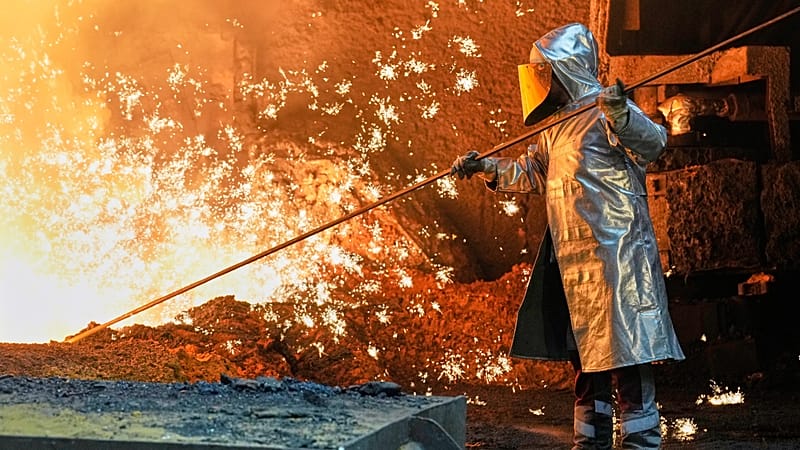
The main concern centres on Germany’s energy-intensive sectors, including steel, cement and chemicals, which are particularly exposed to high energy costs.

"The extent of these effects depends on the duration and intensity of the conflict," he added. "However, financial market experts are sceptical that it will come to a swift end."

Oil and natural gas prices have surged since the end of last month, when the United States and Israel attacked Iran, killing its supreme leader and plunging the Middle East into conflict.

Iran has declared the Strait of Hormuz — a vital shipping route that typically carries around a fifth of global oil and gas trade — closed to vessels from countries it considers allied with the United States and Israel.

Around 80% of survey respondents expect inflationary pressure in Germany and the eurozone, ZEW said.

By contrast, assessments of the current economic situation improved slightly.

ZEW surveyed 178 analysts and institutional investors in the second week of March for the latest edition of its report.

Iran conflict darkens eurozone growth outlook

In a separate survey, the eurozone ZEW Indicator also fell sharply, reversing a recent upward trend, as investor sentiment deteriorated in response to rising energy prices linked to the conflict with Iran.

The eurozone economic sentiment index fell into negative territory as the escalating conflict in the Middle East continued to threaten energy prices, supply chains and broader economic stability across Europe.

The expectations index came in at -8.5, down from 39.4 in February — the lowest level in nearly a year — and well below market expectations of 24.

Analysts at Oxford Economics said: "Today’s reading highlights how the Iran conflict will jeopardise the gradual recovery we had been expecting this year."

They added that the impact on the eurozone economy in the first quarter is likely to remain limited, as energy prices only began rising towards the end of the period. However, in the following three months, they expect "the full impact to materialise, largely through a squeeze on real household incomes as inflation rises".

However, they noted that "the energy price shock, as well as its impact on activity, should remain significantly smaller than the crisis triggered by Russia’s invasion of Ukraine in 2022."

Sign up to read this article
Read news from 100’s of titles, curated specifically for you.
Already a member? Sign in here
Related Stories
Top stories on inkl right now
One subscription that gives you access to news from hundreds of sites
Already a member? Sign in here
Our Picks
Fourteen days free
Download the app
One app. One membership.
100+ trusted global sources.