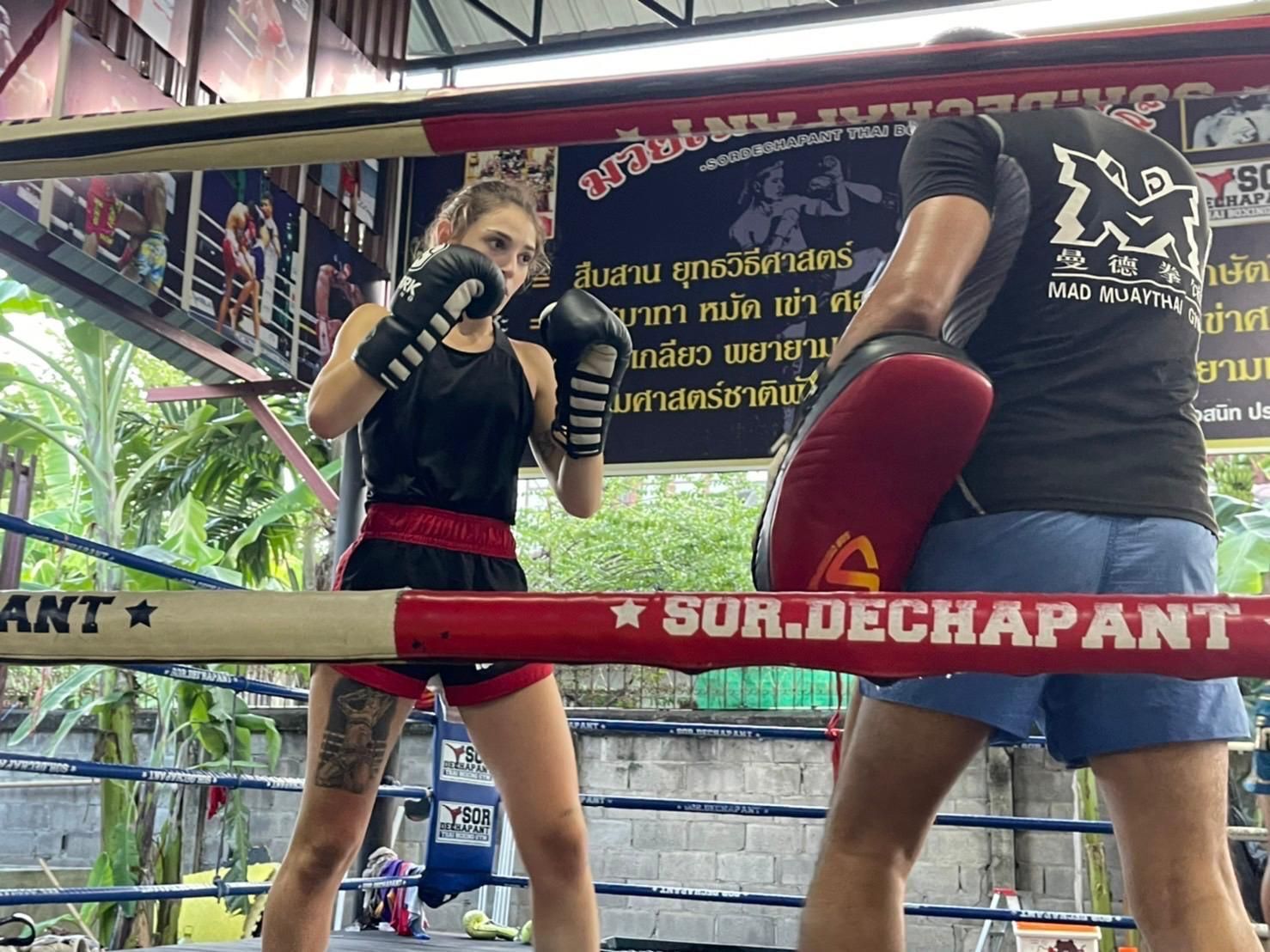
I've been coaching at Sor.Dechapant Muay Thai School in Chatuchak, Bangkok - the official training facility for Muay Thai Visa Thailand (MTVT) - for more years than I care to count now, and I've seen the same pattern hundreds of times. Someone arrives in Bangkok, trains hard for two weeks, feels amazing, then flies home right when the actual transformation would've started.
The ones who stay the full year? They're different people by the end. Not because they trained harder every day—honestly, if you're still going maximum intensity after three months, you're probably injured. They change because their body stops treating Muay Thai like an emergency and starts treating it like a skill. Same with the brain.
After the first month, most students build basic stamina and coordination. By three months, I see noticeable fat loss, better muscle tone, and faster reflexes. After six months to a year, the changes are obvious—lean muscle, solid cardio, and they can actually spar without looking like they're drowning.
But the real story isn't just physical. Research shows that physical exercise increases brain-derived neurotrophic factor (BDNF) levels, a protein that plays a key role in brain health and neuroplasticity. Training doesn't just make you stronger; it literally changes how your brain processes stress and handles pressure.
Months 1-3: The Shock Phase
This is where I see people confuse soreness with progress. Soreness just means you did new stuff. Doesn't automatically mean you did useful stuff.
What's actually going on is your nervous system getting thrown into entirely new movement patterns. Stance, guard, checking kicks, pivoting, keeping posture in the clinch, breathing when someone's driving their shoulder into your sternum. It's overwhelming at first.
Each proper Muay Thai session works the whole body and easily burns 600-700 calories in an hour. I usually see visible body composition changes after 4-6 weeks of consistent training combined with decent nutrition.
Physically, conditioning changes show up first. Heart rate recovery improves, students stop feeling like they're dying after warm-ups, and they can go longer without needing to collapse on the mats. Expect sore muscles, better sleep, and more energy.
Mentally, this phase is messy. The stress response is loud. They're learning to deal with impact, pressure, and constant correction from coaches. That's a social stressor too. You're being watched, being told you're doing it wrong. And you are—everyone is at first.
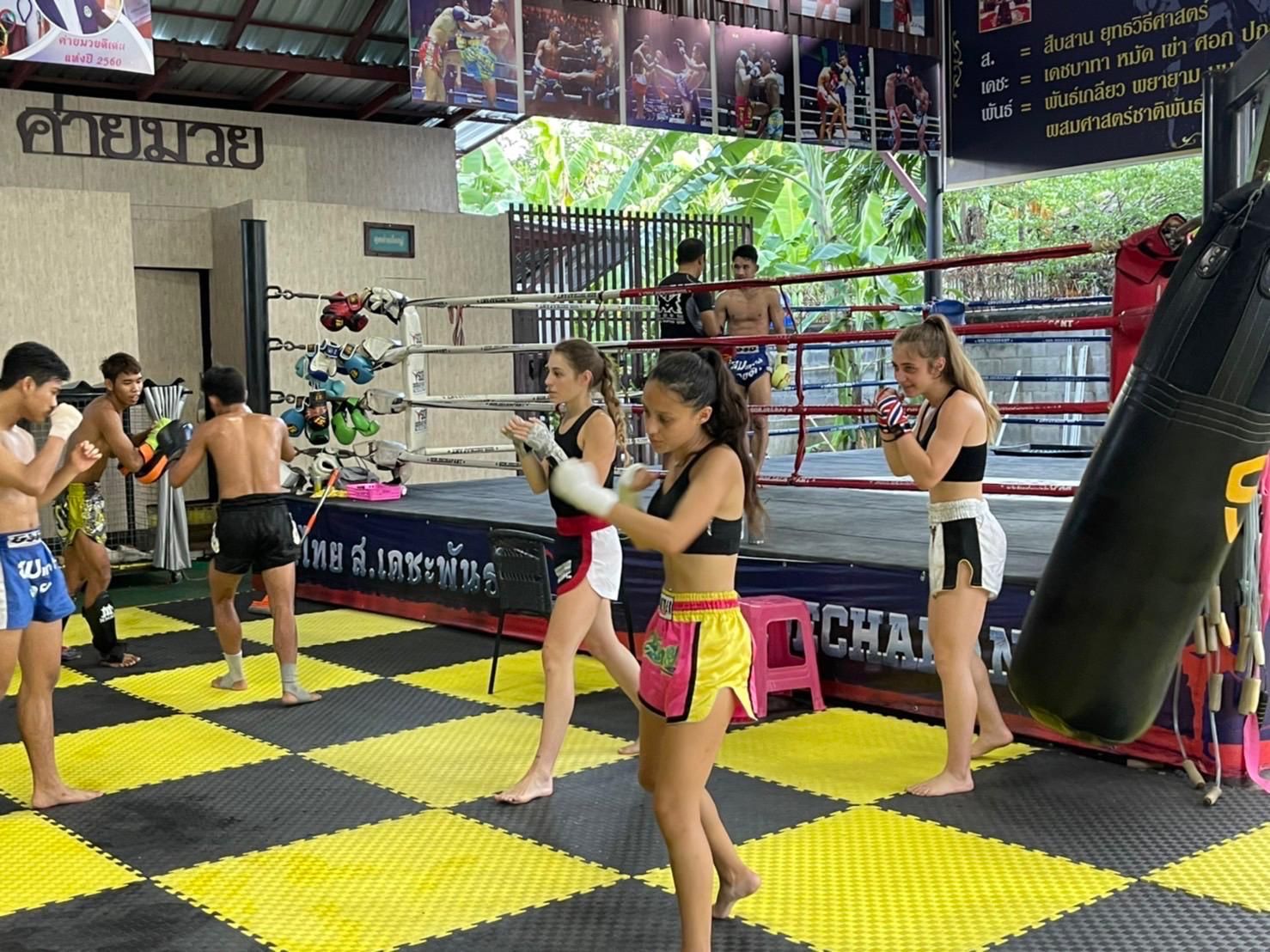
For beginners, it's normal to be gasping for air during the first few sessions. Muay Thai is one of the most grueling workouts you'll ever experience, and it will develop your cardiovascular conditioning if you stick with it.
If you're wondering whether to quit, the signal isn't "I'm sore." It's "I have joint pain that's getting worse" or "I keep getting hurt because I'm pushing intensity when my technique is terrible." A good gym slows you down before your body forces the issue.
Months 4-6: The Rhythm Phase
Somewhere in this window, I'll see a student throw a combo and realize they didn't consciously narrate it in their head. It just happened. That's the first real sign of skill acquisition, and the look on their face is always the same—surprise mixed with relief.
This isn't magic. It's motor learning. The brain builds cleaner pathways for movement and decision-making under pressure. Research using martial arts programs has shown beneficial effects on BDNF levels. The intricate motor patterns, balance challenges, and cognitive requirements may enlist multiple neural pathways, possibly provoking enhanced BDNF synthesis.
Students start telling me they're calmer in annoying situations outside training. They don't react as fast to every provocation. Not because they became monks, but because they've practiced staying functional while their heart rate's up and someone's trying to sweep them.
Physically, this is where the body stops feeling like it's in constant repair and starts upgrading. Timing improves, hips loosen up, footwork gets less clunky, and less energy is wasted.
With consistent training—3 to 4 sessions weekly—students usually notice improvements in muscle tone within a month. More significant changes become visible after several months of showing up.
The trap at this stage is confidence rising faster than competence, so they're tempted to spar too hard. I see this constantly. Classic beginner mistake.
Months 7-12: The Mastery Phase
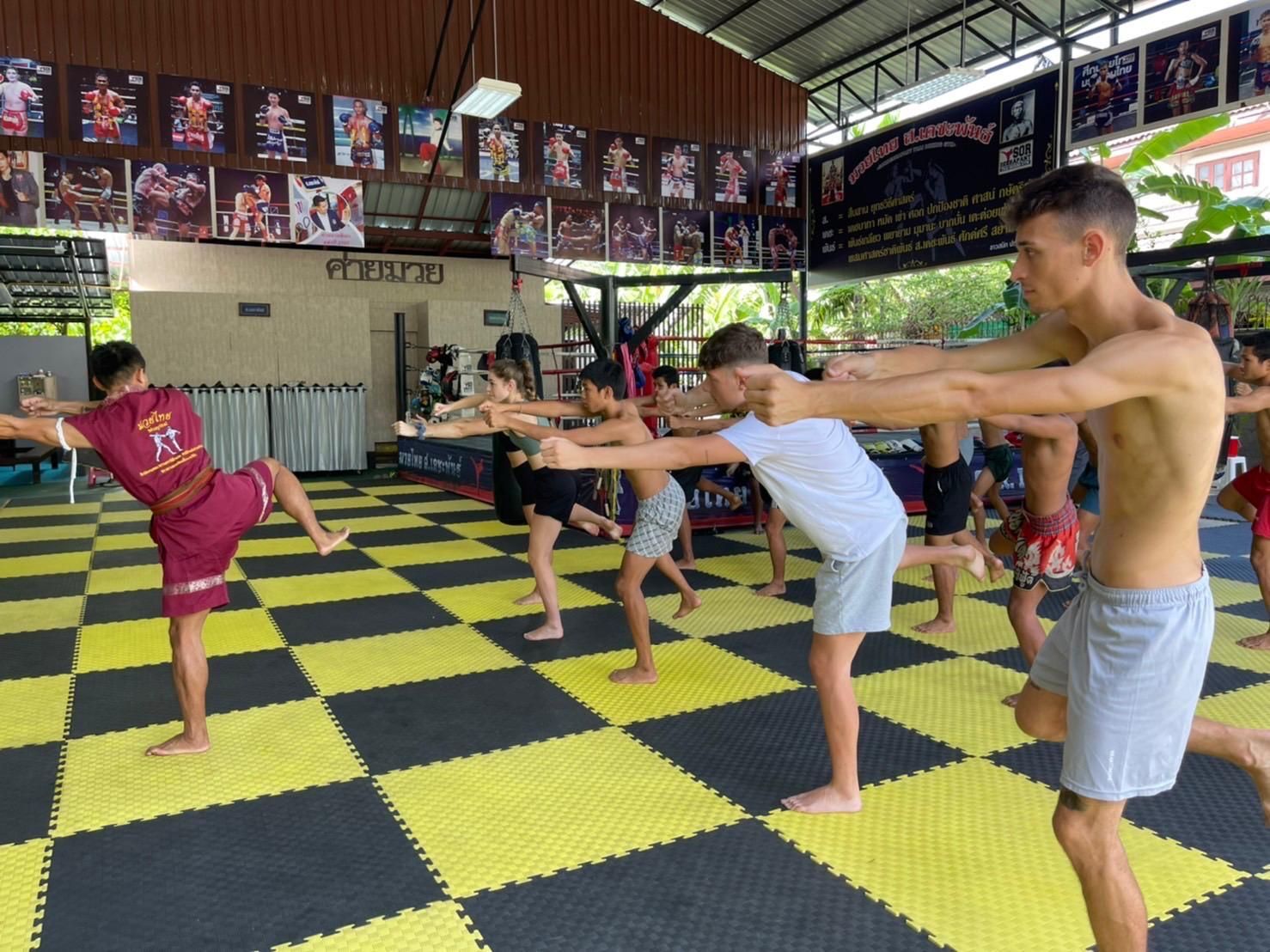
By now, baseline fitness is noticeably higher, and technique is stable enough that I can start working with students on strategy, not just survival. They see openings, set things up, can be tired, and still make decent choices. That's huge, because early on, fatigue deletes decision-making.
This is where people describe "stress inoculation." They get used to discomfort in a practical way. They learn to keep breathing under control when things get intense. Panic is mostly a story the body tells when it's overwhelmed. You don't eliminate it, you just stop being owned by it.
Exercise-induced increases in BDNF levels were consistently associated with improvements in fatigue, pain, and depression in research. Exercise enhances neuronal activity, synaptic plasticity, and neurogenesis, supporting cognitive function, emotional regulation, and pain modulation.
With consistent training over a year, students become stronger, leaner, and tougher. Muay Thai training builds lean muscle while burning fat, lending itself to that lean, toned physique you see in actual fighters.
Another change: shin conditioning. It happens from day to day of kicking pads and heavy bags. After a year, students notice their shins are noticeably harder. The transformation is gradual—micro-fractures calcify, skin toughens, and what used to make them wince becomes tolerable.
Why Continuity Matters More Than Intensity
I tell every new student this on their first day: continuity beats intensity almost every time. If you train hard for two weeks, then stop for a month, your body mostly just remembers suffering. If you train steadily for months without big interruptions, you build an actual base.
In Thailand, continuity isn't only about motivation. It's also about admin, and this is where I see people mess up their training timeline.
Many long-stay students at Sor.Dechapant uses the Education (ED) pathway through our Ministry-licensed school program. Unlike the Digital Nomad Visa Thailand, which is designed for remote workers who want total freedom, the ED pathway is built for those who want the structure of a daily training routine. The basic structure involves an initial 90-day permission of stay, with extensions handled inside Thailand through Immigration.
Travel matters too. If you leave Thailand during your permitted stay without a re-entry permit, your stay permission can be voided. And there's 90-day reporting—holders must report their address every 90 days, with fines if they file late. We track this for our students so they don't miss deadlines.
I'm not saying this to scare anyone. If your admin is chaotic, your training gets chaotic. I've watched students quit not because they hate Muay Thai, but because their life becomes a pile of little fires: missed immigration deadlines, surprise paperwork issues, inconsistent sleep from stress, and money problems. It adds up.
The Ghost School Problem
This is where I need to be direct because I see this constantly with students who trained elsewhere before coming to us.
There are legitimate programs and sketchy setups. A normal person thinks, "Cool, a gym with good reviews, they can help with visas." A smarter brain thinks, "Who's actually licensed, and what are the attendance rules?"
At Sor.Dechapant, we're a licensed school (License สช.กร. 00025/2568) operating under the Office of the Private Education Commission. We're also a Sports Authority of Thailand "5-Star Professional Camp." When Immigration sees our school name on documents, they know it's real because we have active fighters competing at ONE Championship, Lumpinee, and Rajadamnern stadiums.
If you're considering any education program in Thailand, verify first. Ask if the school is properly licensed. Ask what attendance expectations are—we require 80% minimum and at least 4 sessions weekly. Ask who handles paperwork.
If an agent or gym tells you, "Don't worry, you don't have to show up, it's totally fine," that's where your alarm should go off. You're being set up in a situation where you don't understand compliance expectations.
What If You Don't Want to Fight
Most of my students don't fight, and that's fine. "Zero to fighter" makes a good headline, but the deeper reality is "zero to capable."
Long-term Muay Thai training still makes sense if you never compete. The benefits are simpler: getting fit without treadmill jail, learning a skill that demands attention, building real confidence, and finding community when you're living abroad.
Muay Thai sharpens your mind, fostering clarity and focus. As you learn proper self-defense, it toughens you from the inside and helps boost your immune system through consistent physical stress and recovery.
If you want to train for a year without becoming That Person who won't shut up about "warrior mindset," focus on consistency, technique quality, and recovery. Go hard sometimes, go easy a lot. Train like you're trying to be healthy in month twelve, not heroic in week two.
The Reality Check
A year of training doesn't make you a new person overnight. It makes you someone who keeps showing up, even when it's sweaty and annoying and your technique feels stuck for two weeks. That consistency is the real transformation. The visible stuff—weight loss, muscle definition, improved cardio—is just a side effect.
Regular physical activity elevates BDNF levels and fosters memory and learning, offering implications for the prevention and treatment of neuropsychiatric conditions. The changes are real, measurable in studies, and happen slowly through sustained effort.
If you're seriously considering the year-long version, treat the training and admin as one integrated project. The bodywork is hard. The paperwork is tedious. But both together are what make "365 days" more than a caption.
A year passes anyway. The question is whether you spent it building something real or just thinking about it.
About the Author:
Teacher Somchart (Kru Chart) is a senior coach at Sor.Dechapant Muay Thai School in Chatuchak, Bangkok—a Ministry of Education licensed institution (License สช.กร. 00025/2568) and Sports Authority of Thailand "5-Star Professional Camp." He has spent years coaching both Thai and international students through complete training progressions, from their first nervous session to competition-ready skill development.