Closing summary
This blog is closing now but you can find our latest full story on the falling out between the US and Ukraine here and all our Ukraine coverage here. Here’s a recap of the latest developments:
The US and Ukraine appear to be heading towards an irreconcilable rift after Donald Trump escalated his attacks on Volodymyr Zelenskyy, calling him a “dictator” and warning the Ukrainian leader “better move fast” or he “won’t have a country left.” The US president also accused Zelenskyy – without evidence – of benefiting from continuing US financial and military support. Trump’s latest comments cast serious doubt on future US aid to Ukraine and mark the most explicit threat yet to end the war on terms favourable to Moscow.
Trump’s fiery Truth Social rant on Wednesday came after Zelenskyy accused the US leader of being “trapped” in a Russian “disinformation bubble”. The Ukrainian president said Trump was pushing “a lot of disinformation coming from Russia,” and accused Washington of bringing Russia out of global isolation through bilateral talks earlier this week in Riyadh. Zelenskyy also disputed Trump’s comments that most of Ukraine’s support comes from the US. US vice-president JD Vance warned Zelenskyy against “bad mouthing” Trump, saying criticising the president would not help his cause.
Zelenskyy’s comments at a press conference came in response to Trump’s claims that Ukraine was to blame for Russia’s 2022 invasion, remarks that echoed the Kremlin’s narrative. Trump said he was “disappointed” that the Ukrainian leader complained about being left out of talks between the US and Russia over ending the Ukraine war, and increased pressure on Zelenskyy to hold elections – echoing one of Moscow’s key demands. Trump’s former vice-president, Mike Pence, challenged him in a post that said: “Mr. President, Ukraine did not ‘start’ this war … . The Road to Peace must be built on the Truth.”
In a speech to business leaders in Miami later, Trump repeated his attacks on Zelenskyy and claimed that he “could have come [to the talks in Saudi Arabia] if he wanted”. Zelenskyy has said he was not invited to the talks.
Vladimir Putin said Ukraine would not be excluded from negotiations to end the war, and rejected claims that Moscow had rejected talks with Europe or Kyiv. On Trump, the Russian leader said the US president had begun receiving “objective information” about the war in Ukraine, which led him to “change his position.” He added that he was happy to meet with Trump, and said he “highly rated” the results of the Russia-US summit in Riyadh.
Zelenskyy said he would meet with Trump’s Ukraine envoy, Keith Kellogg, in Kyiv on Thursday. Kellogg, who is seen as Trump’s most pro-Ukraine adviser, arrived in Kyiv for talks with Ukrainian leaders on Wednesday. “Together with America and Europe, peace can be more reliable, and this is our goal,” Zelenskyy said in his daily evening address on Wednesday.
Keir Starmer expressed his support for “Ukraine’s democratically elected leader” during a call with Zelenskyy on Wednesday evening. German chancellor Olaf Scholz said that it was “wrong and dangerous” to deny Zelenskyy’s democratic legitimacy. The EU’s foreign policy chief, Kaja Kallas, said there can be no Russia-Ukraine peace deal without the participation of Ukraine and Europe.
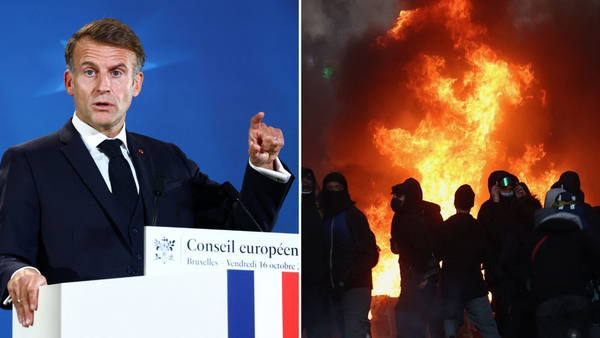
Starmer and French president Emmanuel Macron are set to visit Washington next week, according to reports. Macron will meet with Trump at the White House, a US official said. Starmer is also expected to visit Washington next week, amid other meetings aimed at bringing an end to Russia’s war in Ukraine, US national security advisor Mike Waltz said.
Sweden and Poland agreed to “strengthen and deepen cooperation” politically and in civil protection and civil defence, citing the worsened security situation across Europe. The statement of intent pledges to work together to improve national resilience and preparedness strategies, provide Ukraine support on strengthening national resilience and improve resilience and security in the Baltic region – particularly on critical infrastructure.
Denmark’s prime minister Mette Frederiksen announced the country needs a “massive rearmament” to avoid war as she announced Denmark will spend 50bn DKK over the next two years on defence. The investment brings Denmark’s defence spending up to 3% of GDP in the next two years (up from 2.4% in 2024). It comes after coming under huge pressure from the Trump administration over Greenland and its recent comments on cutting support to Europe and Ukraine.
Europe’s leading human rights official criticised US vice-president JD Vance’s “very problematic” speech on European democracy, offering an implicit rebuke to Vance’s take on free speech and politics across the continent. The Commissioner for Human Rights at the Council of Europe, Michael O’Flaherty, challenged Vance’s claim that Europe had abandoned its values in an interview with the Guardian.
EU sanctions against Russia will be extended to cover aluminium imports and dozens more “shadow” vessels covertly exporting Russian oil below a price cap imposed by western allies. The new package, 16th since the full scale invasion in 2022, includes a ban on imports of Russian aluminium into the EU, said by EU officials to generate significant revenues for Russia. The approval of the package carries extra weight, amid fears in Brussels that Trump will seek to lift US sanctions against Russia as part of his effort to make a peace deal.
Updated
Russia has unleashed a mass drone attack on Ukraine’s southern city of Odesa for the second night running, knocking out power for thousands of residents and plunging parts of the city into darkness, the regional governor has said. Reuters reports:
Governor Oleh Kiper, writing on the Telegram messaging app, said the latest night-time strikes had triggered a blackout for some 5,000 residents.
Kiper said nearly 90,000 people had been left in the dark in Odesa district in and around the city from the successive nights of attacks. President Volodymyr Zelenskyy said a similar number was without heating.
Kiper also said the strikes had triggered a fire at a restaurant and a storage facility and damaged an administrative building. One person was injured.
Photos on social media showed areas of the city in darkness.