Get all your news in one place.
100’s of premium titles.
One app.
Start reading
The Guardian - UK
The Guardian - UK
World
Tom Ambrose (now) and Taz Ali (earlier)

Zelenskyy says no agreement on key issues in peace talks as he accuses Russia of ‘dragging out negotiations’ – as it happened

Volodymyr Zelenskyy.
Volodymyr Zelenskyy. Photograph: Action Press/Shutterstock

Closing summary

  • Volodymyr Zelenskyy said there has been no agreement between Ukraine and Russia on the key issues at the US-mediated talks in Geneva. “We can see that some groundwork has been done, but for now the positions differ, because the negotiations were not easy,” the Ukrainian president told reporters after the talks had finished, according to the AFP news agency.

  • The latest round of US-mediated peace talks between Russia and Ukraine in Geneva on Wednesday ended without a major breakthrough, as fighting continues in a war that will enter its fifth year next week. Ukraine’s president, Volodymyr Zelenskyy, said no agreement had been reached on the thorniest questions at the negotiations in Switzerland, accusing Moscow of “trying to drag out” the process.

  • Ukraine has sanctioned the Belarusian president Alexander Lukashenko for providing military support to Russia and enabling “the killing of Ukrainians”, Zelenskyy has announced. Lukashenko, one of Russian president Vladimir Putin’s closest allies, has allowed Moscow to use Belarusian territory as a launchpad for its invasion of Ukraine.

  • Russia has demanded for evidence after five European countries accused Moscow of poisoning the outspoken Russian opposition leader Alexei Navalny with a dart frog poison. The UK, France, Germany Sweden and the Netherlands said on Saturday that laboratory testing of samples from Navalny’s body had confirmed the presence of epibatidine, a toxin found in poison dart frogs in South America and not found naturally in Russia.

  • Slovakia has threatened to cut emergency electricity supplies to Kyiv if it does not reopen a pipeline that brings Russian oil to Slovakia and Hungary. Slovakian prime minister Robert Fico, who is a close ally of Putin’s along with Hungary’s Viktor Orbán, declared a state of emergency over oil supplies.

  • Four South African men who were lured into fighting alongside Russian forces in Ukraine landed at Johannesburg’s main airport on Wednesday, public broadcaster the South African Broadcasting Corporation reported. Police were waiting at OR Tambo International Airport, the SABC said. A police spokesperson declined comment, directing enquiries to the foreign affairs ministry.

  • Ukraine’s sports minister has condemned the decision to allow six Russians and four Belarusians to compete under their nation’s flags at next month’s Winter Paralympics as “disappointing and outrageous” and said Ukraine officials will not attend the opening ceremony or other official events as a result. “The flags of Russia and Belarus have no place at international sporting events that stand for fairness, integrity, and respect,” said Matvii Bidnyi in response to the International Paralympic Committee’s decision on Monday.

  • Russia and Cuba on Wednesday criticised the US energy blockade of the Caribbean island in a show of solidarity in Moscow, where Havana’s foreign minister was due to meet with president Vladimir Putin. Cuba’s top diplomat Bruno Rodriguez travelled to traditional ally Russia seeking help as his country reels from a severe fuel crisis – intensified by Washington’s de-facto oil blockade.

  • Slovakia has threatened to cut emergency electricity supplies to Kyiv if it does not reopen a pipeline that brings Russian oil to Slovakia and Hungary. Slovakian prime minister Robert Fico, who is a close ally of Putin’s along with Hungary’s Viktor Orbán, declared a state of emergency over oil supplies.

  • Chancellor Friedrich Merz said he was open to a social media ban for children. “If children today, at the age of 14, have up to five hours or more of screen time a day, if their entire socialisation takes place only through this medium, then we shouldn’t be surprised by personality deficits and problems in the social behaviour of young people,” he said in an interview with the podcast Machtwechsel.

  • Heavy snow and rain across Romania left 200,000 homes without electricity on Wednesday, energy minister Bogdan Ivan said, with traffic blocked on motorways and national roads and dozens of trains delayed. Public transport in the capital, Bucharest, was struggling under 40 cm (16 inches) of snow, Reuters reported. Fallen trees halted road and rail traffic, schools closed in several towns and 10 ambulances in six counties were snowed in, the national emergency response agency said.

  • France has launched wide-ranging investigations into human trafficking and financial fraud among contacts of the late convicted US sex offender Jeffrey Epstein following the release of a trove of files on his activities. Paris prosecutor Laure Beccuau told France Info radio on Wednesday that the investigations will rely on publicly available material alongside complaints filed by child protection groups.

“The greatness of America,” wrote the 19th-century French diplomat, political philosopher and historian Alexis de Tocqueville, “lies not in her being more enlightened than any other nation, but rather in her ability to repair her faults.”

For a brief moment at the Munich Security Conference (MSC) last weekend, European leaders half-thought that their most heartfelt wish – the return of the old US, that believed in the EU ideal and backed a rules-based world order – had been granted.

The previous year on this same stage, US vice-president JD Vance had delivered a gut punch: a brutal ideological assault accusing Europe of abandoning “fundamental values”, and questioning whether the US and EU still had a common agenda.

This year, secretary of state Marco Rubio gave a speech so markedly different in tone that the sheer relief at hearing something other than abuse saw the audience – led by Germany’s defence and foreign ministers, plus 40-odd US officials – give him a standing ovation.

Rubio played a soothing tune. The US and Europe “belong together”, he said: if Americans came across as direct and urgent, it was because they know European and US destinies were forever intertwined. The US would “always be a child of Europe”.
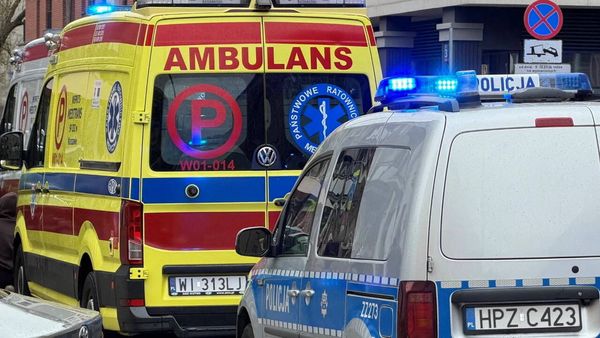
Four South African men who were lured into fighting alongside Russian forces in Ukraine landed at Johannesburg’s main airport on Wednesday, public broadcaster the South African Broadcasting Corporation reported.

Police were waiting at OR Tambo International Airport, the SABC said. A police spokesperson declined comment, directing enquiries to the foreign affairs ministry.

A foreign ministry spokesperson did not immediately respond to a message seeking comment, Reuters reported.

South Africa’s government said in November that it would investigate how 17 of its citizens joined mercenary forces in the Russia-Ukraine conflict after the men sent distress calls for help to return home.

President Cyril Ramaphosa spoke to Russian president Vladimir Putin by telephone earlier this month, and Ramaphosa’s office said after the call that the two leaders had “pledged their support to the process of returning South Africans fighting alongside Russian forces in Ukraine“.

Under South African law, it is illegal for citizens to provide military assistance to foreign governments or participate in foreign armies unless authorised by South Africa.

Heavy snow and rain across Romania left 200,000 homes without electricity on Wednesday, energy minister Bogdan Ivan said, with traffic blocked on motorways and national roads and dozens of trains delayed.

Public transport in the capital, Bucharest, was struggling under 40 cm (16 inches) of snow, Reuters reported. Fallen trees halted road and rail traffic, schools closed in several towns and 10 ambulances in six counties were snowed in, the national emergency response agency said.

“Of the 200,000 homes affected so far, roughly 86,000 were reconnected to power, there are ... 266 towns affected,” Ivan told reporters.

He added Romania’s power consumption was 7.4GW on average, with surplus wind and hydro production being exported. Production and consumption were up 11% and 6% on the year, respectively, he said.

We have some images from the newswires of Denmark’s King Frederik in Greenland. He is expected to attend a luncheon hosted by Greenland’s prime minister Jens-Frederik Nielsen and take a tour of a school in Nuuk and the headquarters of the Joint Arctic Command. He is also scheduled to visit a factory of Royal Greenland, the island’s largest company.

‘Not easy’: Russia-Ukraine peace talks in Geneva end with no breakthrough

The latest round of US-mediated peace talks between Russia and Ukraine in Geneva on Wednesday ended without a major breakthrough, as fighting continues in a war that will enter its fifth year next week.

Ukraine’s president, Volodymyr Zelenskyy, said no agreement had been reached on the thorniest questions at the negotiations in Switzerland, accusing Moscow of “trying to drag out” the process.

“We can see that some groundwork has been done, but for now the positions differ, because the negotiations were not easy,” he told reporters after the talks.

Zelenskyy said the status of Russian-occupied territories in eastern Ukraine and the future of the Zaporizhzhia nuclear power plant, which remains under Moscow’s control, were among the most contentious unresolved issues.

The second day of talks ended after just two hours, signalling scant progress and underscoring how distant a deal still appears, despite Donald Trump’s promises to end the war on the first day of his presidency.

Read the full report by our Russian affairs reporter Pjotr Sauer here:

Slovakia warns Ukraine of reprisals over blocked pipeline

Back in Ukraine news, Slovakia has threatened to cut emergency electricity supplies to Kyiv if it does not reopen a pipeline that brings Russian oil to Slovakia and Hungary.

Slovakian prime minister Robert Fico, who is a close ally of Putin’s along with Hungary’s Viktor Orbán, declared a state of emergency over oil supplies. He said he had ordered the release of 250,000 tonnes of oil from emergency reserves in response to the interruption of oil supplies via the Druzhba pipeline.

Ukraine said the pipeline, which runs from Russia through its territory to Slovakia and Hungary, was shut down after being damaged during a Russian attack near the western Ukrainian city of Brody.

Fico claimed the repair work had finished and accused Ukraine of blocking oil supplies in order to “blackmail” Hungary, which opposes Kyiv from joining the EU. Orbán repeated this accusation, saying on social media that Ukraine was “trying to pressure us to support their EU membership”.

“Thankfully, Hungary has a government that doesn’t bow to blackmail,” he said.

Fico threatened to end electricity supplies to Ukraine, saying: “If the president (Zelenskyy) believes these supplies are not important, we can decide to withdraw from the electricity supply accord.”

Ukraine has been grappling with severe power outages in several cities including the capital Kyiv, which officials have blamed on delibate Russian attacks on energy infrastructure.

Danish king arrives in Greenland

Denmark’s King Frederik has arrived in Greenland for a three-day visit in show of support for the autonomous Danish territory after Trump repeatedly demanded control of the island.

AFP news agency reported that the king waved to well-wishers at Nuuk airport and was greeted by Greenland’s prime minister Jens-Frederik Nielsen.

France has launched wide-ranging investigations into human trafficking and financial fraud among contacts of the late convicted US sex offender Jeffrey Epstein following the release of a trove of files on his activities.

Paris prosecutor Laure Beccuau told France Info radio on Wednesday that the investigations will rely on publicly available material alongside complaints filed by child protection groups.

One will focus on human trafficking, the other on crimes including money laundering, corruption and tax fraud.

Russia and Cuba on Wednesday criticised the US energy blockade of the Caribbean island in a show of solidarity in Moscow, where Havana’s foreign minister was due to meet with president Vladimir Putin.

Cuba’s top diplomat Bruno Rodriguez travelled to traditional ally Russia seeking help as his country reels from a severe fuel crisis – intensified by Washington’s de-facto oil blockade.

US president Donald Trump cut off key supplies of Venezuelan oil to Cuba after ousting Venezuela’s Nicolas Maduro and has threatened sanctions on states that sell oil to Havana.

Rodriguez met with his Russian counterpart Sergei Lavrov ahead of seeing Putin, with the long-serving Russian diplomat using Soviet-era language to criticise Washington.

“We call on the US to show common sense and refrain from the military-maritime blockade of the island of freedom,” Lavrov said.

Ukraine officials to boycott Winter Paralympics opening ceremony over Russian athletes

Ukrainian officials will not attend the opening ceremony or other official events of the Winter Paralympics over the decision to allow six Russians and four Belarusians to compete under their nation’s flags, Ukraine’s sports minister said.

“We thank every official from the free world who will do the same. We will keep fighting,” Matvii Bidnyi said.

The Guardian’s chief sports reporter, Sean Ingle, has more on this story here:

Russia demands proof of Navalny poisoning

Russia has demanded for evidence after five European countries accused Moscow of poisoning the outspoken Russian opposition leader Alexei Navalny with a dart frog poison.

The UK, France, Germany Sweden and the Netherlands said on Saturday that laboratory testing of samples from Navalny’s body had confirmed the presence of epibatidine, a toxin found in poison dart frogs in South America and not found naturally in Russia. In a joint statement, the five countries said Russia “had the means, motive and opportunity” to administer the poison to Navalny, who was in a remote Arctic penal colony serving a 19-year sentence. He died in February 2024 which the Kremlin said at the time was of natural causes.

Russia’s foreign ministry spokesperson Maria Zakharova said: “All the accusations against Russia were of the ‘highly likely’ variety. There were no specific details. It was purely a proclamation to become the opening act of the Munich (security) conference and to overshadow the Epstein files.

“We demand they hand over concrete data on this issue.”

Updated

Merz open to social media ban for children in Germany

In Germany, chancellor Friedrich Merz said he was open to a social media ban for children.

“If children today, at the age of 14, have up to five hours or more of screen time a day, if their entire socialisation takes place only through this medium, then we shouldn’t be surprised by personality deficits and problems in the social behaviour of young people,” he said in an interview with the podcast Machtwechsel.

He said he was generally sceptical of bans but saw the consequences of mobile phone use. “I think the priority must be how to protect children at an age when they also need time to play, learn, and concentrate at school,” he added.

Merz said his government is considering “various ways of handling it in a more restrictive manner”, including an age limit and forcing platforms to verify users’ ages.

It follows moves made by several countries to ban social media to children under the age of 16. The first to introduce such a measure was Australia, where platforms such as TikTok, YouTube and Snapchat were required to remove accounts held by under-16s or face heavy fines since December.

India said it was discussing age restrictions with social media firms, while France’s National Assembly backed a bill that would ban social media access for under-15s.

Earlier this week Keir Starmer pledged action on young people’s access to social media in “months, not years”, but said that it did not necessarily mean a complete ban on access for under-16s.

Updated

Paris prosecutors open two new probes on Epstein and call for victims to come forward

Outside of Ukraine, prosecutors in France have opened two new investigations linked to Jeffrey Epstein as they urged potential victims to come forward.

Paris prosecutor Laure Beccuau said the probes were launched to examine the alleged sexual offences and possible financial crimes connected to the convicted sex offender. The investigations are seeking to use the millions of files released by the US government related to Epstein, Beccuau added.

“All that data … some will shed light on others to be able to get a well-informed, very broad, panoramic view,” Beccuau told the French broadcaster France Info.

Beccuau called on all potential French victims to come forward, saying: “We want to stand with these victims. We will receive all statements they wish to make.”

Beccuau also said some material from old investigations is to be revisited in the light of new revelations. She was referring to the investigation into French modelling agency executive Jean-Luc Brunel, a close associate of the US financier, who died in custody in 2022.

Brunel was found dead in his cell in a Paris prison in 2022 after having been charged with raping minors. The case against him was dropped in 2023 in the wake of his death, with no other person charged.

Zelenskyy: No agreement on key issues in Geneva talks

Zelenskyy said there has been no agreement between Ukraine and Russia on the key issues at the US-mediated talks in Geneva.

“We can see that some groundwork has been done, but for now the positions differ, because the negotiations were not easy,” the Ukrainian president told reporters after the talks had finished, according to the AFP news agency.

He listed the fate of occupied territories in Ukraine’s east and the future of the Zaporizhzhia nuclear power plant, which Russia has taken control of, as the unresolved “sensitive” issues in the peace talks.

Updated

Ukraine sports minister slams Russia’s Winter Paralympics entry as ‘deeply outrageous’

Ukraine’s sports minister has condemned the decision to allow six Russians and four Belarusians to compete under their nation’s flags at next month’s Winter Paralympics as “disappointing and outrageous”.

“The flags of Russia and Belarus have no place at international sporting events that stand for fairness, integrity, and respect,” said Matvii Bidnyi in response to the International Paralympic Committee’s decision on Monday.

“These are the flags of regimes that have turned sport into a tool of war, lies, and contempt. In Russia, Paralympic sport has been made a pillar for those whom Putin sent to Ukraine to kill – and who returned from Ukraine with injuries and disabilities,” he added.

Read the full report here:

Geneva peace talks 'intensive' and there is 'progress' - Umerov

News agencies have reported some comments from Rustem Umerov, the head of the Ukrainian delegation.

He told reporters that the talks were “intensive and substantive” and that a number of issues were clarified, without providing further details.

There is progress but no details can be disclosed at this stage,” he was quoted as saying.

The peace talks ended abruptly today after about two hours, according to reports, in contrast with yesterday’s negotiations that apparently took place over six hours.

Neither side have offered any public sign of progress, but instead said the talks were “difficult” with Russian news agencies quoting sources describing the negotiations as “very tense”.

Officials have remained tight-lipped about the deliberations, but the talks seem to have stalled on the fate of Ukrainian-held territory in the east that Russia wants under its control as the price for ending the war, a demand that Kyiv considers a nonstarter.

Russia’s chief negotiator Vladimir Medinsky told reporters that further negotiations would be held soon, without specifying a date.

Talks were 'difficult' but will continue in 'near future', says Russia's chief negotiator

The Russian state-owned news agency Ria Novosti has reported some comments by Moscow’s chief negotiator Vladimir Medinsky after today’s meeting ended.

“The negotiations lasted two days: a very long time yesterday in various formats, and about two hours today. They were difficult, but businesslike,” he was quoted as saying.

The next meeting will take place in the near future, Medinsky added.

Just moments before his remarks, Zelenskyy posted a message on social media also describing the talks as “difficult”.

Updated

Peace talks in Geneva end

News agencies, citing officials, are reporting that the peace talks in Geneva have ended. Reuters quoted one Ukrainian official as saying the talks lasted about two hours.

Updated

Zelenskyy describes talks as 'difficult' and accuses Russia of 'dragging out negotiations'

Zelenskyy has described the talks with the US and Russia as “difficult” and accused Russia of “trying to drag out negotiations” when they could have reached the final stage.

In a social media post, the Ukrainian president said:

Yesterday there were meetings in different formats – both bilateral between Ukraine and the United States and multilateral formats. In particular, there were talks between Ukrainian, American, and Russian representatives … The Ukrainian delegation, together with the American team, also met with European representatives – from the United Kingdom, France, Germany, Italy, and Switzerland.

We consider Europe’s participation in the process indispensable for the successful implementation of entirely feasible agreements – Ukraine has no doubt that partners are capable of ensuring the constructiveness of the negotiation process and, therefore, a dignified result.

Yesterday’s meetings were indeed difficult, and we can state that Russia is trying to drag out negotiations that could already have reached the final stage. I thank the American side for its attention to detail and patience in conversations with the current representatives of Russia.

Updated

Without US military support, we need a European defence union. Here’s what that looks like

After a year of Donald Trump’s second term and two Munich Security Conferences, we now know that Europe will have to defend itself in future with less US support; probably with much less US support; and possibly – gulp – with no US support at all.

European leaders recognise that they need to reduce overdependence on the US. Yet many, including Keir Starmer and to an extent Friedrich Merz, are still clinging to the wreckage of the transatlantic relationship. They do so in hope, rather than certainty, that the US will come to Europe’s aid if Russia attacks Nato territory.

Who truly believes that Trump, who prefers one-day displays of US power, would commit US forces to an open-ended war in Europe – with potential nuclear risks – if Vladimir Putin suddenly grabbed a Russian-speaking border town in Estonia, or the Norwegian Arctic archipelago of Svalbard?

All European governments now realise they will have to take responsibility for the defence of Europe, potentially on their own.

Read this opinion piece in full here:

Talks focused on clarifying boundaries, says Umerov

We have confirmation from Rustem Umerov, Ukraine’s national security council chief and top negotiator, that the talks in Geneva have begun.

“Consultations are taking place in focus groups within the political and military blocs. We are working to clarify the parameters and mechanics of the solutions discussed yesterday,” he posted on social media, without providing further details.

“We are focused on subject-specific work. We will inform you about the results later,” he added.

It is widely reported that the two sides remain at loggerheads on key issues including control of territory in eastern Ukraine.

While peace talks are taking place, the Ukrainian energy ministry reported that four regions are without power this morning due to Russian attacks against infrastructure.

Thousands are affected by the power outages in Odesa, Zaporizhzhia and Dnipropetrovsk in the south and Sumy in the north-east, the ministry said in a Telegram post.

More than 99,000 people are without power in Odesa where the situation “remains difficult”, the ministry said, as it blamed the outage on Russian shelling that has damaged equipment and adverse weather conditions.

Ukraine sanctions Belarus leader for supporting Russia's war

Ukraine has sanctioned the Belarusian president Alexander Lukashenko for providing military support to Russia and enabling “the killing of Ukrainians”, Zelenskyy has announced.

Lukashenko, one of Russian president Vladimir Putin’s closest allies, has allowed Moscow to use Belarusian territory as a launchpad for its invasion of Ukraine. Russia has also said it is stationing nuclear-capable Oreshnik missile systems in Belarus, a hypersonic ballistic weapon that Putin has claimed is impervious to air defences.

Belarus has allowed Russia to deploy various military equipment to the country, Ukraine alleges, including relay stations that connect to Russian attack drones, fired in their hundreds every night at Ukrainian cities.

“Today Ukraine applied a package of sanctions against Alexander Lukashenko, and we will significantly intensify countermeasures against all forms of his assistance in the killing of Ukrainians,” Zelensky said in a social media post.

Zelensky accused Lukashenko of helping Russia avoid Western sanctions and that he was “actively justifying Russia’s war, and now further increasing his own participation in scaling and prolonging the war”.

“There will be special consequences for this,” he added.

Peace talks in Geneva begin - reports

Russian state media are reporting that the peace talks in Geneva have begun. We have some early images from the newswires of the scene outside the Intercontinental hotel where the second day of negotiations are taking place.

Zelenskyy says Trump exerting undue pressure as Ukraine-Russia peace talks enter second day

Good morning and welcome to our Europe live blog. The Ukrainian president Volodymyr Zelenskyy said the US was putting undue pressure on him to bring the war to an end, as negotiators from Ukraine and Russia are set to gather for a second day of peace talks in Geneva.

The US-brokered negotiations in Switzerland began on Tuesday but expectations for any breakthroughs were low, with neither side seemingly willing to budge on key issues including control of territory in eastern Ukraine and future security guarantees, despite the US setting a June deadline for a settlement.

US president Donald Trump has recently suggested that the onus was on Ukraine to take steps to ensure the talks were successful, but Zelenskyy has hit back, saying it was “not fair” that Trump is publicly calling on Ukraine, and not Russia, to make concessions for peace.

“I hope it is just his tactics and not the decision,” Zelenskyy told the US website Axios.

He said any plan requiring Ukraine to give up territory that Russia had not captured in the eastern Donbas region would be rejected by Ukrainians if put to a referendum.

Elsewhere, the Danish king is due to start a three-day visit to Greenland, in a show of support to the autonomous Danish territory coveted by Trump. The US president’s threats to seize the Arctic island by force if necessary have increased diplomatic tensions between Washington and Nato member Denmark, but Trump has insisted that Greenland is needed by the US for national security and defence reasons. While Trump has dialled back his threats to take over the island, King Frederik has expressed his solidarity with Greenland, which is home to 58,000 people.

Also today, many Christians and Muslims across Europe will be fasting side by side as they mark the beginning of Ash Wednesday and Ramadan respectively. During Ramadan, Muslims abstain from food and drink from dawn until sunset for a month, while Christians observe a 40-day period of lent leading up to Easter.

Updated

Sign up to read this article
Read news from 100’s of titles, curated specifically for you.
Already a member? Sign in here
Related Stories
Top stories on inkl right now
One subscription that gives you access to news from hundreds of sites
Already a member? Sign in here
Our Picks
Fourteen days free
Download the app
One app. One membership.
100+ trusted global sources.