Closing summary
This live blog will be closing shortly. Thank you for reading the updates and commenting below the line. You can stay up to date with the Guardian’s UK politics coverage here.
Here is a summary of today’s developments:
The foreign secretary has defended children as young as 13 needing digital ID. Asked by LBC whether she supported the Department for Science Innovation and Technology’s consultation on digital ID for young children, Yvette Cooper said: “Lots of 13-year-olds already do [have a form of digital ID], and what the department is going to be consulting on is exactly how that should be taken forward.”
Speaking to BBC Breakfast, Cooper said there are no plans for British or European troops in Gaza after the ceasefire. Cooper told the news programme: “That’s not our plan, there’s no plans to do that.”
The UK government needs to work with China, but there are a “whole series of security threats”, the foreign secretary has said. Asked whether China was a “friend or foe”, speaking on LBC, Cooper said the government had been “clear” that “there’s a whole series of security threats that have come from China”, but added: “They are also, of course, an important trading partner, and also they’re somebody that we need to work with on things like climate change.”
The Lib Dems called digital ID for children as young as 13 “sinister” and a “step towards state overreach”. Responding to reports that the government is considering rolling out mandatory digital ID for children as young as 13, Victoria Collins, Liberal Democrat science, innovation and technology spokesperson said:“This is proof that the Liberal Democrats were absolutely right to warn about mission creep.”
Keir Starmer has been accused of pushing some of his last remaining progressive allies out of government as he embarks on another shake-up of his Downing Street operation designed to empower his chief secretary, Darren Jones. The prime minister is overseeing a reorganisation of several key parts of his government, including the delivery and policy units, to refocus the policy work and give Jones more direct control of the machinery of government.
Ash Regan, the only MSP at Holyrood representing the late Alex Salmond’s Alba party, has quit to sit as an independent. After Salmond died suddenly last year, Regan ran to replace him but was beaten by former MP Kenny MacAskill. Regan said in her resignation letter that she believed the party “had chosen a different path” and would now focus on her members’ bill to criminalise those who buy sex.
Nigel Farage has described a former senior figure in his party who has been convicted of taking pro-Russian bribes as a “bad apple”. Speaking at a campaign visit in Caerphilly on Friday, Farage said he was “shocked” by Nathan Gill’s admissions that he had taken bribes to make statements in favour of Vladimir Putin’s Russia while he was a member of the European parliament.
A former British diplomat has served a petition challenging the ban on Palestine Action in Scotland. The case, brought by Craig Murray, is separate to the judicial review of the proscription decision being brought at the high court in London and could lead to a situation whereby the ban is ruled unlawful in Scotland but not in England and Wales.
The leader of Plaid Cymru has said the party would bring “new energy” to the Senedd after 26 years of Welsh Labour in power, ahead of the party’s annual conference. The party conference will be held in Swansea until Saturday.
Ap Iorwerth also said that next year’s Welsh parliament elections will be a two-horse race between his party and Reform UK. Ap Iorwerth said voters could choose to back Plaid’s vision of a progressive Wales or face the division upon which Reform thrives.
Senior Scottish National party strategists believe a majority at next year’s Holyrood elections is “within reach” despite failing public trust in Scotland’s government as they focus in on the “battleground cohort” of independence supporters who have drifted away from the SNP. Before the party’s annual conference in Aberdeen this weekend, one senior source said the path to a majority – by winning 65 seats or more – was “more straightforward now” than it had been for a long time because of the Tory collapse and Labour’s unpopularity.
Bridget Phillipson is pushing the prime minister and chancellor to scrap the two-child benefit cap entirely in next month’s budget, with the education secretary telling the Guardian the evidence is clear that it needs to be removed. Phillipson, who is finalising a report to Keir Starmer and Rachel Reeves on child poverty, said abolishing the cap was the most cost effective way to make lives better for young disadvantaged people.
The Scottish government will have to make its land reform bill more radical to ensure support from the Greens, the party’s co-leader has said. The land reform (Scotland) bill will go before MSPs for a final vote later this month, after what is expected to be multiple marathon sessions to consider more than 400 amendments.
The head of the Foreign Office will travel to China next week as ministers come under pressure over the collapse of a high-profile espionage case, the Guardian can disclose. Oliver Robbins, who as permanent secretary of the Foreign, Commonwealth and Development Office (FCDO) is its most senior civil servant, will visit China on “long-planned” government business.
Arif Ahmed, England’s higher education free speech regulator, says universities must distinguish between legitimate criticism of Israel’s government while protecting Jewish students from harassment on campus, in an interview about student protests. Ahmed, the Office for Students’ (OfS) director for freedom of speech, said the regulator was “deeply concerned” about antisemitism on campus. In an interview on the BBC’s Today programme, Ahmed said the OfS was “prepared to act” against any university that failed to shield Jewish students as part of its duty to promote free speech.
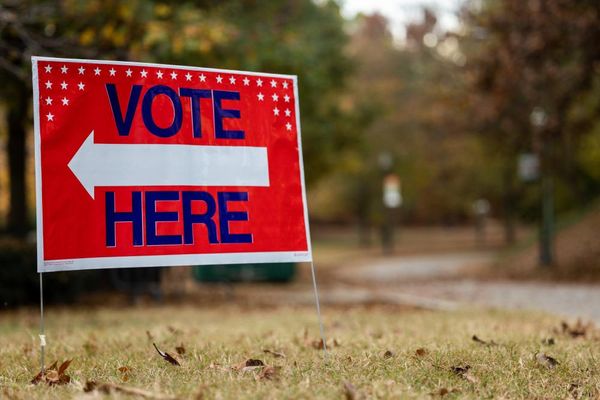
Reform UK recorded its biggest ever byelection win in the election for the Skelton East ward for Redcar and Cleveland council on Thursday, where the party set a new vote record with 65.3% and gaining a council seat from the Tories.
Liberal Democrat leader Ed Davey described “a stonker of a night” for his party, after the Lib Dems held two seats in byelections and gained a seat from the Consevatives in another. Parish councillor Kevin Smith beat Reform UK’s Terry Tume and the Consevative party’s Lucille Baker in the Kenn Valley (Teignbridge) council byelection within the shadow chancellor Mel Stride’s constituency.
Updated
Government plans to merge councils may not save money, and do nothing to solve the very real problems they face, writes Polly Toynbee in her latest opinion piece:
It’s extraordinary that a profound reshaping – and shrinking – of our democracy is happening under our noses, and virtually no one notices. For baffling reasons, soon after the general election a government with a sky-high in-tray of problems embarked on a gigantic local council reorganisation no one knew about.
It didn’t feature in the manifesto, nor in the local government secretary Steve Reed’s conference speech last week – but England has plans to axe unknown numbers of local councillors – some estimates put it at nearly 90%. The white paper outlining these plans actually boasts that there will be “fewer local politicians”, pandering disgracefully to the general scorn for politics. Yet voters trust councillors twice as much as they do Westminister politicians.
For all the talk of localism and connecting to neighbourhoods, these are the unheralded foot soldiers of democracy. It is councillors who run political parties and much that binds their communities. Few people ever join political parties, yet the whole tottering democratic system relies entirely on those who do. Running the council and becoming a councillor is part of party members’ purpose and motivation. Abolishing so many will diminish democratic engagement over time.