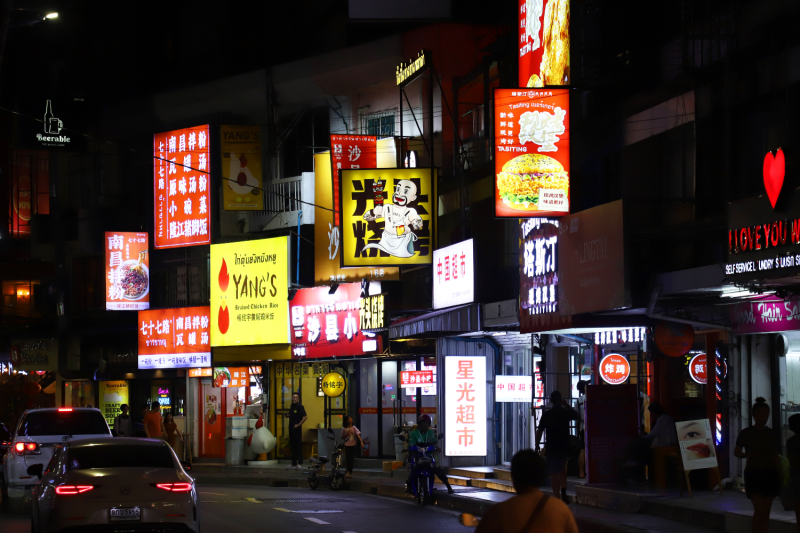
Inspectors took to the streets in Huai Khwang district of Bangkok on Thursday after a claim about a restaurant refusing to accept Thai baht and demanding Chinese yuan caused a social media stir.
District officers were checking all restaurants along both sides of Pracha Rat Bamphen Road — dubbed “Bangkok’s next Chinatown” — to ensure their payment practices comply with the law, said Sombat Kruakeeratitham, the Huai Khwang district chief.
They were responding to a video posted on TikTok by a Chinese man living in Thailand, in which he claimed that a noodle restaurant in the area refused to accept Thai baht, saying it did not have a Thai bank account and only accepted Chinese yuan. The video was posted on May 25 by the account named Jaideebingandfreind.
The foreigner claimed he paid in yuan while also being charged an additional 50 baht. The total worked out to the equivalent of 375 baht, he said.
The man questioned whether it was appropriate for a Chinese restaurant operating in Thailand to have no Thai bank account, accepting only cash in yuan and payments via WeChat, the Chinese super-app.
Inspectors on Thursday found the restaurant in question had placed a QR code linked to a Thai bank account at the counter for customer payments.
Staff there explained that on the day of the incident, the QR payment system had malfunctioned, making it unable to process payments. They asked the customer to pay in cash instead, but the customer did not have any cash. When the QR code was tried again, it worked normally, they said.
The staff insisted that no extra charges were added and that they did not accept yuan as alleged.
The restaurant owner, who is Chinese and has not been named, said the negative publicity had caused him concern. He claimed the restaurant has never accepted payments in yuan and that all revenue is properly transferred into a Thai bank account.
Thursday’s inspections reported no findings of any illegal operations, the district chief.
Authorities plan to introduce stickers for each store in the area certifying that they “accept payments in Thai baht 100%” to build consumer confidence, Mr Sombat said.
He said there had been no such complaints before. District officials regularly meet with 79 legally registered restaurants in the area to discuss operating guidelines and solutions, he added.