Get all your news in one place.
100's of premium titles.
One app.
Start reading
Tom’s Guide
Tom’s Guide
Technology
Sam Hopes

You’re spending too much on gym memberships — why this $11 dumbbell is all you actually need

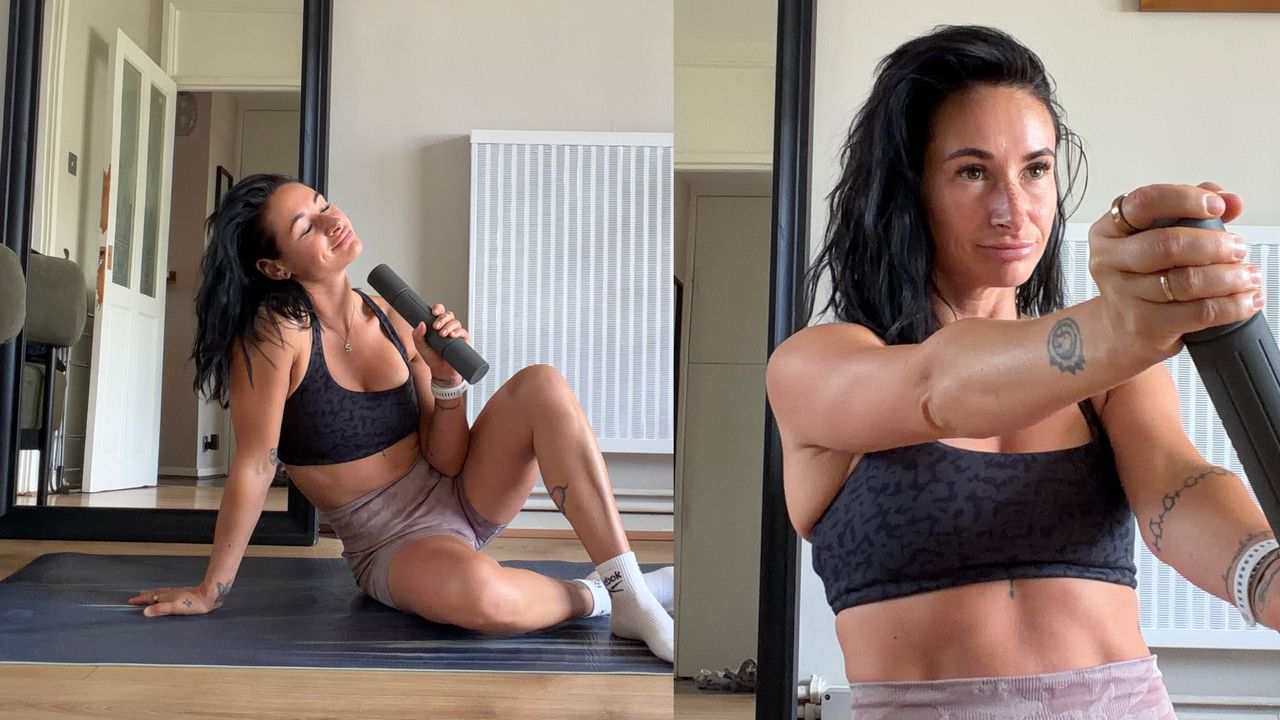
Sam left holding a dumbbell smiling seated on exercise mat, right Sam holding a dumbbell in both hands close up.

I'm a big fan of functional training and accessible but effective workouts. Bang-for-your-buck fitness is my bread and butter, which means you spend less time exercising overall, but still get the many benefits that come from progressive, intentional and consistent training efforts at the correct intensity.

I spend a lot of time explaining to clients that you don't need loads of fancy gym equipment, either, just the right weight selection and kit for the type of workout you want to do. And if you, like me, enjoy resistance training and lifting weights, you can master a full-body workout using just a set of the best dumbbells.

Here's why you can pair it back with just one set of weights, plus a full-body dumbbell workout you can try at home at any level using one or two dumbbells.

Watch: 5-move dumbbell workout that only takes 20 minutes

A post shared by Tom's Guide Fitness (@tomsguidefitness)

A photo posted by on

If you're short on time, you might want to focus on more muscle groups in one session using moves known as compound exercises (ones that work multiple muscles, like push-ups or squats). This means you can train the same muscles several times per week and still hit your workouts two, three, or more times if you wanted to.

If I were rushing through my resistance training for the week, I would try this workout, as it only takes 20 minutes, strengthens your whole body and doesn't require a gym membership. If saving money and time is the goal, here's how to achieve it.

(Image credit: Bodybuilding.com/YouTube)

This workout features just five moves and takes 20 minutes. Set a 20-minute timer. Complete 10-12 reps of your first exercise, then rest for the remainder of the minute. On the next minute, complete the next exercise for 10-12 reps, then rest. Continue through the exercises and complete four rounds.

10-12 reps is just a guideline; you're aiming for about 10 seconds of rest each time, so adjust the reps as needed.

Hex dumbbells are extremely versatile and allow you to switch between standing, kneeling, or floor work with unparalleled grip.

  • Dumbbell push-up to renegade row: Hold a dumbbell in each hand and start in the push-up position with your shoulders stacked over your wrists and core engaged. Bend your elbows and lower your chest toward the ground to perform a push-up. Press the ground away, extend both arms, then row one dumbbell toward your back pocket, keeping the elbow close to your body. Repeat the row on your other side.
  • Dumbbell squat to calf raise: Stand with a weight racked at each shoulder and position your feet roughly shoulder-width apart. Sit your hips back and lower into a deep squat, keeping your chest lifted and back straight. Keep the weight even through your feet. Pause at the bottom, then drive up to stand and lift onto your toes to perform a calf raise. Squeeze your calves at the top, then slowly lower your heels to the ground.
  • Dumbbell bear plank pull-through : Start in a tabletop position with a dumbbell to the left side of you. Tuck your toes and lift your knees to hover above the ground. Push away with your hands to create space between your shoulder blades and draw your navel in as you engage your core. Grip the dumbbell with your right hand and drag the dumbbell over to your right side. Now grip the dumbbell with your left hand and drag it back over to the left.
  • Dumbbell staggered RDL : Stand with your feet hip-width apart and hold a dumbbell in each hand. Take a small step back with your right foot and raise your heel, creating a kickstand with your back leg. Keep a soft bend in your knees and engage your core. Hinge forward at your hips and send your butt back, lowering the weights to either side of your front leg. Keep your shoulders pulled back and gaze slightly ahead. Pause with a flat back, then drive up to stand. Switch sides.
  • Dumbbell swing: Hold a dumbbell in your hands and stand with your feet roughly shoulder-width apart. Pull your shoulders back and down and engage your core. Swing the dumbbell between your legs, hinging forward at your hips and pushing your butt back. A soft knee bend is great, but don't squat. Use your core, glutes and hips to sweep the dumbbell up to your eyeline, then control the weight back between your legs again.

Follow Tom's Guide fitness on Instagram for more workouts, routines, tips, and tricks.

Free weights like barbells and dumbbells are brilliant tools for building strength, power and muscle mass, burning calories, improving cardio fitness, developing coordination and balance and learning key technical lifts and skills.

Both are used in strength programs, cardio workouts, or strength and conditioning routines, and you can lift heavy with either, but you're more likely to save your barbells for maximal lifting, and for many people, dumbbells are more accessible for the home.

I try to program my clients using dumbbells for this reason until we need to work at a much heavier weight or develop a particular technique. I find this particularly beneficial for beginners; when using dumbbells, your weaker side or muscle groups have nowhere to hide — you will lift the weight or fail the lift, and this is a great way to see what areas need improvement or how your form is.

Dumbbell training helps work muscles more evenly, and you can also exercise unilaterally (single-sided), which helps develop strength, balance and coordination.

Dumbbell training can work muscles more evenly, and you can also exercise unilaterally (single-sided), which helps develop strength, balance and coordination, specifically in weaker areas that need focus. For example, I have weak rotator cuff muscles, and I really struggle to lift the same weights on my left and right sides. For that reason, I always use dumbbells for upper-body workouts, as using barbells would just mean my right side picking up the slack.

Another reason to love free weights is a more natural range of motion, which is a big tick for functional training. Where machines and barbells might restrict certain movement patterns, dumbbells don't. That said, you won't be able to load as heavily with dumbbells, and you'll also be limited by your grip strength at certain levels.

Bottom line

I recommend dumbbells for beginners new to weightlifting or those building a home gym in a small space.

Dumbbell training provides better range of motion than barbells and gym machines, and is an effective way to build strength, muscle and power. If you notice a significant difference in ability on one side versus another, work with dumbbells at the ability level of your weaker side and gradually increase the weight. Over time, leveling things up will help you avoid injury and pain associated with weak muscles, tightness, or poor posture.

I would aim for a few sets of weights, if you can, for your upper and lower body and core. Otherwise, a medium set is a great place to start, or invest in adjustable dumbbells if you want to have more options. Unilateral training means you'll only need to invest in one weight, which could save you some extra money.

More from Tom's Guide

Marcy Classic hex rubber dumbbell
Sign up to read this article
Read news from 100's of titles, curated specifically for you.
Already a member? Sign in here
Related Stories
Top stories on inkl right now
One subscription that gives you access to news from hundreds of sites
Already a member? Sign in here
Our Picks
Fourteen days free
Download the app
One app. One membership.
100+ trusted global sources.