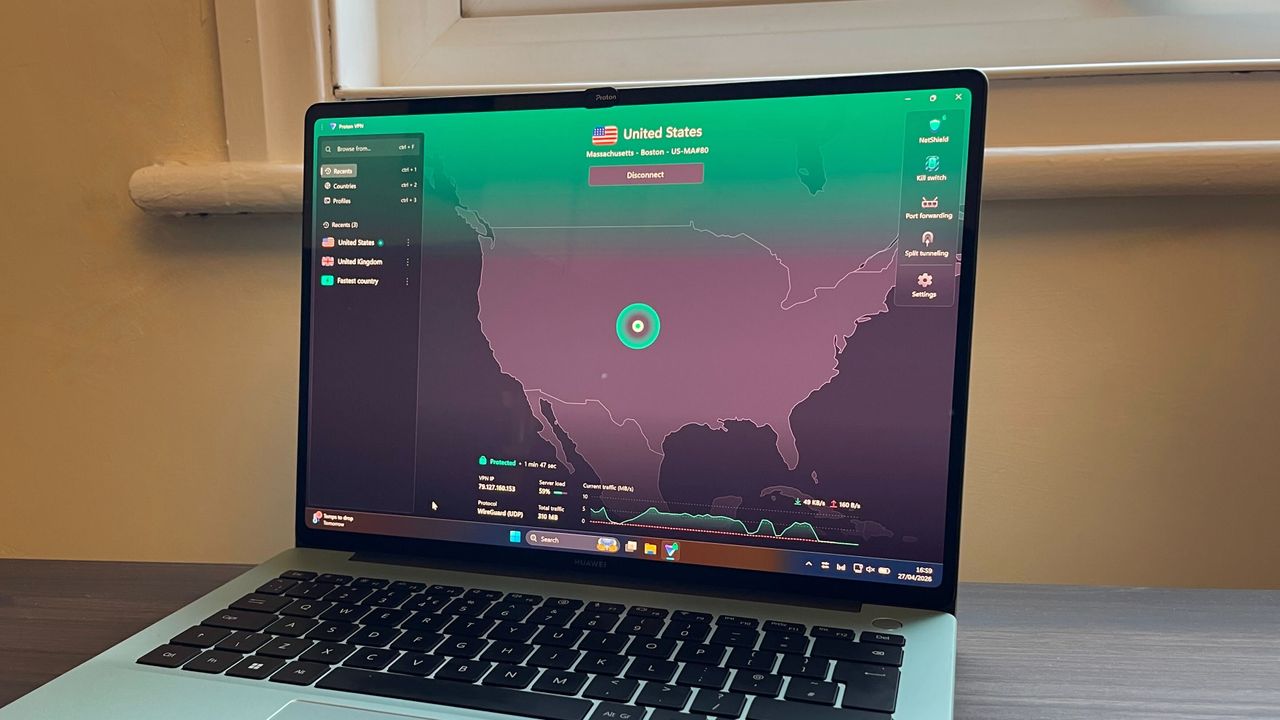
As AI tools become part of everyday life, many people are rethinking their online privacy. A new survey from All About Cookies found that 40% of VPN users say they now use a virtual private network (VPN) specifically to protect their data from AI companies.
It's an understandable concern. Every time you interact with an AI chatbot, upload a document or generate an image, you're sharing information with an online service. But there's one important catch: while a VPN is a great privacy tool, it probably doesn't protect your AI data in the way many people think it does.

Here's what you need to know.
Why people are turning to VPNs
According to All About Cookies' annual VPN survey of 1,000 U.S. adults, concerns about AI are beginning to influence how people think about online privacy.
The survey found that:
40% of VPN users say they use a VPN to protect their data from AI companies.
19% use a VPN when accessing AI tools.
For that reason alone, it's no surprise that VPN awareness has risen sharply over the past year. At the same time, very few respondents correctly identified everything a VPN actually does. Perhaps that last finding may explain the first.
What a VPN actually does
A VPN creates an encrypted connection between your device and a VPN server. There are valuable privacy benefits, and they're one reason VPNs remain popular.
That means it can:
- Hide your IP address from the websites you visit.
- Encrypt your internet traffic, especially when you're using public Wi-Fi.
- Prevent your internet service provider from seeing the contents of your browsing activity.
- Make it appear as though you're browsing from another location.
What a VPN doesn't do
This is where AI enters the picture. If you open ChatGPT, Gemini, Claude or another AI service and type in a prompt, you're voluntarily sending that information directly to the company operating the service.
A VPN doesn't stop that.
Similarly, if you're logged into an AI account, the service can still associate your conversations with your account regardless of whether you're using a VPN.
In other words, a VPN protects the connection, but not the information you choose to share once you reach the website.
How to better protect your AI privacy
A VPN is still a smart addition to your privacy toolkit, especially if you frequently use public Wi-Fi or want to hide your IP address. Just don't expect it to prevent AI services from collecting information that you intentionally submit.
If your goal is to reduce how much information AI companies collect, these steps are usually more effective than relying on a VPN alone:
- Review each AI service's privacy settings .
- Turn off chat history or model training where the option exists.
- Avoid sharing sensitive personal or financial information .
- Use temporary chats or anonymous sessions when appropriate.
- Read each company's data retention policy before uploading documents.
The takeaway
The survey highlights the fact that people are increasingly concerned about what happens to their data when they use AI.
A VPN is an excellent tool for improving online privacy, but it's not an invisibility cloak for AI. If you're using ChatGPT, Gemini, Claude or another AI assistant, the most important privacy controls are usually found inside the service itself — not in your VPN app.
Follow Amanda Caswell and stay ahead of the AI curve