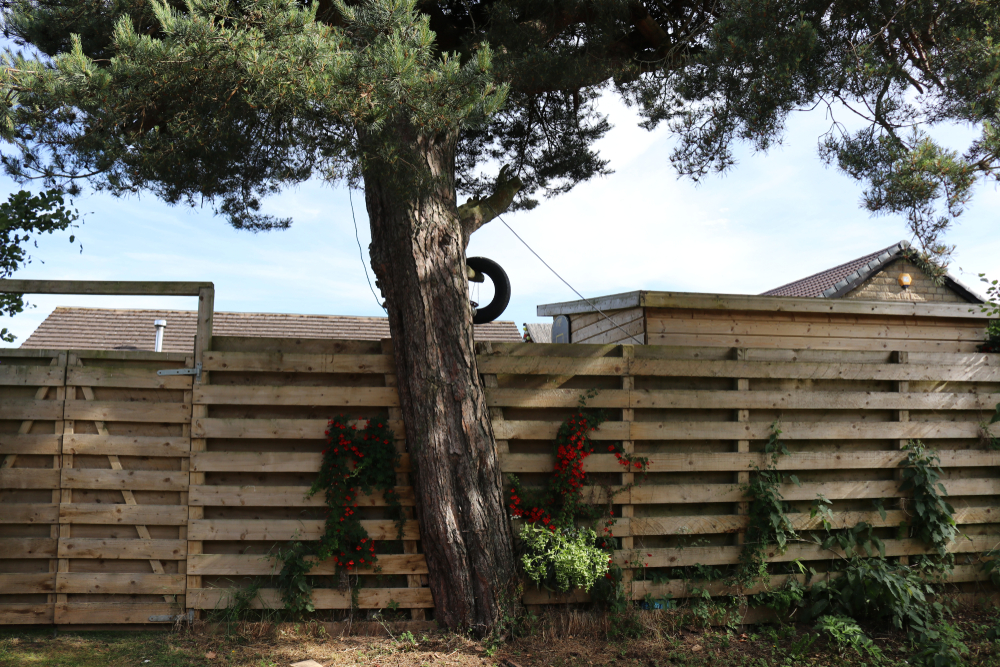
You come home from work and notice something disturbing: your neighbor has cut several large branches off the beautiful shade tree you’ve spent years caring for. They explain that the branches were hanging over their fence, so they had every right to remove them. But weeks later, your tree begins dropping leaves, developing dead limbs, or showing signs of serious stress. Now you’re wondering whether your neighbor crossed a legal line and who will pay if the tree dies.
Neighbor tree trimming laws can be surprisingly complicated, especially when branches cross property boundaries. While neighbors generally have certain rights to trim overhanging vegetation, those rights aren’t unlimited. In some circumstances, damaging or killing someone else’s tree can lead to substantial financial liability.