Get all your news in one place.
100's of premium titles.
One app.
Start reading
The Conversation
The Conversation
Allison M. Roth, Assistant Professor of Biological Sciences, University of Missouri-Columbia

Your local fishing hole is getting browner, changing which fish species thrive and which ones struggle

Increased carbon in runoff from land is turning freshwaters darker. Andrew P. Hendry via Flickr

The lakes, streams and ponds you’ve visited for years are likely looking more brown than they used to. And people who are fishing those waters are likely catching different species and sizes of fish than in the past.

Our research has identified a link between those two developments, which means that trout, bass, perch and whitefish may become less common in unstocked lakes. But pike and walleye anglers may be in for a trophy-sized surprise.

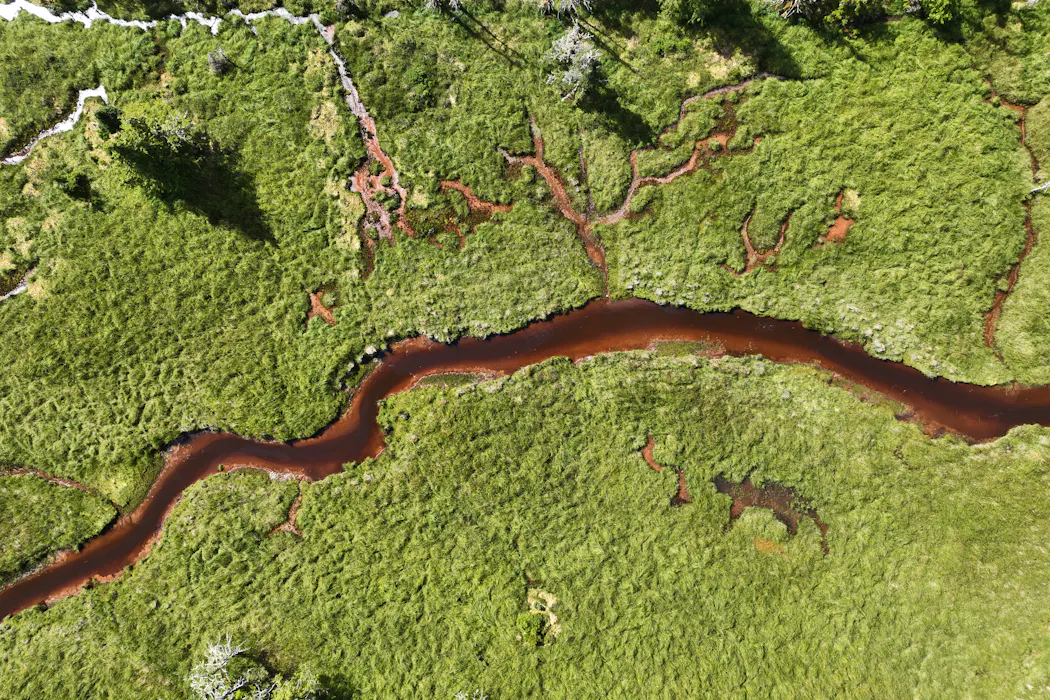
In the past several decades, across much of northeastern North America and northern Europe, many freshwater ecosystems are getting darker, and they are changing in other ways as a result.

What is freshwater browning?

The specific phenomenon of darkening water, called “freshwater browning,” is driven by a few factors. Among the reasons are climate change, as higher temperatures and increased runoff are combining to increase the amount and types of carbon compounds that move from soil and land into bodies of water.

Similarly, as people have taken steps to reduce acidic emissions coming from smokestacks and other sources, less acid has fallen as precipitation, changing the chemistry of soils. Those chemical changes are also increasing the flow of carbon to bodies of water.

Higher levels of carbon make water look brown because it’s basically dissolved plant matter that stains the water like tea leaves would.

Underwater visibility

It’s harder to see in browner waters, which makes it harder for fish to locate prey, escape from predators and find suitable habitat to live in.

Our recent study combined a review of past research with some new analyses to examine how different kinds of fish do in darker water. Working with a large team of experts, we tallied findings from previous studies that looked at the relationship between the darkness of a body of water and fish growth rates in that same body of water.

We found that in browner waters, fish often grow more slowly. The decreased growth rate in individual fish appears to reduce the population sizes of these fish, which may, in turn, change the quantities and proportions of different kinds of fish in a lake.

But freshwater browning doesn’t affect all species of fish equally.

A person's hands hold a fish with large eyes and an open mouth.
Walleyes are among the fish species that seem to thrive in browner waters. AP Photo/Daniel Miller

Unsurprisingly, we found that vision appeared to be quite important for navigating browner waters. When we studied fish communities in 303 Canadian lakes, we found that in lakes with darker water, fish species with larger eyes were more common.

When we looked at data on populations of eight economically important fish in 871 lakes across North America and Europe, we found that browning was associated with smaller populations of several species, including lake trout, lake whitefish, yellow perch, largemouth bass and smallmouth bass. Brook trout abundance was not affected by freshwater browning.

Browning was associated with larger populations of northern pike and walleye.

We believe that’s because walleye, for example, have a specialized retina that helps them see in browner waters with poorer visibility. Similarly, pike have a well-developed lateral-line sensory system that allows them to sense vibration, movement and pressure changes in the water.

A person holding a fishing rod uses a float to remain above the surface of a body of water.
Anglers may want to use different types of lures in darker waters. AP Photo/Ted S. Warren

A change for anglers

People fishing in browner lakes may consider appealing to the senses of the fish that are likely to be in the water. For example, rather than using colorful or shiny lures to attract their visual attention, when fishing in darker water, consider using vibrating lures that a fish’s lateral line system can detect, or scented lures that trigger an olfactory response.

By examining what’s happening to the water and in it, both scientists and people who enjoy fishing can understand the changes we’re seeing and what they mean in practical terms.

The Conversation

Allison M. Roth received funding to conduct this work from the Groupe de recherche interuniversitaire en limnologie/the Interuniversity Research Group in Limnology (GRIL; https://doi.org/10.69777/341034), which is funded by the Fonds de recherche du Québec Nature et Technologie (FRQNT).

This contribution was made possible by a working group grant, led by A. M. R., from the Groupe de Recherche Interuniversitaire en Limnologie/the Interuniversity Research Group in Limnology (GRIL; https://doi.org/10.69777/341034), which is funded by the Fonds de recherche du Québec Nature et Technologie (FRQNT).

This article was originally published on The Conversation. Read the original article.

Sign up to read this article
Read news from 100's of titles, curated specifically for you.
Already a member? Sign in here
Related Stories
Top stories on inkl right now
One subscription that gives you access to news from hundreds of sites
Already a member? Sign in here
Our Picks
Fourteen days free
Download the app
One app. One membership.
100+ trusted global sources.