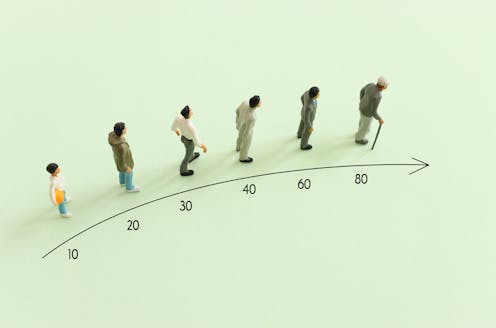
As we journey through life, the risk of developing chronic diseases, including cancer, heart disease and neurological disorders, increases significantly. However, while we all grow older chronologically at the same pace, biologically, our clocks can tick faster or slower. Relying solely on chronological age – the number of years since birth – is inadequate to measure the body’s internal biological age.
This discrepancy has prompted scientists to find ways to determine a person’s biological age. One way is to look at “epigenetic clocks” which consider chemical changes that occur in our DNA as we age. Another approach uses information from medical tests, such as blood pressure, cholesterol levels and other physiological measurements.