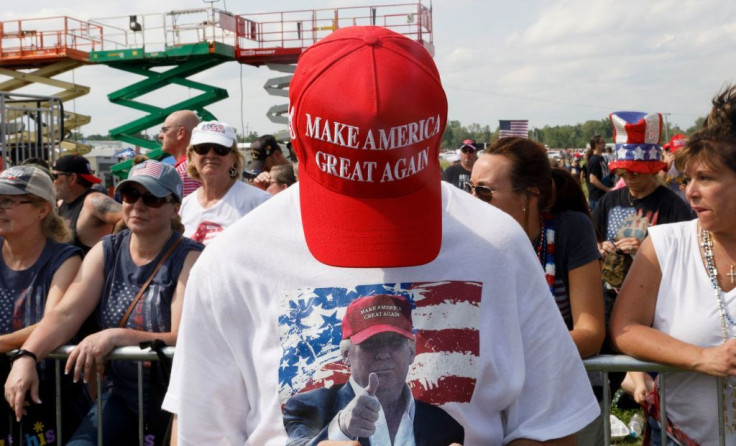
President Donald Trump's decision to strike Iran has fueled growing dissatisfaction among some young conservative activists who backed his 2024 campaign, with many arguing he has abandoned his "America First" agenda and calling instead for a Republican Party that is even further to the right, according to a sprawling report by The Atlantic.
Based on interviews with college Republican activists across the country, the report found that many young Trump supporters remain committed to conservative politics but are increasingly frustrated by what they see as shortcomings on foreign policy and immigration.
Rather than moving away from the GOP, several said they want a party led by figures they believe would pursue a more hardline nationalist agenda than Trump and Vice President J.D. Vance.
Much of the criticism compiled by The Atlantic centers on the U.S. military campaign against Iran. Riley Wilson, a member of a Turning Point USA chapter in Pennsylvania, told the outler that Trump's decision to attack Iran was a "stab in the back" after campaigning on a promise of "no new wars."
Vinson Ratcliffgardy, president of a Turning Point chapter at Angelo State University in Texas, described the conflict as "another sand war in the Middle East" and said it reflected "the very things Trump decried against in his campaign."
The report also found frustration over immigration enforcement, with some activists arguing the administration has fallen short of Trump's pledge to carry out mass deportations. Ratcliffgardy said the "general consensus" among his peers is that the administration "hasn't done enough," adding that "the hope for the future is to deport more."
Several interviewees expressed support for a more explicitly nationalist and Christian conservative platform, with some citing far-right figures such as Nick Fuentes, Tucker Carlson, Candace Owens and Florida gubernatorial candidate James Fishback as influential voices among younger conservatives.
The findings echo broader signs of generational differences within the Republican Party. A Ronald Reagan Institute survey cited by TIME on Wednesday found that 39% of Republican voters under 30 do not identify with the MAGA movement, compared with 25% of Republicans overall.
The poll also found younger Republicans were generally less supportive than older GOP voters of Trump's foreign policy approach, despite continuing to favor an "America First" outlook.
Although Trump remains the dominant figure in the Republican Party, both reports suggest younger conservatives are increasingly debating what the movement should look like after his presidency, with some seeking a successor who would pursue a more uncompromising version of his agenda.