
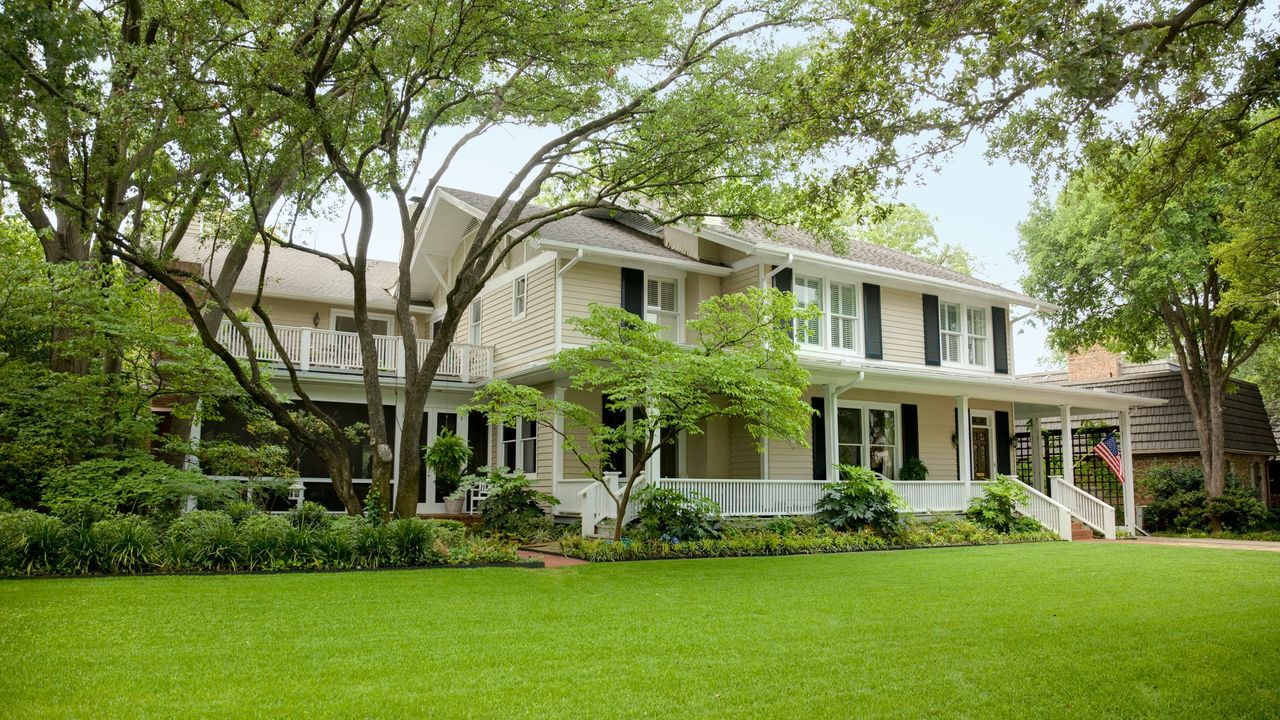
You may want to downsize in retirement if your home has appreciated over the years. Financial planners often recommend this retirement planning move, especially for those who fear a secure retirement is out of reach. That's because, for most retirees, housing is their biggest expense.
The Urban Institute reported that over the past 20 years, the number of older households spending more than half of their income on housing has nearly doubled, rising from 5.2 million to almost 11.7 million.
For many retirees, downsizing could be the solution. Given that median home equity for homeowners ages 65 and over was $250,000 as of 2022, per the Joint Center for Housing Studies of Harvard University, downsizing could give many older Americans an opportunity to shed some of their costs. Some might even walk away with a nice sum of money.
But while downsizing in retirement makes sense for some people, it’s not a given that it will work for you. And it pays to consider the benefits of staying in your home before rushing to put it on the market.
Downsizing in retirement robs you of connection
It’s not an uncommon thing to grow emotionally attached to the home you raised your family in. If that’s the case, you may find that downsizing is a difficult process.
"The home is where the family still gathers," says Adriana Montes, founder and CEO of Florida Dreams Realty Group. "Grandkids, holidays, the guest room, the space to host. Retirees who downsize too aggressively often regret losing the home that keeps the family coming back."
There’s also the comfort of staying in the home and community you love. A 2024 AARP report found that among Americans ages 50 and over, 75% have a strong preference for staying in their current home as they age. And 73% hope to remain in their communities.
A significant drawback of downsizing is giving all of that up. Even if you can stay in the same neighborhood, it’s hard to replace the familiarity that comes with being in the same home for many years.
After all, you know your home’s quirks, like the closet that warps every summer when temperatures rise or the one window that seems to leak every time it rains. In a new home, you face a world of unknowns. And that extends to maintenance and repair expenses, which can be tricky to budget for at any stage of life and particularly tough to cover once you’re on a fixed income.
Moving to a different neighborhood, meanwhile, might feel jarring at a time in life when you’re already making other adjustments. Many retirees have difficulty transitioning into a routine that doesn’t involve a day job and office life. Downsizing and moving to another neighborhood might only add to the burden.
Most importantly, you'll need to weigh the friendships in your current area with those you might make in a new location or retirement community. Research shows that social connection is critical to a happy retirement and that loneliness exacts a cost on society and our health.
Downsizing doesn’t always produce big cost savings
Another thing to consider is that downsizing doesn’t always produce the savings it’s expected to. Some retirees give up larger homes and move to condo or townhouse communities where the fees are high. Sometimes, those fees come with the benefit of robust amenities. But they can also erode the financial benefit of downsizing.
Sander Scott, Realtor & Broker at Net Real Estate, says, "[Retirees] consider condos or smaller properties in an effort to seek relief from the responsibility of maintenance and to save money. The may soon discover that they haven't eliminated those costs so much as simply shifted them somewhere else."
For example, Scott explains, a condo can free an owner up from mowing the lawn, shoveling snow, or maintaining the exterior.
"But," he says, "the financial obligation shows up in the form of association dues, special assessments, and rules that you no longer control. The feeling of responsibility changes, but the expense is still there."
Here are some additional costs to consider when weighing downsizing vs aging in place.
- Property taxes : Longtime homeowners may benefit from programs that cap annual tax assessments.
- Capital gains taxes : As homes appreciate, more seniors face capital gains exceeding the $250,000 exemption for singles and $500,000 for married couples.
- The cost of selling a home : Repairs, landscaping and agent fees can add up. You should budget about 8% to 10% of your home's sale price for selling costs, according to Zillow .
Downsizing may not even be an option for some older Americans
Even if downsizing is something you're interested in doing, it may prove more difficult than expected. Redfin reports that 54% of baby boomer homeowners are mortgage-free. And even among older Americans with mortgages, many have low rates.
A separate Redfin report found that as of early 2024, 88.5% of U.S. homeowners with mortgages have interest rates below 6%. More recently, though, the share of homeowners with mortgage rates above 6% surpassed the share with rates below 3%, according to Realtor.com.
But many long-term homeowners locked in low mortgage rates by refinancing during the pandemic, when sub-3% mortgages for 30-year loans were not uncommon. With the average 30-year mortgage rate today sitting at roughly 6.5%, many older homeowners are apt to be hard-pressed to downsize if they’re not mortgage-free.
"If downsizing means taking out a new mortgage at today's rates, the monthly savings may disappear entirely," Scott says.
Is downsizing in retirement right for you?
Ultimately, the decision to downsize is a personal one. If you’re tired of the same old walls and the same burdensome repairs, you may decide that shedding square footage makes sense for you. But if you love your community and don’t want to leave, that’s reason enough to stay put if you can afford to.
Also consider your family situation. If your children have grown and live far away, downsizing could create financial and logistical challenges that prevent them from visiting as often as they’d like. And if you have hobbies that require more space, like woodworking or painting, downsizing might interfere with your ability to stay as busy as you want.
If you do decide to stay in your home, know that there are modifications you can make to age in place. Some of these can be reasonably affordable, like installing grab bars in bathrooms, while others may be more costly, like widening doorways and putting in slip-resistant flooring.
"Aging in place is usually cheaper than people think," Montes says. "A $15,000 to $30,000 investment in single-floor living, a walk-in shower, wider doorways, and better lighting can let you stay in a home you love for another decade—for a fraction of the cost and upheaval of selling, moving, and buying."
Ultimately, you’ll need to figure out what makes the most sense logistically, emotionally, and financially. The key, either way, is to recognize that downsizing isn't automatically your best option.