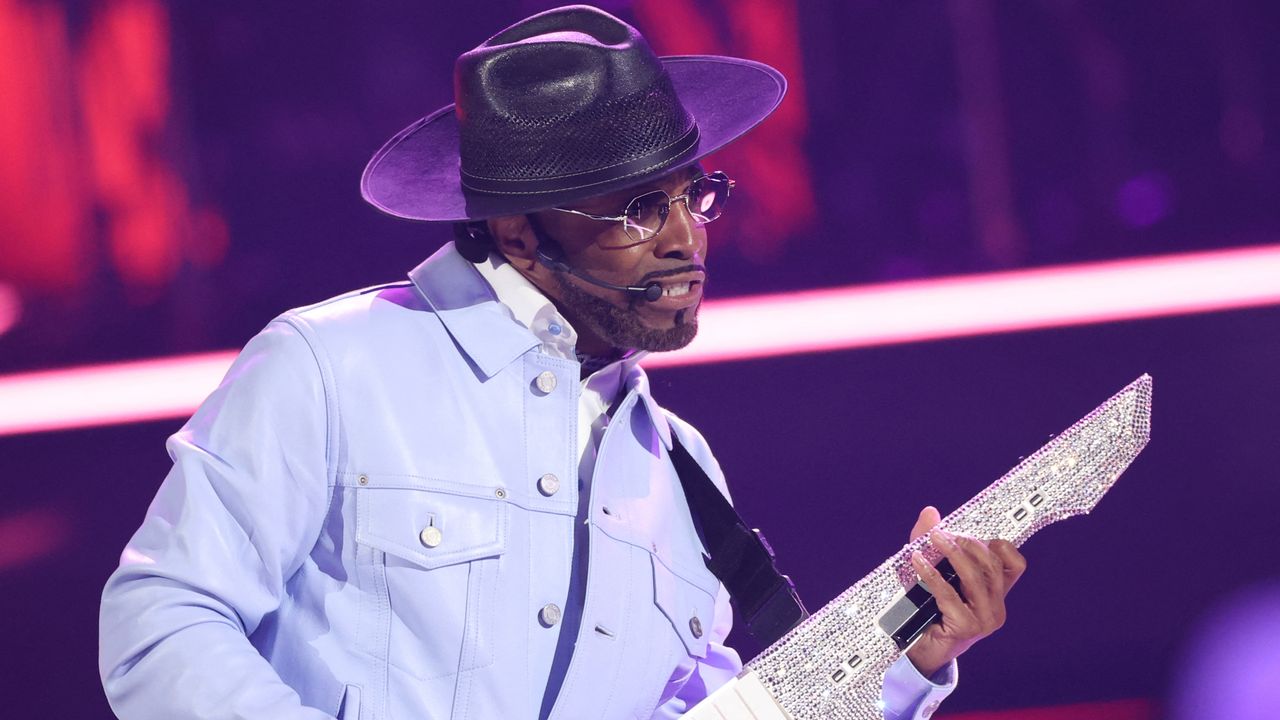
As the originator of new jack swing, Teddy Riley has produced some big records in his time, but perhaps none so iconic as Blackstreet’s 1996 hit No Diggity, a US number one that featured a rap from Dr Dre and a verse from Queen Pen.
Now, speaking to TmrO Network, Riley has been explaining how he came up with the famous beat for the song, which is built around a 1-bar sample of Bill Withers Grandma’s Hands, which dates from 1971.

Sitting in his studio, Riley explains that he came to the sample in 1994 via his collaborator William "Skylz" Stewart, who was playing around with the loop but couldn’t get it to sync.
“I said, ‘Yo, what you gonna do with that?’” remembers Riley. “He said, ‘I don't know.’ So I said, ‘Give me the sample.’”
Discussing that single bar phrase, Riley says: “That's the grits, right there. So I had to turn it into grits and eggs.”
He did this by speeding and pitching it up, to add a bit more urgency, and then cutting it into four slices on his MPC so it could easily be synced to tempo.
And then, of course, there’s that famous piano stab turnaround, which Riley compares to the ‘ba-dum-tss!’ that a drummer might play on stage after a comedian has landed a punchline.
“I wanted that because I [wanted] to make it to feel like there's a tag on the end,” says Riley.
As you’ll be aware if you’ve heard No Diggity, this is also the only thing that resembles a bass part on the song. Asked why he didn’t put a proper bassline in throughout, Riley says that he just couldn’t come up with anything that made sense.
“You just can't put bass on a song like this,” he argues. “What would you put? We tried with the band, we tried to have the bass in there. It just doesn't work.”
Keeping things sparse in the low-end certainly leaves plenty of room in the mix for the vocal melody, which is dripping in blues and soul history. Riley suggests that he wanted this to remain in keeping with that Withers’ sample – “I didn't want to take it away from its roots” – and says that No Diggity marked a turning point for him musically, as he started to explore blues, jazz and soul and looking for ways to fuse them as a producer.
Perhaps the biggest lesson we can all take away from the making of No Diggity, though, is not to be too heavy-handed when we make our own music.
“You don't have to do too much,” says Riley. “This wasn't over-produced, because, you know how we can over produce a song and be like, this is too much? We didn't have to do much.”