
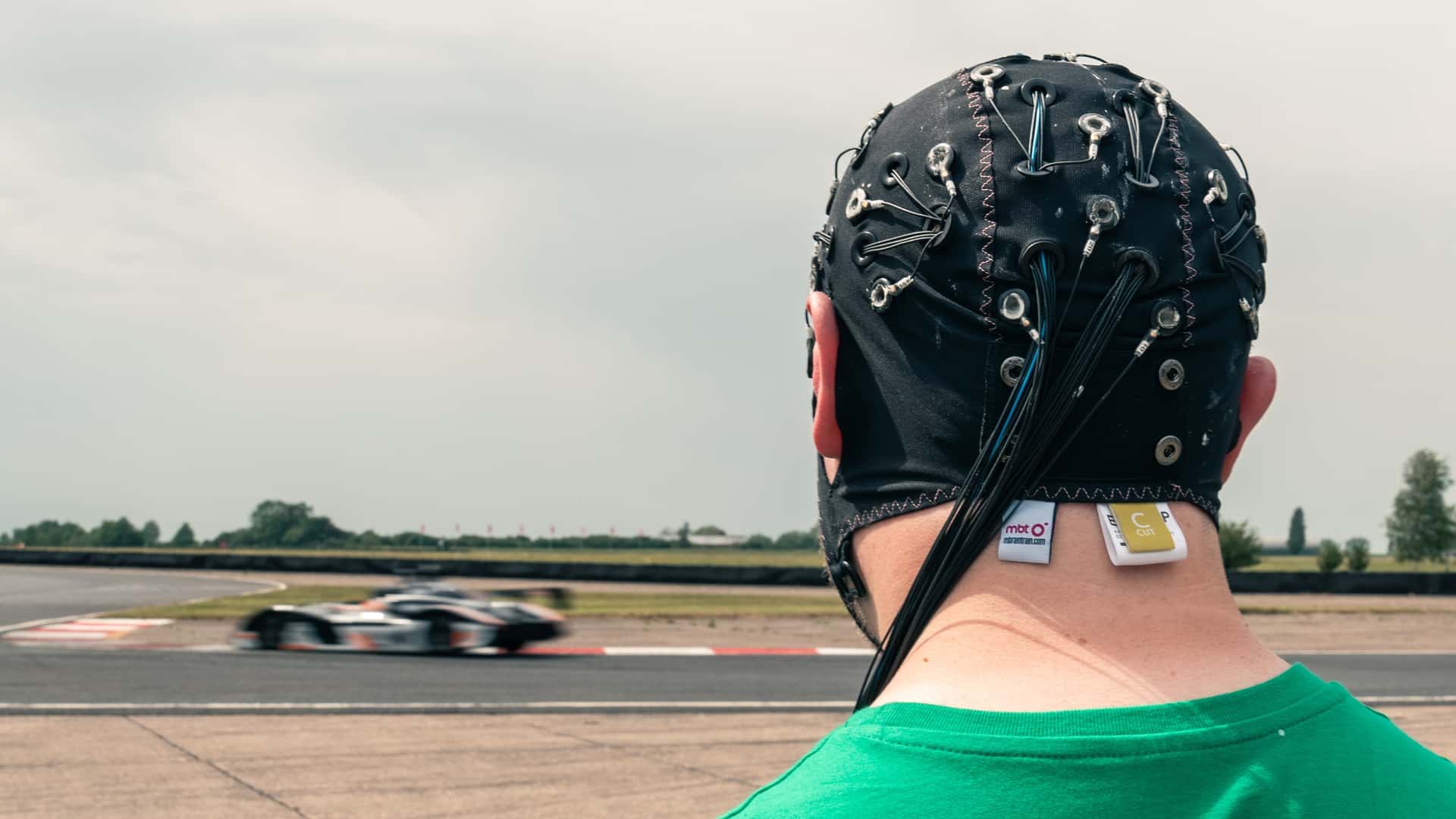
Castrol has published a brain-and-body study on driving that tries to pin down why some laps feel electric while others just feel quick. The company wired up drivers with brain, eye, heart, and skin sensors across five closed-course runs, then had UK-based neuroscience firm Brainbox sift the data to separate thrill from fear.
The main takeaway cuts across a common assumption in the car world: speed by itself does not guarantee a thrill. Castrol says the sweet spot comes when three things crest together: a jolt of physical stimulation, a demanding mental task, and an emotional state where excitement edges out fear.