Get all your news in one place.
100's of premium titles.
One app.
Start reading
The Economic Times
The Economic Times
Trending Desk

Yayoi Kusama Death Reason: Japanese avant-garde artist known for her iconic polka dots dies at 97, museum says she painted until her final days

Japanese avant-garde artist Yayoi Kusama, renowned for turning her hallucinations into striking artworks, has died at the age of 97. Kusama, whose celebrated works included colourful polka-dot paintings, iconic pumpkin sculptures and immersive Infinity Mirror Room installations, died on August 14 at a hospital in Tokyo, according to the Yayoi Kusama Studio.

Yayoi Kusama Death Reason

According to a statement from the Yayoi Kusama Museum, Kusama died at a hospital on August 14. The museum said she continued painting until her final days. No cause of death was disclosed.

Also Read: Yayoi Kusama saw dots everywhere: Japanese artist returned from US in 1973, lived voluntarily in a psychiatric hospital from 1977 until her death

The statement read, “Throughout an extraordinary lifetime devoted entirely to artistic creation, Kusama pursued an internationally acclaimed career as a pioneering avant garde artist whose creative practice encompassed visual art, performance, fiction, and poetry. She continued to paint until her final days, never setting aside her brush, and continued exploration of forever love and eternal soul.”

Yayoi Kusama’s Early Life in Japan

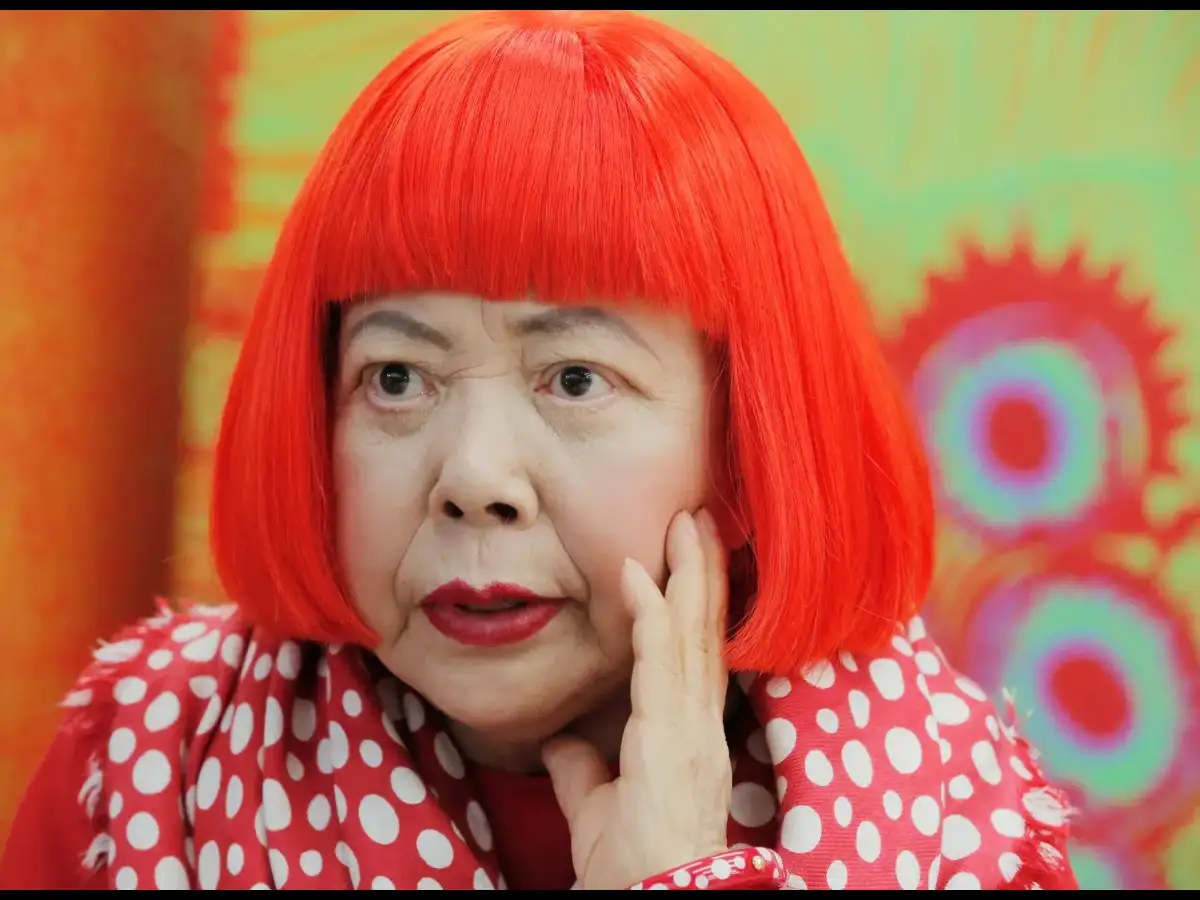
Yayoi Kusama was born in Matsumoto, Japan, in 1929. She went on to become a major figure in modern art, working across painting, sculpture, performance, writing and installation art. Her distinctive bright red bob, psychedelic colours and signature polka-dot patterns eventually became closely associated with her artistic identity.

Kusama’s Training in Traditional Japanese Art

During her school years, Kusama received guidance from Japanese painter Kakei Hibino. She later attended the Kyoto Municipal School of Arts and Crafts, where she studied traditional Japanese painting.

Yayoi Kusama Moved to New York

In 1957, Kusama moved to New York, where she quickly established herself within the city's experimental art scene.

She began exhibiting her distinctive net paintings and soft sculptures, while also organising body-painting events and artistic happenings connected to protests against the Vietnam War. She also explored writing, producing fiction and poetry.

Kusama is often credited with influencing or having an impact on artists such as Andy Warhol during this period.

Kusama Returned to Japan

As her mental health deteriorated, Kusama returned to Japan in 1973. Four years later, she voluntarily moved into a psychiatric hospital, where she continued to live. Despite residing at the hospital, Kusama maintained her artistic practice. She reportedly travelled to her nearby studio each morning to continue working on her art.

International Fame and Global Recognition

Kusama's reputation continued to grow over the years, with her exhibitions drawing large crowds around the world. Her distinctive artworks became highly sought after, with some of her pieces commanding significant prices in the international art market.

Sign up to read this article
Read news from 100's of titles, curated specifically for you.
Already a member? Sign in here
Related Stories
Top stories on inkl right now
One subscription that gives you access to news from hundreds of sites
Already a member? Sign in here
Our Picks
Fourteen days free
Download the app
One app. One membership.
100+ trusted global sources.