Get all your news in one place.
100's of premium titles.
One app.
Start reading
The Times of India
The Times of India
World
Aadrita Halder

Xi-Trump talks: Tariff cuts, Iran, AI dialogue and more shape US-China ties

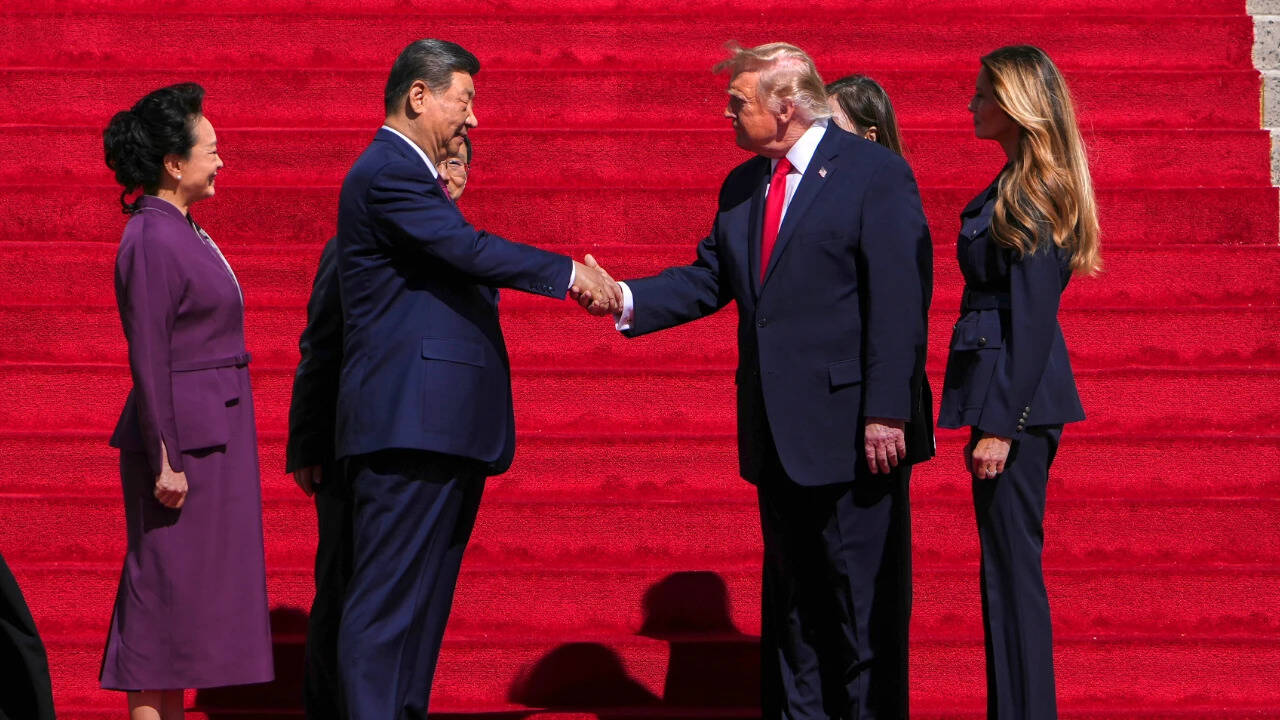
Chinese President Xi Jinping wrapped up his three-day state visit to Washington on Friday, announcing that he will meet US President Donald Trump twice more before the end of the year, taking the total number of face-to-face meetings between the leaders of the world’s two largest economies in 2026 to four.

Get breaking news anytime, anywhere. Download the TOI app now!

The visit focused on strengthening the US-China relationship, with the two sides reaching agreements and setting up mechanisms covering trade, investment, energy, drug trafficking, critical minerals and emerging technologies. Trump and Xi also discussed global issues including the war in Iran, while agreeing to maintain dialogue and pursue a relationship based on strategic stability, respect, fairness and reciprocity.

The visit was criticised by some in the US as heavy on ceremony but light on substantive breakthroughs, with no major progress announced on issues including trade or the safety of artificial intelligence. The two leaders, however, sought to project continuity in their efforts to preserve a stable relationship and agreed to continue discussions on several areas in the months ahead.

The state visit, which concluded on September 25, marked the first visit by a Chinese president to the White House in more than a decade.

$30 billion tariff reduction framework

The two countries operationalised the US-China Board of Trade and the US-China Board of Investment, which were established after the May 2026 summit in Beijing.

Under the Board of Trade, the two sides reached consensus on recommendations for more favourable tariff treatment for $30 billion of non-sensitive goods in each direction. The board also launched a working group on market access barriers in agriculture.

US exports covered under the recommendations include agricultural goods, fish and seafood, logs and wood products, cosmetics and medical devices, while US imports include consumer products such as small appliances, toys, holiday decorations and children’s car seats.

China will also import at least 10 million metric tons of US coal in 2027 and again in 2028.

The Board of Investment will provide a government-to-government channel to discuss investment opportunities and investment-related barriers. Separately, the two countries agreed to continue work on US concerns over supply shortages involving rare earths and other critical minerals, with the aim of restoring shipments to appropriate levels.

China and the US had already been working on a reciprocal tariff reduction framework covering $30 billion worth of products from each side.

Focus on drugs and energy

The United States welcomed China’s scheduling of orphines, a class of deadly drugs, and noted China’s new export controls on two fentanyl precursor chemicals. Washington also encouraged the permanent scheduling of these and other substances and chemicals to curb the flow of illicit precursors to drug producers in North America.

The United States said that, acting on information from US law enforcement, China arrested 21 Chinese citizens in August 2026 for the manufacture and distribution of precursor chemicals to illicit drug producers in North America. The US also encouraged maximum sentences, including the death penalty where applicable.

Trump also urged Xi to increase the production of refined petroleum products to help stabilise global supply.

New dialogue on ‘super intelligence’

The two leaders agreed to use the term “super intelligence” rather than “artificial intelligence” for applicable emerging technologies.

The US and China established the U.S.-China Super Intelligence Dialogue to exchange views on the risks and benefits linked to such technologies, with the next exchange scheduled for November 2026. They also agreed to establish a bilateral communication channel for incidents involving super intelligence.

The two countries also agreed on a $30 billion reciprocal tariff-reduction arrangement and to launch dialogue on AI under an eight-point consensus reached during Xi’s visit, according to China’s state news agency Xinhua.

Global issues and strategic stability

Trump and Xi discussed Russia, North Korea and Iran and agreed that Iran can never have a nuclear weapon. They also agreed that no country or institution can be allowed to impose tolls on international waterways.

The two leaders agreed to support each other as the respective hosts of the G20 and APEC, with both intending to attend each other’s summits.

Trump also advocated trilateral arms control negotiations involving the United States, Russia and China.

The leaders recalled that the United States and China had been allies during World War II and fought together in the war. Trump also highlighted the US forward military presence in the Indo-Pacific, which the White House said had contributed to generations of American prosperity.

Sign up to read this article
Read news from 100's of titles, curated specifically for you.
Already a member? Sign in here
Related Stories
Top stories on inkl right now
One subscription that gives you access to news from hundreds of sites
Already a member? Sign in here
Our Picks
Fourteen days free
Download the app
One app. One membership.
100+ trusted global sources.