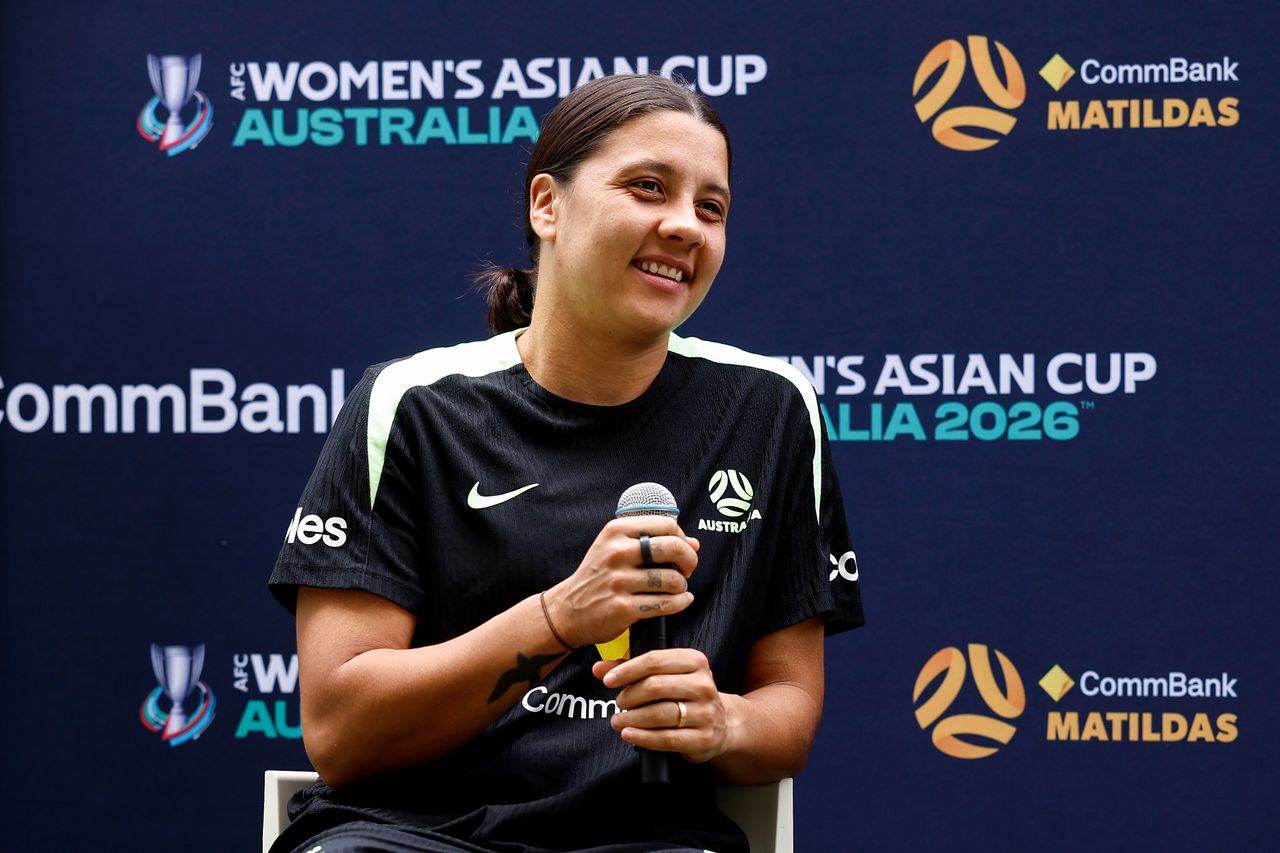
The AFC Women’s Asian Cup 2026 kicks off in March, with Australia set to host their second major women’s football competition in three years after the 2023 World Cup.
Twelve nations will compete from March 1-21, with a total of 27 matches taking place across Perth, Sydney and the Gold Coast.
With nine titles under their belt, reigning champions China are the most successful team in the competition. But what is the tournament format, who are the teams and who are the favourites to lift the trophy this time? FourFourTwo has your complete guide.
Tournament Overview
When does the tournament kick off?
The Women's Asian Cup will start on March 1 2026, with the final scheduled on March 26.
Who are the hosts and what are the venues for the 2026 Women's Asian Cup?

Australia host the 2026 tournament for the first time since 2006, where they finished runners-up.
Four football associations initially submitted their interest to host the tournament however following the withdrawals of Jordan, Saudi Arabia and Uzbekistan bids, Australia was selected as the host nation in March 2024.
The 27 matches will be split across three Australian venues:
Perth, Western Australia
Perth Stadium: 60,000 capacity
Perth will host the opening ceremony match on 1 March, featuring the Matildas, and a semi-final.
Perth Rectangular Stadium: 20,500 capacity
Perth Rectangular Stadium will host 6 group stage matches and 2 quarter-finals
Sydney, New South Wales
Stadium Australia: 79,500 capacity
Stadium Australia, Sydney, will host one group stage match featuring the Matildas, two Quarter-finals, a Semi-final and the Final.
Western Sydney Stadium: 30,000 capacity
Six group stage matches will be played here
Gold Coast, Queensland
Gold Coast Stadium: 28,000 capacity
Four group stage matches to be held on the Gold Coast, including the Matildas second group match.
Format of the competition
What is the format of the Women's Asian Cup?

The 12 qualified teams are split into three groups of four, which were seeded based on world rankings.
Group A: Australia, South Korea, Philippines, Iran
Group B: North Korea, China, Uzbekistan, Bangladesh
Group C: Japan, Vietnam, Chinese Taipei, India
The top two teams from each group will qualify automatically, with the final two spots in the last eight being awarded to the best third-placed teams.
This will then progress in the usual way to semi-finals and a final.
There are also implications for qualification for the 2027 Women’s World Cup. With six spots available, the semi-finalists will automatically qualify. The four teams eliminated in the quarter-finals will then play off against each other, with the two winners advancing to the inter-confederation play-offs.
Australia
Australia (Hosts, world ranking: 15)

The Matildas will be looking to add a second Asian Cup title to their trophy cabinet, having lifted the trophy just once before in 2010.
Australia, now under the guidance of former Arsenal manager Joe Montemurro, have the home advantage, which they used to great effect during the 2023 Women’s World Cup when they reached the semi-finals before being knocked out by England.
The squad boasts a wealth of world-class talent, with plenty of familiar faces for Women’s Super League fans.
Captain Kerr
Much of the spotlight will once again fall on captain Sam Kerr. The Golden Boot winner at the last tournament endured a frustrating 20-month spell on the sidelines after suffering an ACL injury in 2023. She eventually made her Chelsea comeback in September last year and returning to international duty soon after.
While she is yet to regain the relentless consistency we associate with the super striker, Kerr's wealth of experience and know-how in big moments remain crucial to Australia's hopes of a deep run.
Fowler returns from injury
Montemurro has selected Manchester City's star attacker Mary Fowler despite limited game time since returning from a serious knee injury.
Sidelined since April, Fowler has played less than 80 minutes across the WSL and Women's FA Cup since her return in February.
Strong WSL core
Australia’s defensive and midfield core is equally strong. Chelsea’s Ellie Carpenter and Arsenal trio Steph Catley, Kyra Cooney-Cross and Caitlin Foord are headline names, while the WSL is also represented by Alanna Kennedy (London City Lionesses) and Katrina Gorry (West Ham), making her fourth Asian Cup appearance.
Tottenham defender Charli Grant misses out on the 26-player squad, having not played club football since November following a knee injury.
China
China PR (Reigning champions, world ranking: 17)

China remain a dominant force in Asian Cup history with a record nine titles, including their most recent triumph in 2022.
Their recent global form has been less consistent. At the 2023 Women’s World Cup, China suffered a disappointing group-stage exit, including a heavy 6-1 loss to eventual finalists England, failing to progress beyond the group stage of the competition for the first time.
China will also be wanting to forget their most recent meeting with the Lionesses in November, where the Asian champions were demolished 8-0 at Wembley.
Despite those setbacks, China arrive at this Asian Cup as the reigning champions and their pedigree in this competition keeps them among the favourites once again. Their 2022 victory was one of the most dramatic in the competition’s history, as they overturned a 2–0 deficit to beat South Korea 3-2 in the final.
Japan
Japan (world ranking: 8)

Based on world rankings alone, Japan go into this tournament as favourites. Their squad is packed with talent familiar to WSL fans, with several players now established at top English clubs.
Among the standout WSL names are Yui Hasegawa, Aoba Fujino and goalkeeper Ayaka Yamashita of Manchester City, Manchester United's Hinata Miyazawa, Maika Hamano of Spurs (on loan from Chelsea), and Kiko Seike who is a key player for Brighton. This core has helped Japan thrive on the world stage in recent times.
Japan lifted the Asian Cup in 2014 and 2018, and reached the semi-finals in 2022 before a narrow penalty shootout defeat to China, while their World Cup victory in 2011 remains historic.
At the 2023 World Cup, Japan delivered arguably the most memorable moment of the tournament with a 4-0 victory over eventual champions Spain in the group stage. They went on to beat Norway in the round of 16 before falling to Sweden in the quarter-finals.
Japan will always go into this tournament with a target on their back and their 2022 heartbreak will only make them more determined.
North Korea
North Korea (world ranking: 9)

This team is bursting with history, and they remain one of the competition's powerhouses alongside Japan, China and Australia. North Korea are three-time champions, lifting the Asian Cup in 2001, 2003 and 2008 and also reached the quarter-finals of the 2007 World Cup.
But their progress was derailed after five players tested positive for a banned substance at the 2011 World Cup in Germany. A subsequent four-year ban ruled them out of the 2015 tournament then later failed to qualify for the 2018 Asian Cup and 2019 World Cup. They then withdrew from the 2022 and 2023 editions due to Covid-19 restrictions. Despite their absence from major tournaments, they curiously remain ninth in FIFA's world rankings.
At youth level though, they have shone. North Korea won three of the last nine under-17 Women’s World Cups. including the most recent edition in 2025. The country's structured development system whereby young girls get professional coaching during school years and huge incentives to represent the national team, has produced a pathway of talent.
Perhaps unsurprisingly, every player in the current squad competes domestically. Their return to international comeptition in this Asian Cup will provide an interesting benchmark of whether they have maintained their credentials among the continent's elite.
South Korea
South Korea (world ranking: 21)
South Korea achieved their best-ever finish at the last Asian Cup, finishing as runners-up after a narrow 3-2 defeat to China in the final.
They have qualified for four World Cups, reaching the round of 16 in 2015 and appearing again in 2003, 2019 and 2023. South Korea have also featured in every Asian Cup since 2001 and remain consistent contenders in the region.
Vietnam
Vietnam (world ranking: 36)
Vietnam have featured in every Asian Cup since their debut in 1999 and hosted the tournament twice, in 2008 and 2014.
They are a major force in Southeast Asia, although they have yet to progress beyond the group stage on the Asian stage.
Vietnam reached their first World Cup in 2023 but faced a difficult group and suffered heavy losses against the USA, the Netherlands and Portugal.
Chinese Taipei
Chinese Taipei (world ranking: 40)
Chinese Taipei once dominated the Women’s Asian Cup, winning three consecutive titles between 1977 and 1981, and they will arrive down under hoping to revive that golden era.
After periods of absence, they returned to the tournament in 2022, losing on penalties in the quarter-finals. Their qualification for 2026 was emphatic, topping their group with a perfect record and standout performances from forward Su Yu-hsuan.
This tournament marks an exciting opportunity for Chinese Taipei to aim to re-establish themselves among Asia’s elite.
Philippines
Philippines (world ranking: 41)
The Philippines made history by qualifying for their first Women’s World Cup in 2023. Although they exited in the group stage, a 1–0 win over co-hosts New Zealand delivered an unforgettable moment of national pride.
Their rise has been rapid. They reached the semi-finals of the 2022 Asian Cup, losing to South Korea, and that run secured their historic World Cup debut. The squad will hope to build on that momentum at this year’s tournament.
Uzbekistan
Uzbekistan (world ranking: 49)
Uzbekistan return to the Women’s Asian Cup for the first time since 2003 after a dramatic qualifying run that ended with a 4–2 penalty shootout win over Nepal.
They enjoyed big victories over Sri Lanka and Laos in qualifying before surviving a tense shootout thanks to goalkeeper Maftuna Jonimqulova’s heroics. Their qualification is a major step forward, especially as they prepare to host the 2029 edition, and they are quickly becoming fan favourites back home.
India
India (world ranking: 67)
India enter the draw from the lowest pot, but this tournament marks the first time they have qualified for the tournament on merit. Women’s football in India continues to face significant challenges, with limited funding, infrastructure and opportunities compared to the men’s game, despite the women often outperforming them internationally.
India hosted the 2022 Asian Cup but were forced to withdraw during the group stage due to a COVID-19 outbreak within the squad. After that heartbreak, this edition offers a fresh chance to reignite national interest and inspire a new generation of girls to play football.
Iran
Iran (world ranking: 68)
Iran return to the Asian Cup for only the second time after claiming the final qualification spot, defeating Jordan again, as they did ahead of the 2022 edition.
Despite being the only qualifying team to lose a match, Iran's resilience is notable. Their head coach Marziyeh Jafari said: "I am really happy that we were able to make the hearts of the Iranian people happy. Qualifying for the AFC Asian Cup was not easy!”
Bangladesh
Bangladesh (world ranking: 112)
Bangladesh will make their first ever Asian Cup appearance in 2026 after a qualifying campaign that showcased the progress of their grassroots development.
Despite arriving as the lowest-ranked side, the young team will bring momentum from winning all three qualifiers, scoring 16 goals and conceding only once.
The tournament marks a special moment for women and girls football in Bangladesh.