
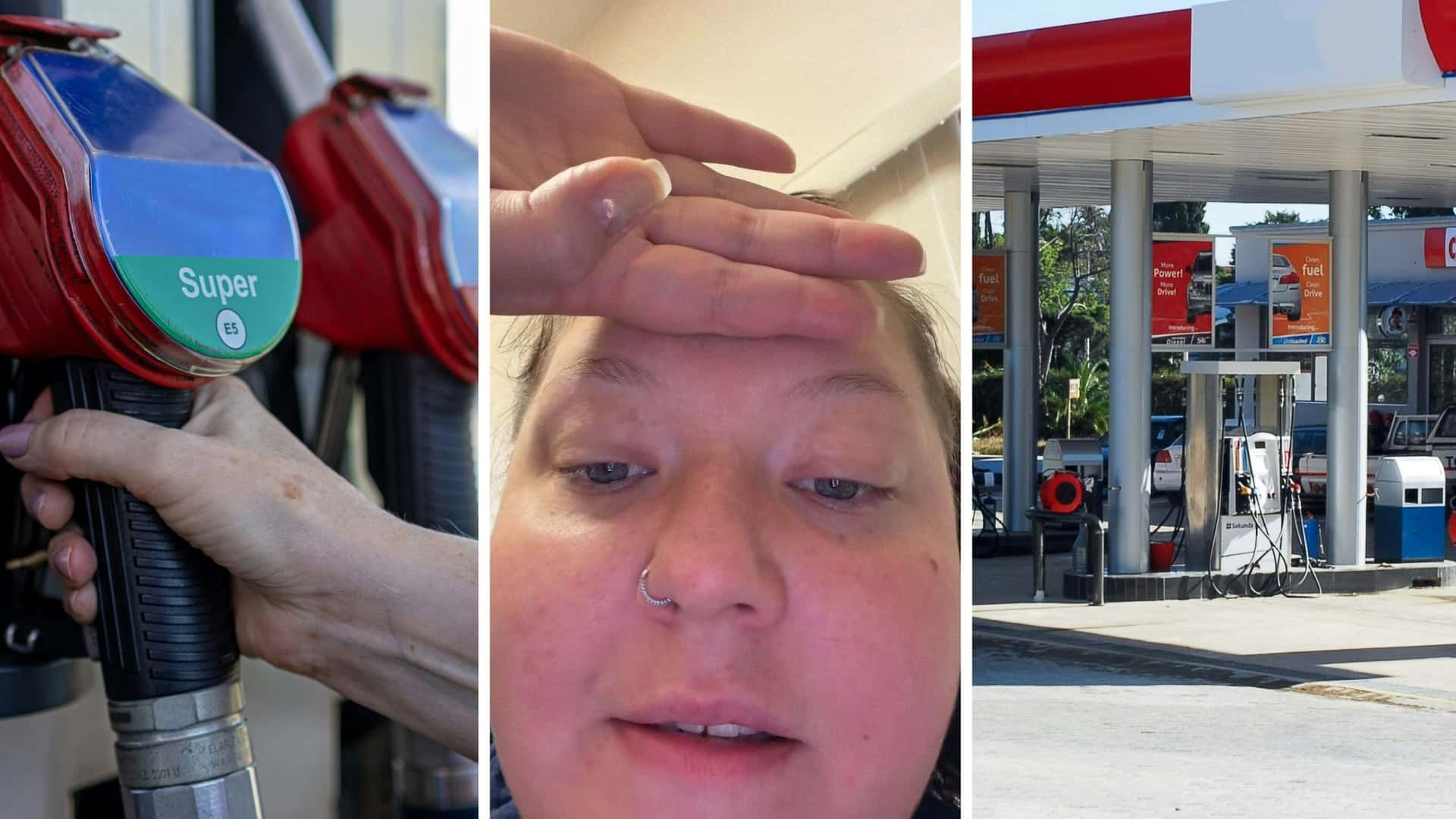
A woman says she thinks gas pumps may be shorting drivers on the amount of fuel they’re paying for. Now others are claiming they’ve noticed the same thing.
Fayht Parker (@iamfayht) says in a recent video that she started questioning whether a gallon at the pump is really adding up to a full gallon.

“Everything is a scam at this point,” she wrote in the text overlay of her clip.
Parker says she's seen people take gallon jugs to gas stations, fill them at the pump, and end up with containers that aren’t even halfway full.
That led her to start questioning her own fill-ups. Parker says she plans to Google how much fuel her minivan is actually supposed to hold after noticing how many gallons it takes at the pump.
“I’m tired of this,” Parker says. As of this writing, her video has just over 169,000 views.
Are Gas Pumps Actually Shorting Drivers?
Parker’s suspicion is understandable, but a random gallon jug isn’t a reliable way to check whether a gas pump is cheating you.
The National Institute of Standards and Technology (NIST) defines a US gallon as 231 cubic inches of fluid, and gas pumps are tested against certified measuring containers—not just any old jug. State and local weights-and-measures officials typically use a precisely measured five-gallon prover and compare the amount dispensed with what the pump says it delivered.
Those pumps do have some room for error, but not to the extent that Parker suggests. NIST says a typical dispenser tested with five gallons has a maintenance tolerance of plus or minus 6 cubic inches (about 98 milliliters).
Parker also says she plans to look up whether her minivan really holds 20 gallons. That can be useful, and drivers can find that number in a car’s owner’s manual.
NIST, however, says a vehicle’s advertised fuel-tank capacity is an approximation and can vary because of the tank’s design and manufacturing processes, among other things, and that fuel capacity can fluctuate by as much as 3%. So pumping slightly more or less than a listed capacity does not automatically mean the station’s pump is wrong.
None of that means gas pumps can never be inaccurate. NIST says weights-and-measures inspectors also respond to complaints about pumps that may be malfunctioning or giving incorrect readings.
Viewers Say They Have Noticed Gas Pumps Shortchanging Them
A lot of viewers were ready to believe Parker was onto something.
“I saw one guy had 2/3 of a milk jug and it said THREE gallons on the machine,” one person wrote.
Another commenter had a theory about the gas cans themselves.
“Probably the reason why those gas containers they also sell aren’t translucent,” they said.
Others said their own gas spending had made them suspicious.
“I did not understand why my $45 fill up is now $60,” one viewer wrote.
“I knew something was up bc I’ve been spending more on gas and it ain’t lasting!! Premium gas prices are KILLING me,” another added.
Some commenters took Parker’s claim a step further.
“Should any of us be surprised at this point? They have been stealing from us for decades,” one person wrote.
“Costco gas only! They don’t play,” another said.
A couple of viewers pointed Parker toward the agency that handles these kinds of complaints.
“Report them to your state’s weight and measures bureau/agency!!” one commenter wrote.
“Report them to the department of weights and measures,” another echoed.
One viewer compared Parker’s complaint to what they said they had noticed with food packaging in the US.
“They’re doing the same thing with food here. I am originally Australian, and all the food products weighted a minimum of stated weight. In the US, they seem to treat it as a maximum”
Motor1 contacted Parker via TikTok direct message. We’ll be sure to update this if she responds.