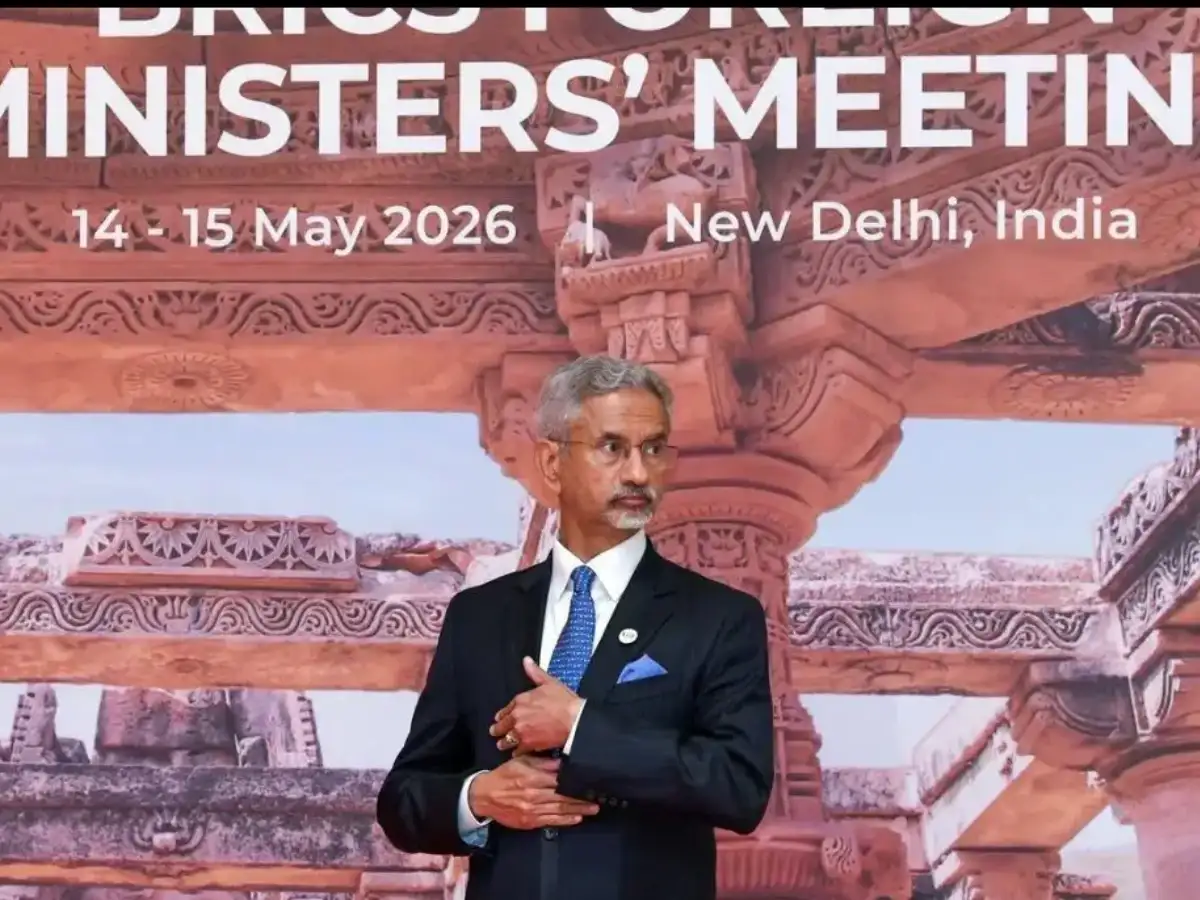
India on Thursday sharpened its push for sweeping reforms of global institutions, with External Affairs Minister S. Jaishankar warning that the effectiveness and credibility of the United Nations would remain “constrained” without meaningful changes, including an expansion of the UN Security Council.
Addressing the BRICS session on reforms of global governance and the multilateral system, Jaishankar said the structures underpinning global governance had failed to keep pace with a world that is now “more interconnected, complex, and multipolar” than when many international institutions were first created.
Also Read: BRICS a key voice of Global South, India to push for more inclusive world order: PM Modi
“We meet at a time when the effectiveness of global governance and the credibility of multilateralism are under increasing scrutiny,” Jaishankar said, as he pitched for what India has long described as “reformed multilateralism”.
Making a forceful case for overhauling the United Nations architecture, the minister said the global body’s responsibilities and membership had expanded significantly over the decades, but its key institutions continued to reflect “an earlier era”.
“Without meaningful reform, including expansion in both permanent and non-permanent categories, the effectiveness and credibility of the UN will remain constrained,” Jaishankar said. “Representation of Asia, Africa, and Latin America is essential.”
The remarks come amid India’s sustained campaign for a permanent seat at the UN Security Council, alongside broader calls from developing nations for greater representation in global decision-making bodies.
Also Read: Jaishankar, Iran FM hold bilateral meet
Jaishankar said reform was “not a matter of choice, but of necessity” if multilateral institutions were to remain relevant in addressing contemporary global challenges. He pointed to declining trust, inefficiencies in decision-making and growing strain on multilateral frameworks as signs of an international system struggling to adapt.
The external affairs minister also highlighted what he described as gradual progress in negotiations around UN reform, saying discussions had moved beyond broad principles towards “greater specificity”.
“It is time to move to text-based negotiations,” he said, referring to the Inter-Governmental Negotiations process on Security Council reforms. He noted that BRICS had extensively debated the issue, particularly during the Johannesburg Summit, and said the grouping’s outcome documents reflected an emerging consensus on the need for reform.
Beyond the UN, Jaishankar called for urgent restructuring of the international financial architecture, arguing that current economic challenges — including supply chain vulnerabilities, food and energy insecurity, and unequal access to critical resources — required stronger and more responsive multilateral development banks.
“Development and climate finance must be more accessible and aligned with national priorities,” he said.
He also pressed for reforms to the global trading system, warning that “non-market practices”, concentrated supply chains and uncertain market access were exposing the world economy to fresh risks.
“A rules-based, fair, open, and inclusive trading system, with the WTO at its core, remains essential,” Jaishankar said, while adding that the system must also address asymmetries and reflect the concerns of developing countries.
Framing India’s approach as one rooted in dialogue and bridge-building, Jaishankar said reformed multilateralism must be grounded in “respect for sovereignty and territorial integrity, adherence to international law, and recognition of diverse national circumstances”.
“In conclusion, the message from our times is clear. Cooperation is essential. Dialogue is necessary. Reform is overdue,” he said.