Get all your news in one place.
100’s of premium titles.
One app.
Start reading
Windows Central
Windows Central
Technology
Ben Wilson

Windows 11 locked me out of Notepad via Microsoft Account bugs — is the 'Thin Client' era ruining my 27 blissful years of PCs?

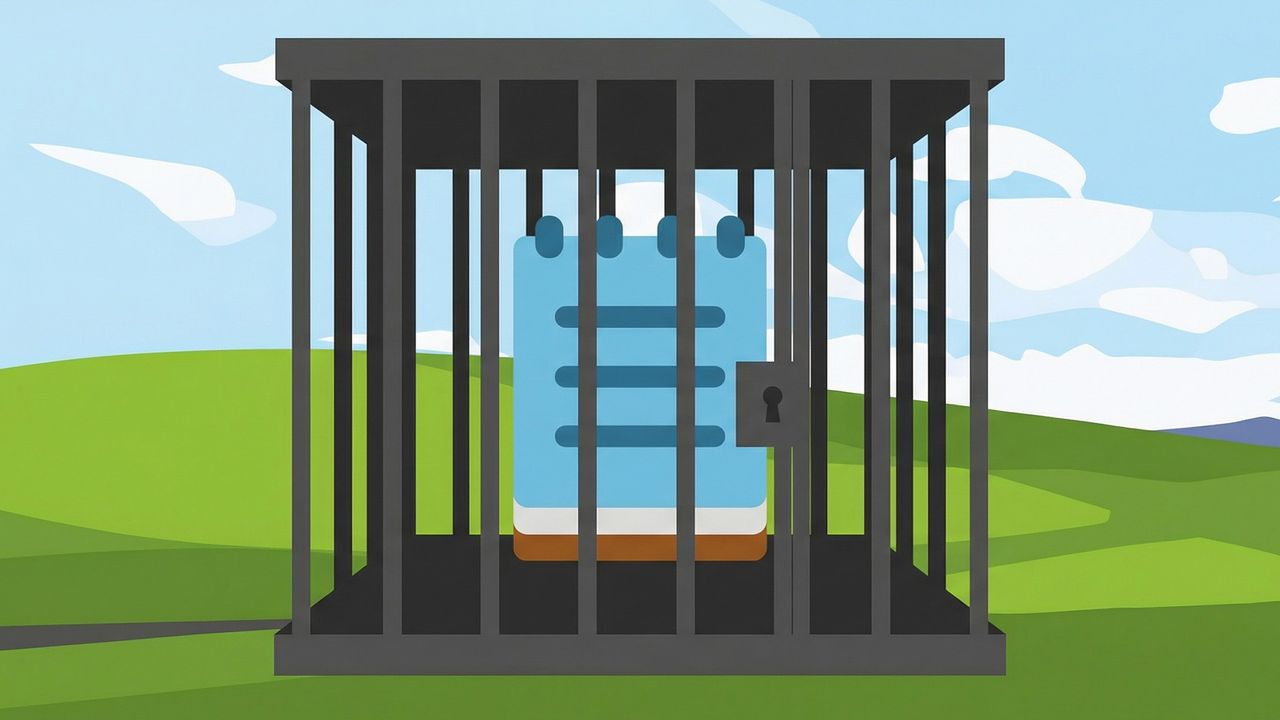
Notepad icon from Windows 11 in a cartoon jail cell, generated by Gemini.

A couple of weeks ago, I found that I couldn't open Notepad on my desktop PC. It wasn't because Windows 11 had crashed, but rather, Microsoft told me it wasn't "available in (my) account". It turned out that an error (0x803f8001) with Microsoft Store's licensing service stopped me from opening a few first-party apps, including the Snipping Tool.

Yes, even the app I usually use to screenshot error messages was busted. Ironic. Now, I'm usually a fairly level-headed Windows enthusiast who can relate to users who both love and loathe Microsoft's operating system, but I couldn't open Notepad.exe — are we serious?

You've probably all seen the memes: it's called "This PC" now, and not "My Computer" anymore. It's usually easy to laugh off as a disgruntled conspiracy, but I can see why it trends when the themings of Software as a Service (SaaS) are creeping into the most basic Windows apps.

After all, Notepad is supposed to be the absolute barebones, most ultra-basic app in the entire OS. Well, it was, before Microsoft added Copilot and users started looking for a way to disable the unusual AI addition. Sure, you can still type C:\Windows\notepad.exe into 'Run' with Windows + R for a legacy fallback, but many perhaps wouldn't know about it.

I'm still a Windows guy, and I always will be. Nevertheless, I can't ignore that Windows 11 regularly feels less like an operating system and more like a thin client; just a connection to Microsoft's cloud with fewer options for you to act as the administrator of your own PC.

This PC vs. My Computer

I was completely locked out of the modern Notepad (Image credit: Ben Wilson | Windows Central)

To be clear, I don't have major problems with the default, out-of-box experience (OOBE) of Windows 11. In fact, it doesn't take me long to make changes when installing fresh copies on new desktop builds. Default pins on the Start menu don't matter because I barely use it, and disabling ads is straightforward enough. The major points pretty much boil down to:

  • Uninstalling OneDrive: The web app is fine for manual backups, but I definitely don't want my files automatically synced.
  • Creating a local account: Microsoft keeps making it harder, but I'll always use workarounds.

After that, I don't take issue with the normal desktop — unless something unexpectedly breaks. Our Editor-in-Chief, Daniel Rubino, said it best, "People don’t hate change. They hate surprise." It was certainly a surprise to lose access to my plain text editor, loaded up with more than what an extended (Windows + V) clipboard would be useful for. Nobody asked for this.

So, is the solution to look for open‑source Notepad clones? Maybe for some enthusiasts, but that's just another app to add to a growing Winget list, and I'd rather Microsoft stay true to its word about walking back Windows 11's AI overload. I can't abide by comments on social platforms suggesting people "just use a debloater" on a new Windows PC, either — we shouldn't have to.

I generally avoid recommending Windows debloat scripts from GitHub to anyone in the first place.

That, and I generally avoid recommending Windows debloat scripts from GitHub to anyone in the first place. Windows can be adjusted to your liking if you follow the right guides, and while you can inspect open-source code for yourself and generally trust some well-respected coders on that platform, it's a strange solution that needn't exist.

Stop nudging your users towards danger

I built my PC around the 9800X3D, but is it really mine? (Image credit: Ben Wilson | Windows Central)

I'm not naive enough to think Windows is Microsoft's top priority. Cloud computing and Microsoft 365 are far more valuable than a consumer-level operating system, though Microsoft does have a staggering lead over the competition — one that would be absurd to jeopardize.

Still, my problems with Notepad and Snipping Tool are a raindrop in the Pacific Ocean of Microsoft's broader plans, but I don't want first-party apps asking for authentication from its servers — nor do I want our readers to download the first debloat script they find on the web.

There are justifications for Microsoft adding elements of its cloud business to Windows, but I wish it wouldn't force it in a way that locks people into an online-only experience. My PC should be entirely functional without an Internet connection — especially when I need a few scribbles from Notepad.

AI is undoubtedly the future, at least in some capacity. Even if Satya Nadella says artificial intelligence needs to prove its worth, there's no believable chance that it's going away, especially now that Copilot is so deeply ingrained in practically everything Microsoft owns.

Still, if online-only services are all active by default and Windows 12 is ultimately an agentic AI OS, I wouldn't be surprised if more people stick with a debloated Windows 11, just as others did with Windows 10. Do you think the next version of Windows will return some control back to the user, or will it be even more Internet-dependent?


Join us on Reddit at r/WindowsCentral to share your insights and discuss our latest news, reviews, and more.


Sign up to read this article
Read news from 100’s of titles, curated specifically for you.
Already a member? Sign in here
Related Stories
Top stories on inkl right now
One subscription that gives you access to news from hundreds of sites
Already a member? Sign in here
Our Picks
Fourteen days free
Download the app
One app. One membership.
100+ trusted global sources.