
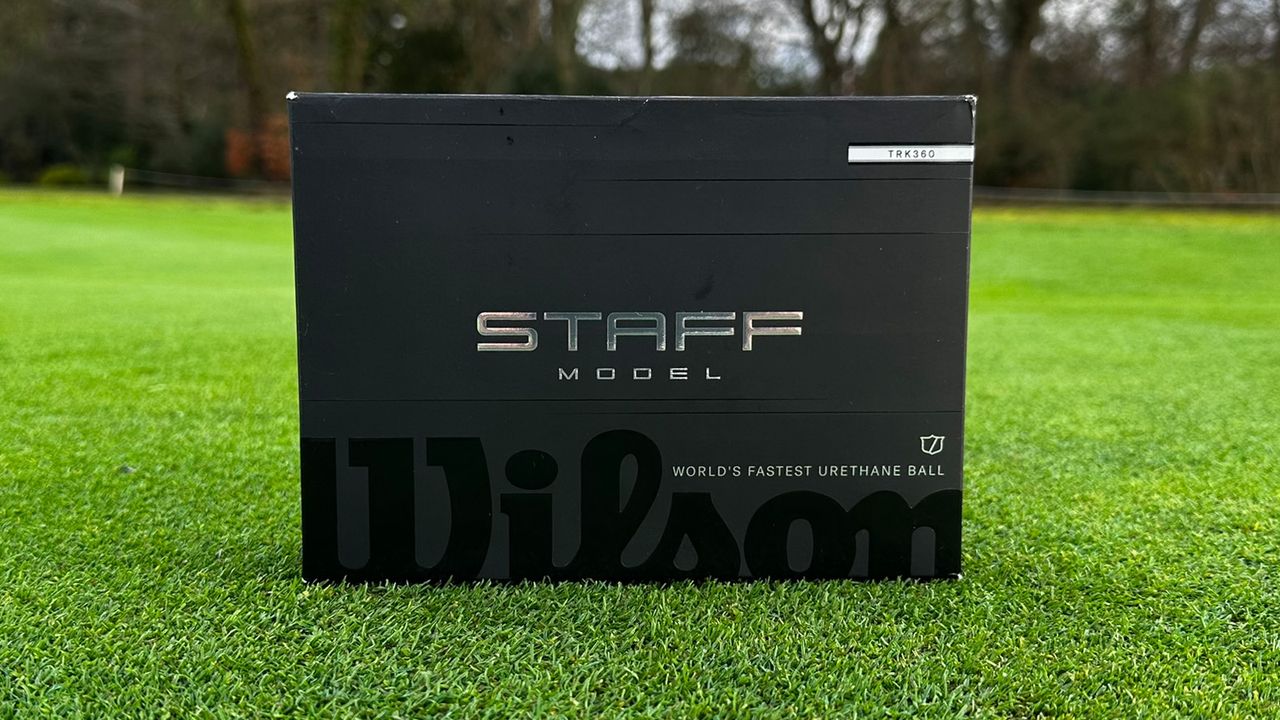
Wilson is a brand that often flies under the radar in the premium ball category, overshadowed by the likes of Titleist, TaylorMade, Srixon and Callaway. But for those in the know, the Staff Model line has quietly been one of the best value-for-performance options in golf for a while now, and I think it deserves a little more praise than it often receives.
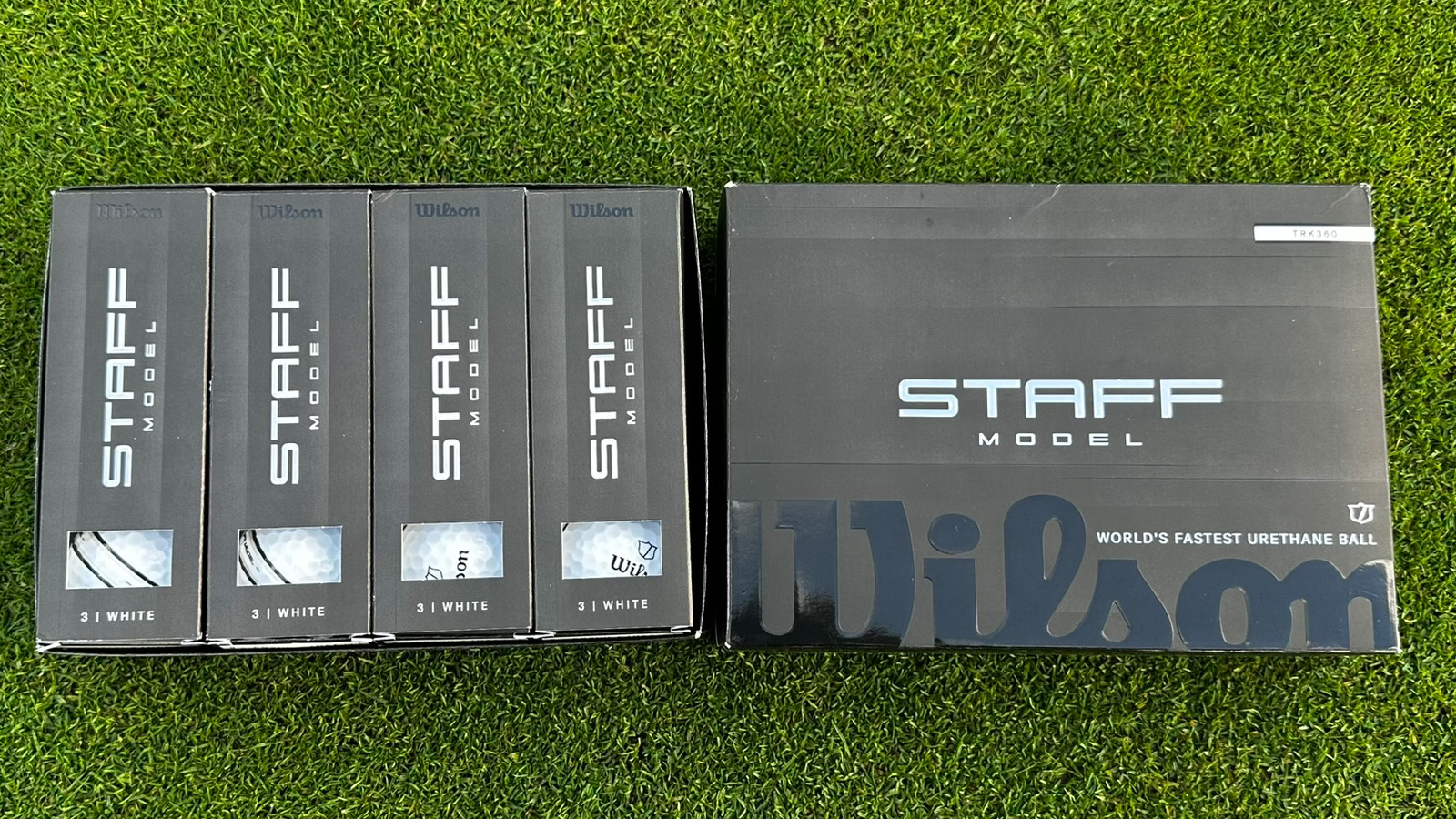
With the new 2026 Staff Model and Staff Model X ($49 per dozen), Wilson is looking to build on that reputation and be positioned among some of the best golf balls on the market. I put both balls to the test indoors on a Foresight GC3 launch monitor and outdoors on the course to see how they compare to what is deemed to be the pinnacle of premium golf balls, the Titleist Pro V1.
The first thing I noticed on my samples is the new TRK360 alignment design. To be completely honest, I've never been a massive fan of visual technology on a golf ball like on the TP5 stripe - I’m someone who draws on a single line on my golf balls - and the bold black and silver striping wrapped around this Staff Model ball felt busy. That said, if you need help with your aim, the option is there and it definitely works, and if you like a clean look you can opt for the standard Staff Model ball with a traditional sidestamp.

That said, the more I played with it, the more I got used to it, and I guess it’s a good way to differentiate your ball from your playing partners. While its primary use is obviously to help with putting alignment, I found it surprisingly useful for feedback, as the lines should roll end-over-end on well-struck putts and wobble instantly if you mishit it.
Both of the new Wilson Staff Model balls feature a 4-piece urethane construction, although the standard Staff Model is designed with a compression of 90 (10 points softer than the X) for a softer feel and lower spin, while the Staff Model X is built for pure speed.

A tour ball needs to perform from tee to green, so I put the Wilson Staff model ball head-to-head against the Titleist Pro V1 to see how the numbers stacked up.
Off the tee, the distance race was incredibly tight, though I found the market leader still holds a slight edge. In my testing indoors on the Foresight Sports GC3 launch monitor, the Titleist Pro V1 delivered a ball speed of 166.8 mph for a carry of 298 yards, whereas the Staff Model was a fraction behind that at 164.4 mph and 293 yards.


Interestingly, the launch characteristics were distinct between the two Wilson siblings - the standard Staff Model launched lower at 13.9°, offering a more penetrating flight compared to the higher-launching 14.6° of the Staff Model X. Despite a touch more spin, and not as much ball speed, the Wilson Staff model ball showed a touch wider dispersion when tested outdoors compared to the Titleist Pro V1.
When I moved to the irons, specifically the 7-iron, the Staff Model balls really separated themselves with significantly higher spin rates. The Staff Model X generated an impressive 6180 rpm, and the standard Staff Model wasn't far off at 5980 rpm.

By comparison, the Pro V1 spun considerably less at 5356 rpm. For a player who struggles to hold firm greens, this extra stopping power is a massive benefit, though it does come with a slight trade off in distance.
The lower-spinning Pro V1 carried about three yards further than the standard Staff Model (182.3 yards vs 179.5 yards), and while that might not matter to some, for shorter hitters, that could be a significant difference.
Inside 50 yards, all three options performed like premium tour balls, offering that hop and stop flight we all love and allowed me to flight pitch shots straight at pins without worrying about the ball releasing. The Staff Model X was actually the highest spinning ball of the entire test, producing 7865 rpm, which edged out the Pro V1’s 7645 rpm.

The standard Staff Model was slightly lower at 7456 rpm, but this is where feel became the deciding factor. The standard model felt noticeably softer than the X, which had a slightly firmer and ‘clickier’ sound that I particularly like for audible feedback and help with distance control.
Overall, the Wilson Staff Model ball produced a pretty well-rounded performance both from a data standpoint and on the golf course. It’s not quite as fast as the gold standard in the premium golf ball market, but offers a feel off the clubface that rivals it, all while coming to retail at nearly $10 cheaper per dozen. If you want a tour-caliber ball and are happy with a small sacrifice of a couple of yards, you should add the Wilson Staff Model ball to your shopping list.