Get all your news in one place.
100’s of premium titles.
One app.
Start reading
The Independent UK
The Independent UK
Business
J.R. Duren

Will Trump’s $200 billion mortgage bond buy actually lower your housing costs?

President Donald Trump made a surprising announcement Thursday on Truth Social about mortgages that may have potential homebuyers excited about lower rates.

The president wrote that he plans to get Fannie Mae and Freddie Mac to purchase $200 billion in mortgage bonds so mortgage rates will drop and homebuyers will save on monthly payments. Fannie Mae and Freddie Mac are government-backed companies that buy mortgages from lenders to free up lenders’ cash to offer home loans.

While the claim may be exciting for those interested in buying a home in the next few months, there’s a good chance the average person wasn’t quite sure how mortgage bonds relate to their monthly payment. After all a 2022 survey, from mortgage lender PrimeLending, found that around half of Americans don’t know the correct definition of a mortgage.

But the idea can be explained simply: Mortgage bonds are what lenders sell to free up cash they use to offer mortgages to borrowers. As more bonds are bought, bond prices go up, and mortgage rates go down, generally speaking.

“Mortgage bonds are important as they set the rates that lenders can offer,” VA Loan Network Co-founder Levi Rodgers told The Independent in an email. “Most mortgages are packaged together and resold to investors. When many people wish to buy these packages of loans, the lender can offer a better rate [to borrowers], as [lenders] can easily resell these packages.”

So can a big mortgage bond buy bring down rates? And, if so, how low could rates go and for how long? The Independent has asked several experts to answer these critical questions.

Can buying $200B in mortgage bonds bring down rates?

Yes, in theory. Buying mortgage bonds is something the Federal Reserve does to spur economic growth, as it typically results in lower mortgage rates, which lead to more people buying homes.

Experts asked byThe Independent were generally in agreement that a big purchase of mortgage bonds would lower rates.

“If these [mortgage bonds] are purchased … it will drive mortgage rates down as long as it’s happening,” Churchill Mortgage Senior Home Loan Strategist Kevin Watson said in an email. “If it actually occurs, it's definitely a great opportunity for current buyers to save some money, and those who bought in the last couple years could look to refinance and also save money.”

In fact, just the announcement of Trump’s plan has lowered mortgage rates by 0.125 percent to 0.25 percent, said Steve Hill, a broker associate at SBC Lending.

“That's a monster move - a $750,000 mortgage is $7,500 cheaper today than yesterday,” Hill told The Independent in an email. “And that's all based on Trump's [Truth Social post].”

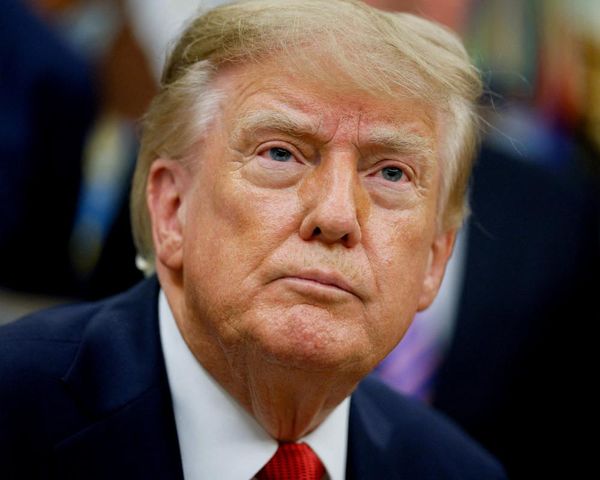
Under Trump’s plan to lower mortgage rates, Fannie Mae and Freddie Mac would buy $200 billion in mortgage bonds (Copyright 2018 The Associated Press. All rights reserved.)

However, the lending market’s reaction to Trump’s plan shouldn’t be seen as a permanent change, Watson warned.

“It's important to note that nothing has actually happened yet and not one [mortgage bond] has been purchased by the government,” he said. “All the hype right now is just the market reacting to the announcement from President Trump.”

How low could rates go and for how long?

It’s hard to pinpoint the impact a $200 billion mortgage bond would have on rates offered to consumers when they’re shopping for a home loan.

Trump’s plan may result in rates being lower for less than 12 months, as consumers are still dealing with a persistent high cost of living that could leave them without much breathing room after a mortgage payment, said Andrew Cooke, principal at wealth management firm Optimist Capital.

Lenders might bump up the buyer's interest rate to protect against that risk, negating any rate drops in the wider market, he said.

“Not going to give [lower rates] a time frame, but it would definitely be short-term - think less than a year, and [they] may not come down much at all,” Cooke said in an email to The Independent. “Never forget that the consumer is, by and large, stressed right now. So, if you were the bank, would you lower a rate for a consumer just because you have the ability to now issue more loans?”

It’s an important point as an individual’s ability to get a low rate isn’t solely based on the mortgage bond market. A wide range of factors, including credit history, credit scores, income, and debt-to-income ratio, influence rates that consumers are offered and whether they’re approved for a mortgage, according to the Consumer Financial Protection Bureau.

A massive mortgage bond purchase could drop mortgage rates, but experts are divided on how long it would last (Getty Images)

So, even if rates fall because of Trump’s plan, it may not change the risks that lenders take on when approving a borrower for a mortgage.

“The problem here is they are not lowering [the] risk of the marketplace or the debtor, so the new loans issued by banks may not have lower rates in the long term, as the risk profile [of the consumer] has not changed,” Cooke said.

Because the fundamentals of risk remain the same, Trump’s plan likely won’t have a lasting effect on rates, said Daniel McKeever, an assistant professor at Binghamton University, State University of New York’s management school.

“The most likely outcome is some temporary downward pressure,” McKeever told The Independent in an email. “The fundamentals of the mortgage market aren't changing just because a government entity buys mortgage bonds.”

Sign up to read this article
Read news from 100’s of titles, curated specifically for you.
Already a member? Sign in here
Related Stories
Top stories on inkl right now
Our Picks
Fourteen days free
Download the app
One app. One membership.
100+ trusted global sources.