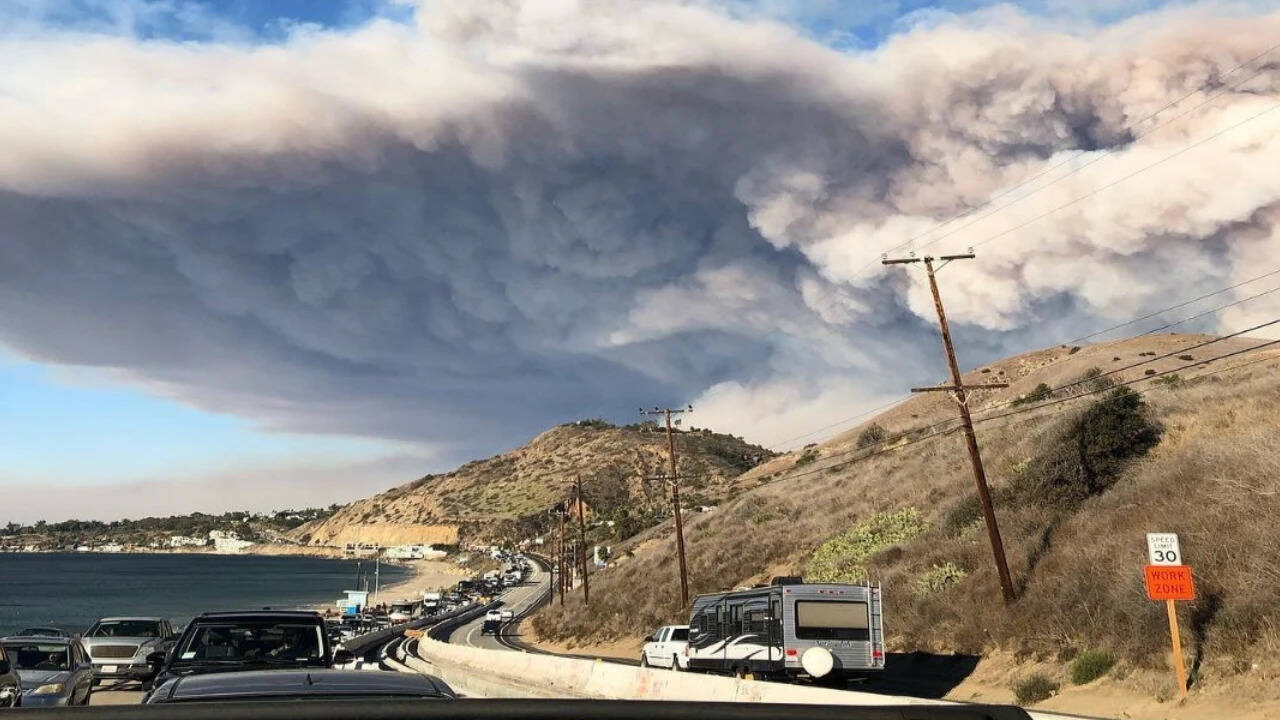
Leave as soon as an evacuation order is issued. One of the most well-known instances was the 2018 Woolsey Fire in Malibu, California, which influenced how one of the country’s largest fire agencies views residents who stay behind. The fire began on Nov. 8, 2018, near the Santa Susana Field Laboratory above Simi Valley, close to the Los Angeles-Ventura County line, and reached Malibu early the next day. The Los Angeles County After Action Review documented the combination of factors, the rapid spread over the 101 motorway, and a warning to the public that agencies will not always be immediately available. At the time, a volunteer group of homeowners known as the Point Dume Bomberos remained behind after the required evacuation and battled spot fires, and neighbours credited them with helping protect homes in the area.
Get breaking news anytime, anywhere. Download the TOI app now!

Why neighbours stayed in
The Woolsey Fire burnt 96,949 acres and destroyed 1,643 structures, according to California state records. Three people were killed. A mandatory evacuation order was issued for all of Malibu on Nov. 9, yet as the fire tore through the hills, some residents questioned whether enough fire resources were available.
The county review helps explain why the official response was stretched. The review said the Woolsey Fire struck while the Camp Fire was raging in Northern California, and other emergencies were drawing from the same limited pool of firefighting resources. That contributed to delays in getting large numbers of engines into Malibu. The study also pointed out deficiencies in communicating evacuations to the public.
Some residents said their knowledge of the local streets and terrain helped them understand where fires were developing and where they needed help. For others on Point Dume, a headland most people never thought to burn, that vista proved costly.Even with volunteers on the ground, the fire drew close. About 90 homes were lost on the Point, roughly 15% of its 610 properties, The Malibu Times reported.
Inside the volunteer push
The group took its name from an older Point Dume surf team known as the Bombers. A phone call among surfing friends brought together about 15 people within hours, and as the days passed, the number climbed to some 2. They used hand tools, a water truck and dirt motorcycles and walkie-talkies to stay in touch when phone coverage failed. One of the organizers prepared a map and, using binoculars from a lookout point, spotted flare-ups and radioed the others with their approximate locations.
One member, Sam McGee, told CNN the crew put out at least 100 hot spots in five days and got nine hours of sleep out of 144. McGee also cautioned against taking all the credit, saying that luck helped some residences. He said there were no further structure fires after the first bad night. Local accounts credited the group with helping protect homes from spot fires and flare-ups.
Fire science can help explain why such patrols may be important. A USDA Forest Service report by US Forest Service scientist Jack Cohen discovered that the large flames of strong wildfires don’t immediately ignite homes beyond 100 feet. The ignitions are from things close to the house, mainly smouldering embers and small surface fires that are igniting items close to the house. A house can survive a fire that passes at full strength if there is someone to smother the little ember fire on a deck or in a gutter.
Their support was more than just firefighting. The same group also helped bring in food and water when the road was closed and supplies were running low, and later they ran a relief facility in a school car park near Point Dume. Members of the Bombers also decided that the experience should not depend on luck next time.
The brigade model that came after
A 2026 report from the Natural Hazards Center at the University of Colorado Boulder, Trial by Fire , examined the Community Brigade pilot during the first seven days of the December 2024 Franklin Fire and January 2025 Palisades Fire in Malibu. Based on participant observations and interviews with brigade members and officials, the researchers reported preliminary evidence of greater trust, fire-risk awareness and community ownership.
The report also distinguished between the two models. Community brigade volunteers undergo extensive training under the direction of the county fire department and the US Forest Service and are called into service when needed. That is unlike stay-at-home defenders who reject evacuation orders. Trained and coordinated volunteers bring local expertise to a professional response, whereas untrained residents who refuse to leave put themselves and the personnel that may have to rescue them in danger.
For Malibu, the experience points to the value of preparation before a fire starts. Residents are still urged to evacuate when ordered, while organized community brigades can help share information, support evacuation and reduce ember-related risks under official direction. Homes with fewer combustible materials around them are better positioned to withstand wildfire, while communities that train and coordinate before an emergency are better prepared to respond safely.