Get all your news in one place.
100's of premium titles.
One app.
Start reading
The Economic Times
The Economic Times

Why was this 17th-century Polish woman buried with a padlock on her toe and an iron sickle across her neck? 300 years later, archaeologists found the answer

More than 300 years after a young woman was buried in what is now Pień, Poland, archaeologists have uncovered new clues about why her community took extraordinary measures to keep her in the grave.

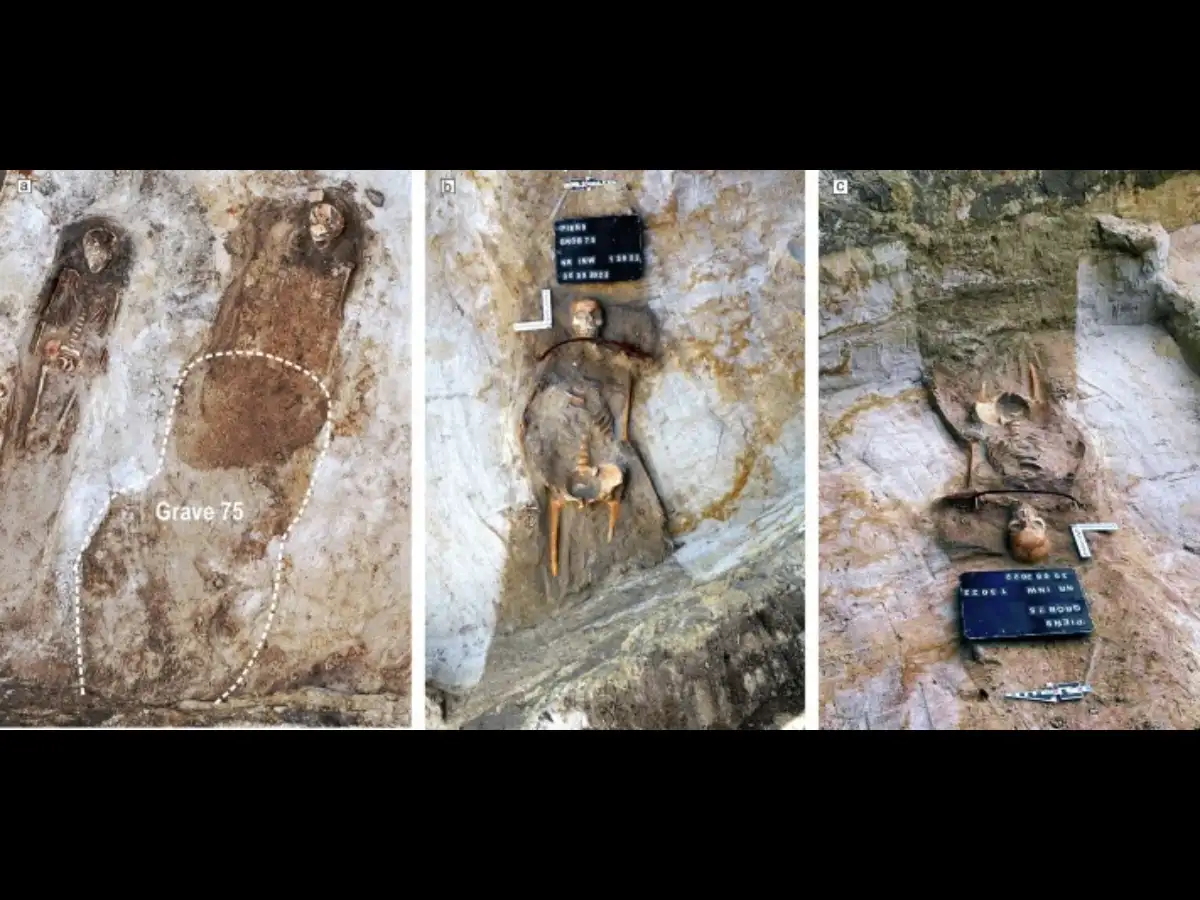
When researchers opened the burial in 2022, they found an unsettling arrangement. An iron sickle had been placed across the woman’s neck, with its sharp blade facing toward her. An iron triangular padlock was attached to her big toe.
The woman, now known as “Zosia,” had apparently been buried with not one but several safeguards intended to prevent her from returning from the dead.

A new study led by archaeologist Dariusz Poliński of Nicolaus Copernicus University offers a closer look at what those unusual objects may have meant—and why the people around Zosia may have feared her even after her death.

ALSO READ: Taylor Sheridan was ready to quit Hollywood after Yellowstone until a $330 million Texas legend changed everything

Why was a sickle placed across her throat?

The sickle is perhaps the most striking feature of Zosia’s burial.

According to researchers, it was deliberately positioned so that the blade would have prevented her from rising from the grave. The arrangement was part of a broader set of practices used by communities who believed certain dead people could return and bring misfortune to the living.

The padlock on her toe appears to have served a similar purpose.

Researchers believe the lock may have symbolically bound Zosia to the grave, while the sickle provided an additional physical and supernatural barrier.

ALSO READ: In 1989, Ted Turner bought a 113,613-acre Montana ranch and made a radical change that transformed the land

“It was unusual that there were two precautions, two methods of showing that this skeleton should be kept in the graveso the fear of the body coming back to life was greater,” Poliński tells CNN’s Katie Hunt.

The discovery suggests that whoever buried Zosia was not simply following an ordinary funerary custom. Her burial appears to have been intentionally different.

Zosia may have been blamed for misfortune

Although modern reports have frequently described Zosia as a “vampire,” archaeologists say the label can be misleading.

Sign up to read this article
Read news from 100's of titles, curated specifically for you.
Already a member? Sign in here
Related Stories
Top stories on inkl right now
One subscription that gives you access to news from hundreds of sites
Already a member? Sign in here
Our Picks
Fourteen days free
Download the app
One app. One membership.
100+ trusted global sources.