Get all your news in one place.
100's of premium titles.
One app.
Start reading
Digital Camera World
Benedict Brain

Why trying to make a boring postcard photo made my work more creative

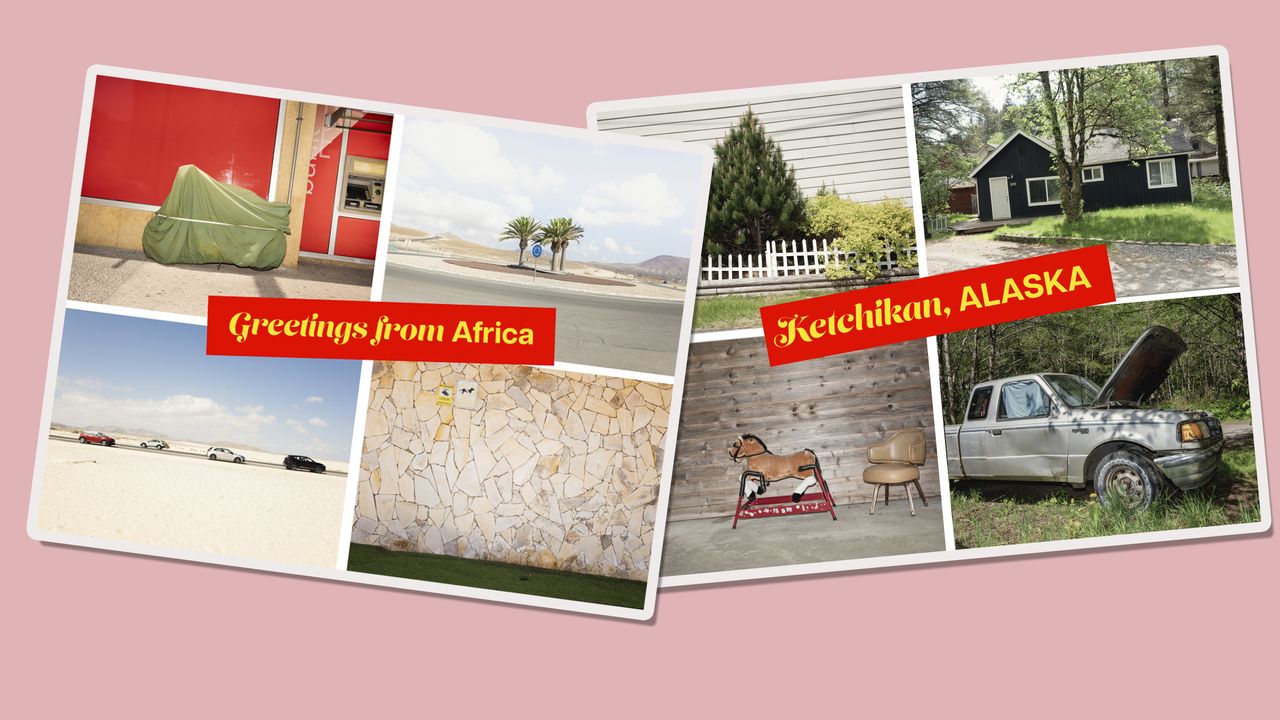
Two postcards made with four boring images each taken in different locations.

The first thing I do in a new location is look for boring postcards. Not the ones on the rack, but the scenes that would never be photographed and made into a postcard. I deliberately try to make four horizontal photographs of the dullest things I can find. Car parks. Ordinary shop facades. Scraps of landscape that appear to have zero photographic ‘value’. It is a small habit of mine, but one I do more and more as it immediately changes how I start seeing a place.

This idea owes something to Stephen Shore, though not in any lofty way. Before his photographs became museum-bound, he also made mundane postcards. Straightforward images of everyday scenes. Shore treated the postcard as a normal way of looking rather than something to rise above.
Martin Parr came into this from a different angle. Beyond his own photography, Parr has curated, edited, and published books literally titled Boring Postcards. They are exactly what they promise. Flat, dull vistas. Forgettable landmarks such as motorway service stations, shopping malls, and so on. The kind of images that feel utterly forgettable on their own but become strangely compelling when seen together. Parr understood the delightful ordinariness of these postcards.

When I make my own boring postcards, it started off as a slightly ironic but also practical practice. In one sense, a slight nod to Shore and Parr, but really just a way of making images and removing grand expectations. There is no pressure to find the best view or the right light. I am not trying to impress anyone, including myself. I just photograph what is there and move on. Something useful happens as a result. Those four images quickly build a sense of place that feels more convincing than the obvious landmarks. They describe how a location actually functions. The in-between spaces and the overlooked edges. The quiet negotiations between people, infrastructure, and environment. They might look unremarkable, but they are specific, and specificity is where photographs start to feel alive.

These images often act as a gateway to more adventurous mages; they act as a conduit to get the creative juices flowing. Once the need to make something good disappears, curiosity takes over. I begin to notice with more clarity. The postcard, usually the final product of travel photography, becomes the starting point instead.
I have also become interested in postcards as objects. They are optimistic by design, full of selective vision and gentle persuasion. Making my own versions feels like a way of acknowledging that history while quietly expanding it. Not everything needs to be beautiful to be worth looking at.

Working closer to home over the past couple of years has only reinforced this approach. Familiar places reveal more when you stop demanding spectacle from them. I have started presenting these images in postcard format as a way of keeping the work grounded.

This is how I begin most projects now. Four boring photographs, made without drama, and a reminder that paying attention is often enough.

Sign up to read this article
Read news from 100's of titles, curated specifically for you.
Already a member? Sign in here
Related Stories
Top stories on inkl right now
One subscription that gives you access to news from hundreds of sites
Already a member? Sign in here
Our Picks
Fourteen days free
Download the app
One app. One membership.
100+ trusted global sources.