Get all your news in one place.
100's of premium titles.
One app.
Start reading
Digital Camera World
Gavin Stoker

Why third-party licensees of Kodak and Yashica brands are succeeding where more major camera manufacturers aren’t

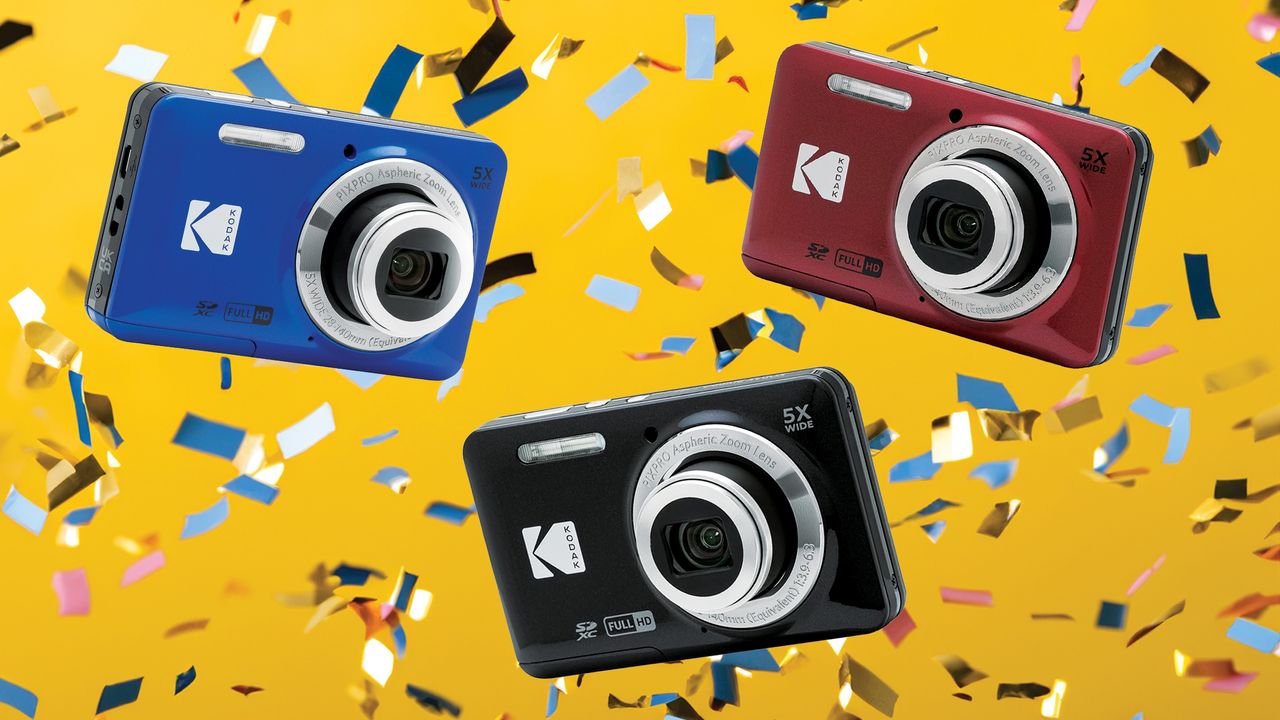
Three Kodak Pixpro FZ55 compact cameras in blue, red, and black float against a vibrant yellow background, surrounded by colorful confetti.

I keep reading reports suggesting some of the best-selling cameras in the world right now are ones which I, and most others, discounted from consideration back in the mid-2000s? By which I mean small 1/2.3-inch sensor point-and-shoot cameras incorporating non-interchangeable lens snapshots with a modest 3x optical zoom, that, while able to conveniently fit in my pocket, don’t offer the ability to do much more than point and shoot.

And which, let’s be honest, deliver an image quality superseded by the camera we now always have with us, namely our smartphone.

The basic snapshot-style best sellers I refer to aren’t Canon, Nikon, Fujifilm or Sony-branded cameras either, but rather those from Kodak. However, it’s not the once great American photography pioneer pumping out low-cost compacts, but rather a long-term licensee of the Kodak name. Headquartered in LA, JK Imaging has been marketing products the public would widely assume as coming directly from the original source for well over a decade. Now compacts are king again, and it’s undertaken a wildly successful Trojan horse-style infiltration of the mass market.

Another familiar brand now also manufactured under licence is the once Japanese-owned Yashica. While nowhere previously as big as Kodak worldwide, the name was nevertheless once globally respected when it came to high-performing compacts. Yet the Yashica brand originally disappeared altogether in 2005 when parent company Kyocera ceased production on all Contax, Kyocera, and Yashica cameras, choosing to focus on more profitable areas of its business.

In 2008, the rights to the Yashica brand were bought by the Hong Kong-based MF Jebsen Group, which in turn licensed out the name, and, more than a decade on, we’ve recently seen retro-styled Yashica point and shoots entering the UK and US markets, principally the City 100, City 200 and City 300 models.

Both Kodak and Yashica’s options are plastic-y yet affordable fixed-lens snappers suitable for anyone who doesn’t otherwise want to invest in any entry-level mirrorless camera. There’s nothing new about the technology involved with either, but that’s not the point.

The point is that JK Imaging kept going with both Kodak and AgfaPhoto compacts when the bigger camera companies pulled out of compact cameras completely. That seemed a somewhat eccentric and ambitious move – at least, until the past couple of years.

Being the biggest and practically only player in a market that almost everyone else had exited meant that the Kodak brand was perfectly placed to reap the reward of renewed interest in compact digicams when they became fashionable again post-pandemic. By contrast, the major players have been reluctant to get involved, fearing a passing fad. And then there’s the fact that getting previously discontinued compact camera lines up and running at volume again involves considerable expense and investment.

This is why we’re seeing cheap, basic digicams now beating the bigger boys and more sophisticated options at their own game. Who’d have thought it?

Sign up to read this article
Read news from 100's of titles, curated specifically for you.
Already a member? Sign in here
Related Stories
Top stories on inkl right now
One subscription that gives you access to news from hundreds of sites
Already a member? Sign in here
Our Picks
Fourteen days free
Download the app
One app. One membership.
100+ trusted global sources.