Get all your news in one place.
100's of premium titles.
One app.
Start reading
Sports Illustrated
Sports Illustrated
Sport
Blake Silverman

Why the Nuggets Should Keep Peyton Watson Amid Financial Constraints, Sign-and-Trade Rumors

Peyton Watson’s future, whether it’s in Denver or elsewhere, remains one of the biggest unanswered questions of the NBA offseason. The Nuggets went into the second apron after matching a two-year, $12 million offer sheet by the Thunder for Spencer Jones, which has made Denver’s path to retain Watson on a new deal even more tricky.

Second-apron constraints and an enormous luxury tax bill has made a sign-and-trade out of Denver a real possibility as Watson’s restricted free agency drags along. On Friday, ESPN’s Dave McMenamin reported that the Clippers, Hawks, Bucks and Cavaliers are Watson suitors should a sign-and-trade come to fruition.

After retaining Jones, Denver became the only team in the NBA that’s currently in the dreaded second apron. Now, the franchise will try to move off some salary to get back under the second apron. Sending Watson elsewhere and taking no money back would greatly decrease the Nuggets’ tax bill. If Watson plays out next season on a $6.5 million qualifying offer, the tax penalties would go up from the current $68.6 million all the way to $112 million. Should the team decide to give the fourth-year wing a new contract in the $23 million per year range—a reasonable annual value for a player of his caliber—the luxury tax bill would balloon to $231 million, according to ESPN’s Bobby Marks.

As Marks pointed out, Denver has paid a total of $53 million in tax penalties since 2002–03. Is this roster—essentially the same one that lost to the Timberwolves in the first round of the playoffs—good enough to be that expensive? Even with debatably the best player in the world in Nikola Jokić still doing his thing, I think not. And that’s stating the obvious.

Although Watson seems like the most realistic casualty of the circumstance, especially when you consider rumored contract negotiations that are far apart, Denver should hold onto its homegrown talent with a long-term deal.

Why the Nuggets should give Peyton Watson a fair new contract despite cap strain

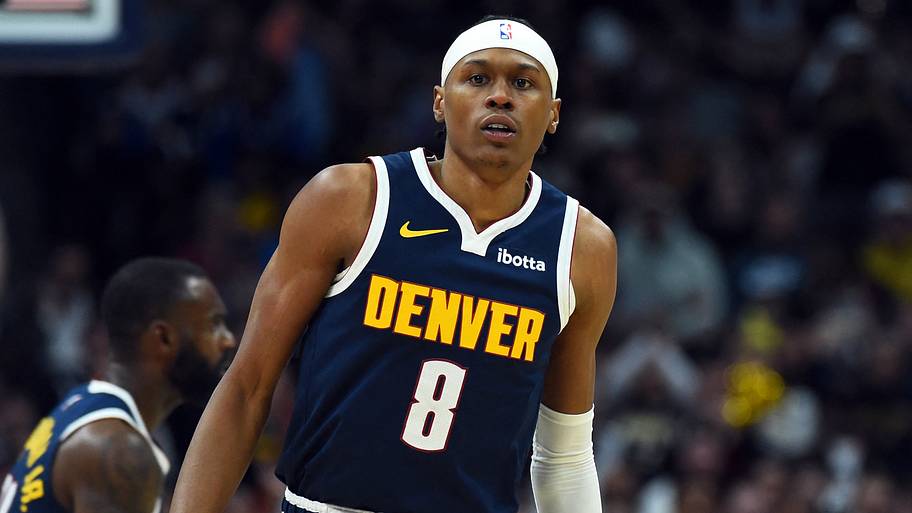
Peyton Watso
Peyton Watson averaged 14.6 games for the Nuggets last season | IMAGN IMAGES via Reuters Connect

Denver is in this position because of the bad contracts still on its books. Christian Braun is on a five-year, $125 million deal that runs through 2030–31. Aaron Gordon has a $37.1 million player option he will likely pick up for the 2028–29 season when he’s 33 years old. Even Zeke Nnaji’s four-year, $32 million rookie extension has aged poorly as he will make $7.5 million in the upcoming season and 2027–28.

The Cameron Johnson trade has come back to bite, too, as the Nuggets sent out their own 2032 unprotected first-round pick with Michael Porter Jr. to bring in the sharpshooter. The 2032 first was the last tradable first-round pick Denver had in its arsenal, as now the Nuggets are unable to trade any that it currently owns due to the Stepien rule.

Other teams are well aware of the situation that Denver is in. No team is going to take Braun’s contract, while opposing teams would almost certainly ask the Nuggets for draft capital for taking on the Gordon or Nnaji contract. Denver wouldn’t need to attach a first-rounder to dump Nnaji, but the franchise is working with minimal second-round picks, too.

Johnson becomes an unrestricted free agent next summer, which makes his current $23.1 million salary an expiring deal. That’s valuable on the trade market, but he’s hard to trade since the team is over the second apron and the great majority of the offseason has already played out. A team like Milwaukee (to note: a reported Watson suitor) that has a large traded-player exception could take Johnson to fill a need at the wing for next season, but Denver doesn’t have any assets to include alongside.

All that leads to why a Watson sign-and-trade is a real possibility. His departure would be a real bummer after he took a huge leap last season and averaged 14.6 points, 4.9 rebounds and 2.0 stocks (steals plus blocks) per game. He’s only 23 years old and looks to be a high-level NBA wing for the next five seasons at least.

Despite the huge cap crunch and astronomical tax bill, Denver has to look toward the future here. Jokić has a $62.8 million player option for 2027–28 which he will have to make a decision on next summer. While the likely outcome is that he picks it up, he could opt out and become a free agent. Maybe he decides to go elsewhere if he doesn’t see the light in Denver or, although he would have plenty of run left next year at 32 years old, maybe he’s ready to spend the majority of his time with his horses instead of just in the summer.

At the very least, Johnson’s $23.1 million will come off the books next summer which a new deal for Watson could replace if the Nuggets are able to trade the former at some point before the February trade deadline. Should Watson play out the season on his qualifying offer, he becomes an unrestricted free agent next summer and would likely walk after the franchise that drafted him chose not to commit to him.

If he ends up as a casualty of the cap strain, Denver will have next to no assets remaining should the franchise face the possibility of a post-Jokić world at some point over the next couple years.


Listen to SI’s NBA podcast, Open Floor, below or on Apple and Spotify. Watch the show on SI’s YouTube channel.

MORE NBA FROM SPORTS ILLUSTRATED

Sign up to read this article
Read news from 100's of titles, curated specifically for you.
Already a member? Sign in here
Related Stories
Top stories on inkl right now
One subscription that gives you access to news from hundreds of sites
Already a member? Sign in here
Our Picks
Fourteen days free
Download the app
One app. One membership.
100+ trusted global sources.