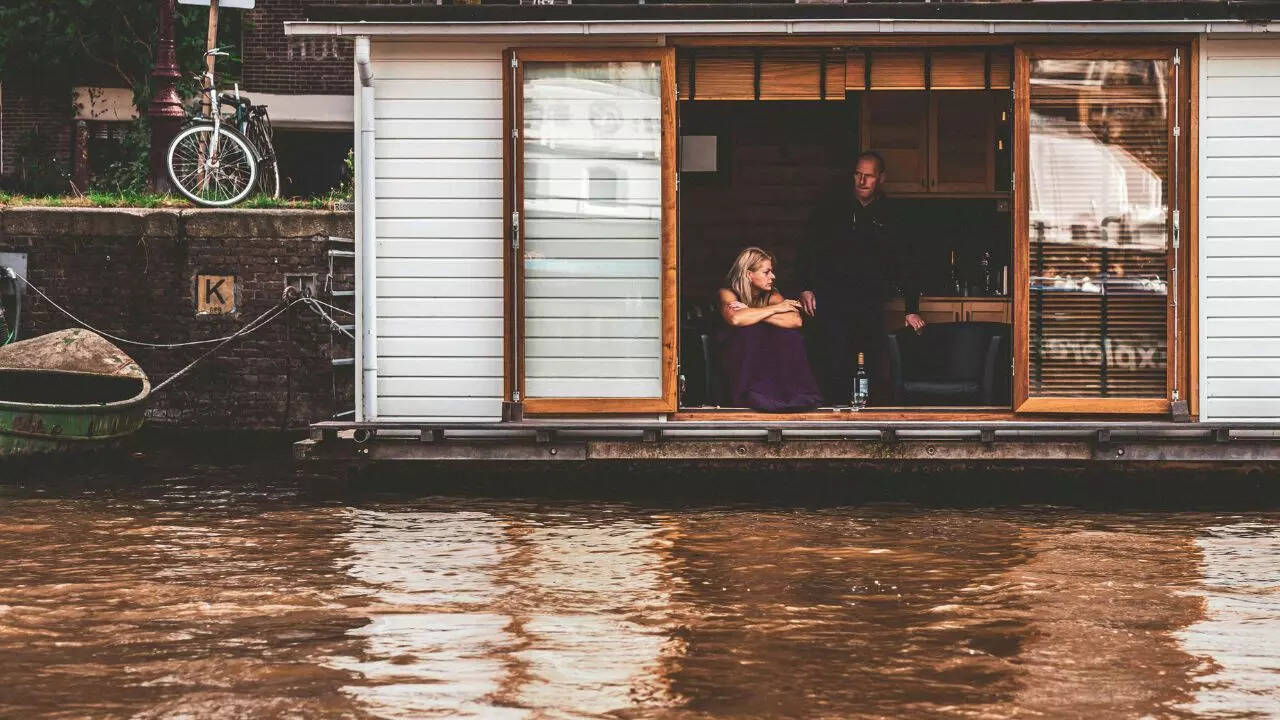
The Netherlands has always lived with water. A large part of the country is lower than sea level. Rivers, canals, and coastlines affect how people live every day. The Dutch have been building dikes, dams, and drainage systems to protect their land for hundreds of years. But in the last few years, this problem has gotten worse because sea levels are rising, it rains more, and flooding happens more often. At the same time, there aren't enough homes in the country.
There are millions of people looking for cheap homes, but there isn't much land left. Instead of fighting water, many Dutch communities are learning to live on it. Floating homes, once seen as unusual, are now becoming part of modern urban planning. According to the BBC reports, these water-based neighbourhoods are growing in number and influence. What began as small experiments is now shaping international projects in vulnerable coastal regions. The Dutch model of floating housing could be a way to deal with both climate change and a lack of housing at the same time, from Europe to island nations.