
Get all your news in one place.
100's of premium titles.
One app.
Start reading
The Conversation
The Conversation
Patrick M. Shober, Postdoctoral Fellow in Planetary Sciences, NASA

Why the meteorites that hit Earth have less water than the asteroid bits brought back by space probes – a planetary scientist explains new research

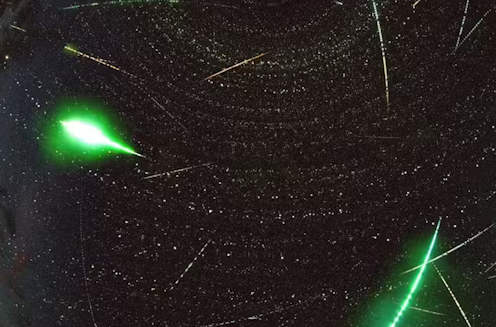
This image overlays over 100 fireball images recorded between 2016 and 2020. The streaks are fireballs; the dots are star positions at different times. Desert Fireball Network

Much of what scientists know about the early solar system comes from meteorites – ancient rocks that travel through space and survive a fiery plunge through Earth’s atmosphere. Among meteorites, one type – called carbonaceous chondrites – stands out as the most primitive and provides a unique glimpse into the solar system’s infancy.

The carbonaceous chondrites are rich in water, carbon and organic compounds. They’re “hydrated,” which means they contain water bound within minerals in the rock. The components of the water are locked into crystal structures. Many researchers believe these ancient rocks played a crucial role in delivering water to early Earth.

Sign up to read this article
Read news from 100's of titles, curated specifically for you.
Already a member? Sign in here
Related Stories
Top stories on inkl right now
One subscription that gives you access to news from hundreds of sites
Already a member? Sign in here
Our Picks
Fourteen days free
Download the app
One app. One membership.
100+ trusted global sources.







