Get all your news in one place.
100's of premium titles.
One app.
Start reading
MyLifeXP
MyLifeXP
Noopur Kumari

Why Sahadeva Refused Krishna’s Peace Plan

What if one Pandava refused to support the idea of peace?

Before the Kurukshetra War, when Krishna was preparing to approach the Kauravas with a peace proposal, most of the Pandavas understood the terrible cost of war. Bloodshed would not affect only kings and warriors. Countless families would suffer.

But Sahadeva looked at the situation differently.

For him, the humiliation of Draupadi in the Kuru court could not simply be forgotten in the name of peace. His words revealed a side of the Mahabharata that is often overlooked: sometimes, the desire for justice can become stronger than the desire to avoid conflict.

When Peace Was Still Possible

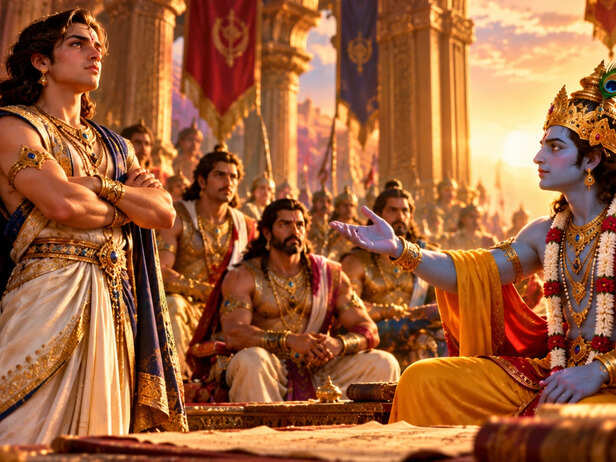
Krishna Discusses the Peace Mission with the Pandavas
Krishna speaks with the Pandavas before his journey to the Kaurava court.

The Udyoga Parva presents a crucial moment before the Mahabharata war. Krishna was preparing to go to the Kaurava court and make an attempt at peace. The Pandavas knew that war would bring enormous destruction, and the wish to avoid unnecessary bloodshed was part of the discussion. Yet beneath these different views was an unresolved wound. Draupadi’s humiliation had not disappeared simply because peace was being considered. For Sahadeva, that memory remained powerful enough to shape his position on the coming conflict.

Sahadeva Refused to Stay Silent

Sahadeva Speaks Firmly Before Krishna
Sahadeva makes his position clear when the Pandavas discuss peace.

According to the traditional account, Sahadeva did not support the idea of making peace at any cost. He urged Krishna to make an effort that would ultimately lead toward war rather than allow the matter to end quietly. His anger was connected to what had happened to Draupadi in the Kuru assembly. While the other Pandavas could discuss peace from different perspectives, Sahadeva saw the humiliation of their queen as an injustice that still demanded an answer. His stand shows how differently the five brothers could respond to the same crisis.

Draupadi’s Humiliation Changed Everything

The Draupadi humiliation remains one of the most painful episodes in the Mahabharata. She was dragged into the royal assembly after being staked in the dice game, and the attempt to publicly dishonour her became a turning point in the story. For Sahadeva, this was not merely a personal insult. It represented a serious violation of dignity and justice. That is why the memory continued to influence his thinking even when Krishna’s peace mission was being discussed. Peace, in his view, could not simply mean forgetting what had happened.

His Anger Had One Clear Target

Sahadeva’s words were especially strong because he connected the unresolved insult to Duryodhana. He expressed that his anger would not settle until Duryodhana was defeated. This did not mean that Sahadeva ignored the destruction that war could cause. Instead, his position reflected a different priority: accountability for what had happened to Draupadi. The contrast is striking. While discussions around the peace proposal focused on preventing further bloodshed, Sahadeva focused on the consequences of allowing a grave humiliation to pass without resolution.

Krishna Heard a Different Voice

The conversation becomes even more interesting because Krishna was not hearing only one opinion from the Pandavas. Yudhishthira, Arjuna and the others had reasons to consider peace, while Sahadeva presented a much harder position. Traditional retellings also describe Satyaki and other warriors responding positively to Sahadeva’s determination. His words gave voice to those who believed that the insult suffered by Draupadi could not be separated from the larger conflict. The scene therefore becomes less about one brother rejecting peace and more about the competing ideas of justice, forgiveness and war.

Why Sahadeva’s Stand Still Matters

The deeper lesson of Sahadeva’s position is not simply that war was preferable to peace. The Mahabharata presents a far more complicated moral conflict. Sahadeva reminds us that peace becomes difficult when injustice remains unresolved. His loyalty to Draupadi shows how deeply the events of the Kuru court affected the Pandavas. At the same time, the story raises an uncomfortable question: can peace survive when those who were wronged feel that justice has been ignored? That tension is one reason the Udyoga Parva remains such an important part of the Mahabharata narrative.

Unlock insightful tips and inspiration on personal growth, productivity, and well-being. Stay motivated and updated with the latest at My Life XP

Sign up to read this article
Read news from 100's of titles, curated specifically for you.
Already a member? Sign in here
Related Stories
Top stories on inkl right now
One subscription that gives you access to news from hundreds of sites
Already a member? Sign in here
Our Picks
Fourteen days free
Download the app
One app. One membership.
100+ trusted global sources.