
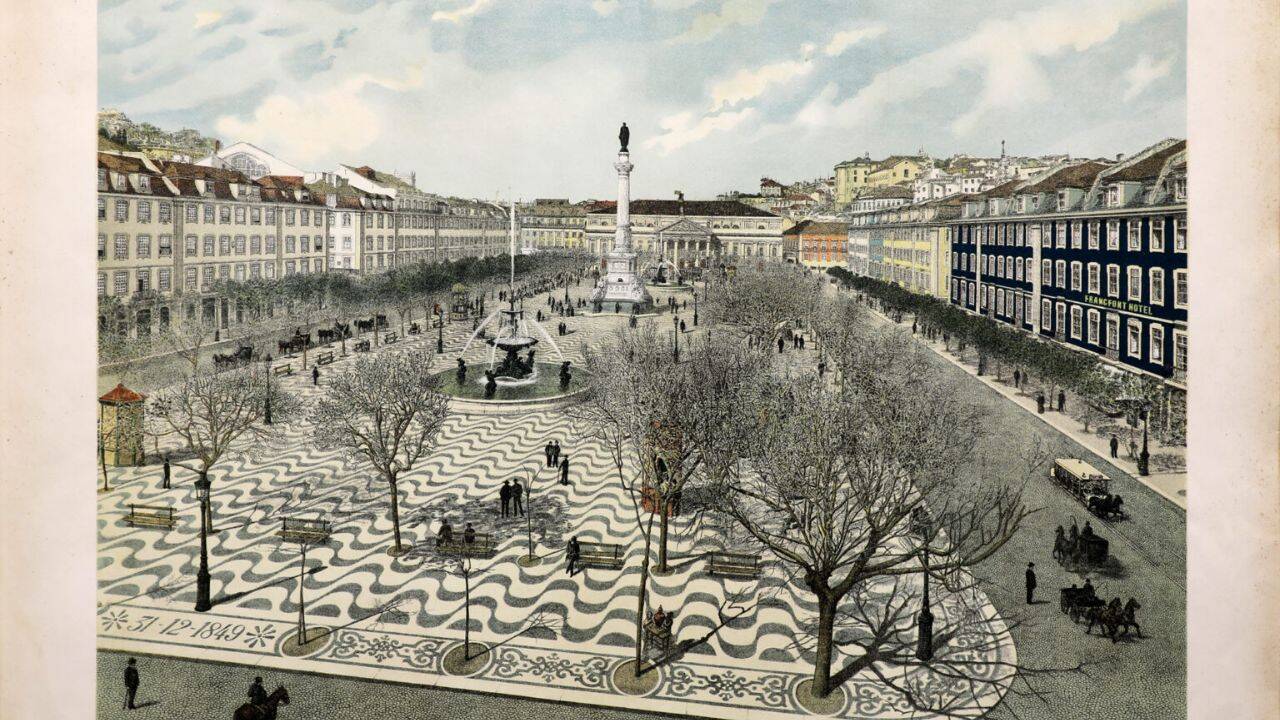
Walk through many Portuguese towns and cities, and the ground often demands as much attention as the buildings. Beneath shopfronts, cafés and historic squares, pavements ripple with waves, geometric motifs, flowers, ships and abstract shapes assembled from thousands of small stones. The effect can feel surprisingly similar to a woven carpet spread across an outdoor room. Visitors tend to look down almost as often as they look up.
This distinctive appearance is the result of Portuguese pavement, known as calçada portuguesa. While it is now regarded as part of the country's visual identity, its origins were tied to practical urban needs rather than decoration alone. Over time, a method once used simply to cover streets evolved into an artistic feature that transformed public spaces and gave many Portuguese cities their recognisable character. Crafted from carefully arranged limestone and basalt stones, these pavements combine durability with intricate design. Skilled workers place each stone by hand, creating patterns that can range from simple geometric arrangements to elaborate scenes reflecting local history, maritime heritage and cultural traditions.














