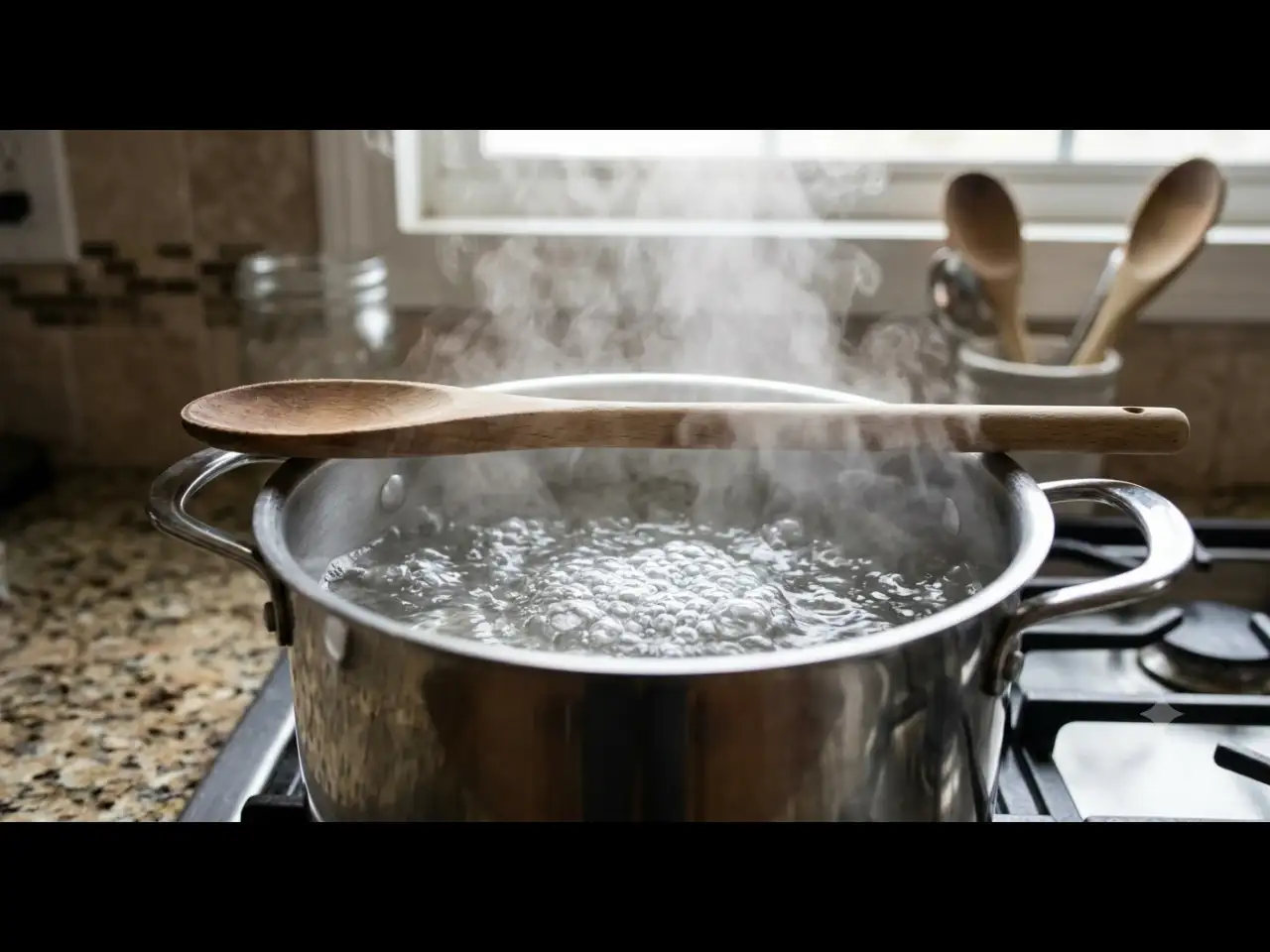
A pot bubbling away on the stove can go from perfectly fine to overflowing in just a few seconds. That's why many home cooks place a wooden spoon across the top of the pot, hoping it will stop the mess before it starts. But does this popular kitchen trick actually work? According to The Conversation, it does (but only for a short time). The reason comes down to the science of bubbles, starch and heat.
Wooden spoon hack
A rapidly boiling pot of plain water usually won't spill over on its own. The real reason for the mess is what gets added to the water. Foods such as pasta, rice, porridge and milk contain carbohydrates or proteins that change the way bubbles form as they cook.
According to The Conversation, starches from foods like wheat, rice, corn and potatoes, along with the milk protein casein, create sticky bubbles instead of ordinary steam bubbles. As the liquid continues to boil, these bubbles stack on top of one another and quickly climb towards the rim of the pot.
With pasta or porridge, the starch forms a gel that coats the bubbles, making them stronger and slower to burst. Milk behaves slightly differently because heated casein creates a foam, but it can rise just as quickly and spill over the edge.
Why do some pots boil over?
The science behind the wooden spoon trick lies in the material itself. Wood is naturally porous when it's dry. Placing a dry wooden spoon across the top of a boiling pot interrupts the bubbles as they reach the surface. The spoon briefly lowers the surface temperature where the bubbles touch it, while its porous surface allows trapped air to escape. This causes many of the bubbles to burst before they can spill over the side. However, this effect doesn't last forever.