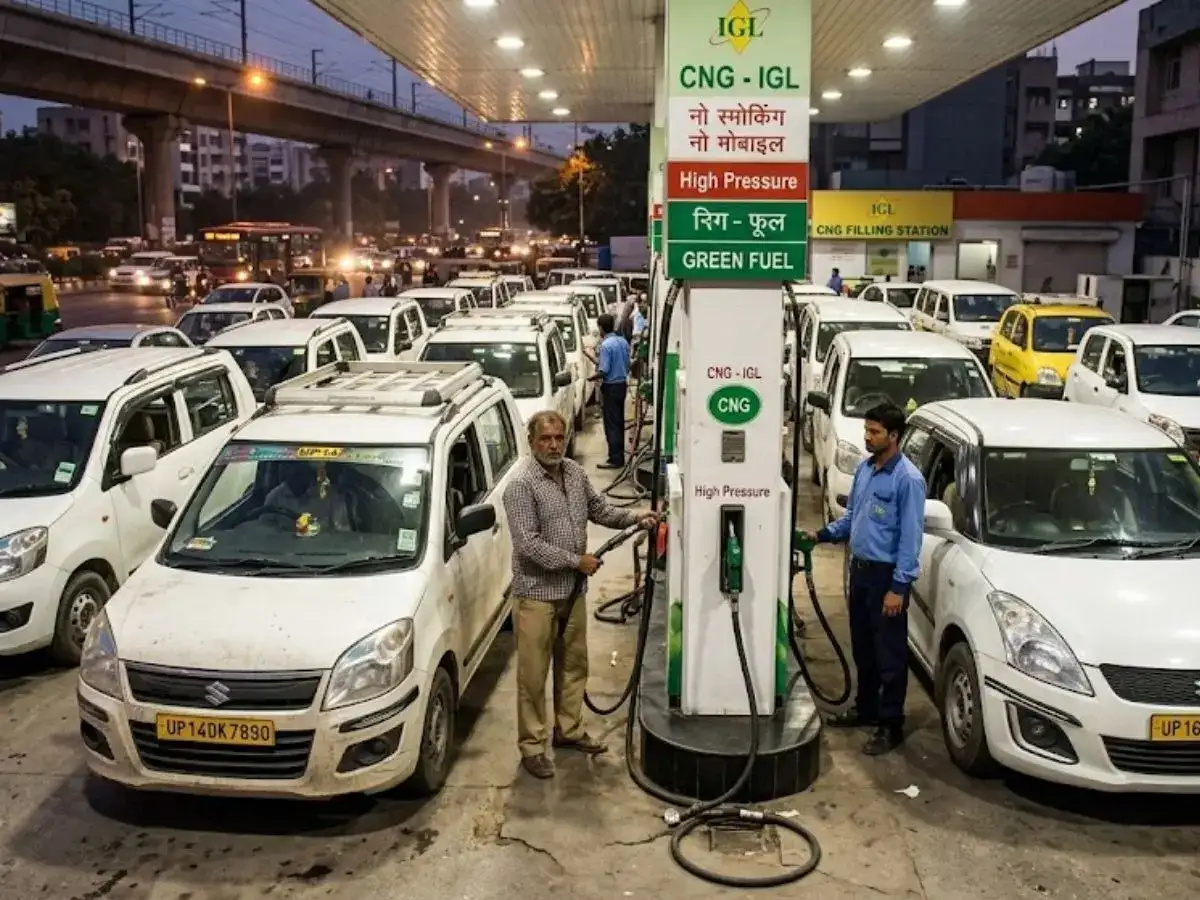
Cab drivers from Noida, Greater Noida and Ghaziabad are increasingly crossing into Delhi to refill CNG tanks as the price difference between the capital and neighbouring Uttar Pradesh cities continues to widen. Drivers say the lower fuel cost in Delhi has become a crucial factor in managing operating expenses and preserving earnings.
Currently, CNG is priced at ₹83.09 per kg in Delhi, compared to ₹91.7 per kg in Noida, Greater Noida and Ghaziabad. For drivers covering long distances every day, the gap translates into substantial monthly savings.

Drivers adjust routes to reduce fuel expenses
Sanjeev, a cab driver from Greater Noida West, said he routinely refuels in Delhi before returning home. According to him, the price difference of ₹8 to ₹10 per kg significantly affects daily earnings.
He said his cab delivers around 10 km per kg of CNG and covers nearly 150 km a day. On a ride worth approximately ₹440, he spends around ₹100 to ₹120 on fuel before platform commissions are deducted, making fuel savings increasingly important amid rising household expenses.
Similar views were expressed by Mantu, who operates between Ghaziabad and Delhi. He said drivers often prefer trips to Delhi because of better fares and the opportunity to purchase cheaper fuel. According to him, repeated CNG price increases have made refuelling in Delhi a necessity rather than an added benefit.
Border fuel stations see increased demand
Drivers say filling stations near Delhi's borders frequently see a large number of Uttar Pradesh-registered cabs. Many plan their refuelling schedules around trips into the capital.
While crossing state borders for cheaper fuel has long been common, drivers say the growing price gap has changed the economics of their business. What was once a way to save money has become an important strategy for maintaining profitability.
Tax structure behind the price difference
Industry experts attribute the variation in CNG prices primarily to differences in state-level taxes and local taxation policies, reports TOI.
According to experts, consumers ultimately bear the impact of these tax structures, a situation that has persisted for years.
Gulf tensions keep energy markets on edge
The issue comes at a time when global energy markets remain sensitive to developments in the Gulf region. On Wednesday, Iranian missile and drone attacks damaged Kuwait International Airport, killing one person and injuring more than 60 others, while US military operations near the Strait of Hormuz continued amid stalled diplomatic efforts.
The conflict has contributed to concerns over energy supplies, with the Strait of Hormuz remaining largely closed and oil prices rising more than 2 per cent. Although there is no direct link between the Gulf hostilities and the current Delhi-Uttar Pradesh CNG price gap, developments in global energy markets continue to influence fuel pricing discussions.