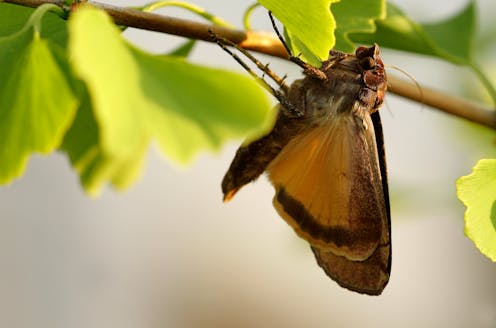
If you’ve ever felt underestimated and ignored, spare a thought for your local moths. Honeybees, bumblebees and butterflies are almost synonomous with pollination. People love them for their intimate relationship with flowers – we can’t grow a lot of our food or enjoy the sight of fragile springtime blossom without them. But our recent research showed moths may actually be more efficient pollinators.
Almost all scientific research on pollinators happens during the day, which means we know little about what happens at night. So we designed a study to compare the contribution of nocturnal and day-active pollinators. We focused on bramble, which is widespread across Europe. People often look at bramble as a prickly pest that needs to be removed from our green spaces. But it is a crucial source of nectar and pollen for bees, butterflies and moths, flowering from early spring through until the autumn.