
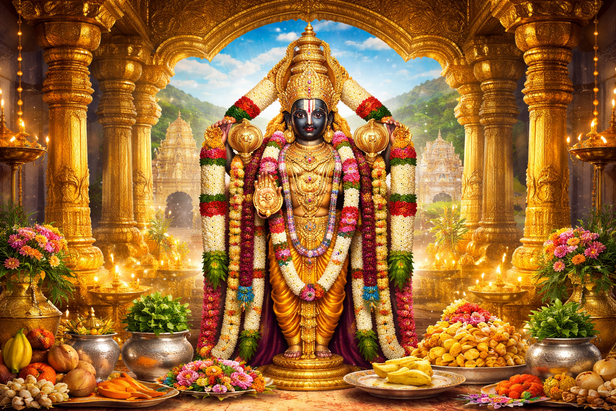
Tirupati is not just a place of worship. For millions, it feels like a living relationship. People do not arrive only with prayers. They arrive with a sense of responsibility, belief, and quiet participation in a promise that, according to tradition, began in Kaliyuga and is still unfolding.
At the heart of this belief is Lord Vishnu, worshipped here as Lord Venkateswara. The story of his so called debt explains not only why devotees give endlessly, but also why Tirupati is widely regarded as the richest temple in the world.

1. A God Who Decided to Live With People
In Hindu belief, Kaliyuga is an age where human beings struggle more than they succeed. Instead of appearing briefly and leaving, Vishnu is believed to have chosen permanence.
As Venkateswara, he settled on the Tirumala hills and stayed. Not as a distant cosmic force, but as a presence people could return to again and again. This belief alone reshapes devotion. Tirupati is not seen as a place where God visits. It is believed to be where God resides continuously, sharing the weight of the age with humanity.
Today, this belief draws an extraordinary number of pilgrims. On average, 70,000 to 90,000 devotees visit the temple every single day, and on festival days the number can cross 1.5 lakh. This constant flow is sustained not by tourism, but by faith in a living presence.
2. Marriage That Symbolised Responsibility, Not Celebration
Venkateswara’s marriage to Goddess Padmavati is central to the story. In Hindu thought, marriage is not just emotional union. It is acceptance of social duty, accountability, and balance.
By marrying, Vishnu is believed to have accepted the responsibilities of worldly life. This transforms him from a distant preserver into a relatable figure who understands obligation, limits, and long term commitment. The idea prepares the ground for the belief of debt that follows.
This symbolism matters deeply in a culture where marriage represents shared responsibility rather than personal fulfilment alone.
3. Borrowing From Kubera as a Moral Act
According to temple tradition, the wedding required vast resources. Venkateswara approached Kubera, the treasurer of the gods, and borrowed wealth.
The borrowing is not portrayed as necessity. It is portrayed as discipline. Wealth is taken with consent. Promises are made before resources are used. The belief subtly teaches that power does not excuse responsibility. Even the divine follows order.
This moral framing is one reason the story continues to resonate across centuries.
4. A Vow That Extends Across Kaliyuga
The most powerful part of the story is the vow attached to the loan. The debt, devotees believe, would be repaid slowly over the entire span of Kaliyuga.
This transforms the idea of repayment into a collective, generational process. Vishnu does not erase the debt instantly. He chooses patience. His continued presence at Tirumala is believed to be tied to honouring this promise. As long as Kaliyuga continues, so does the responsibility.
For devotees, this long horizon makes every small offering feel meaningful rather than insignificant.
5. Why Devotees Believe Their Offering Truly Matters
At Tirupati, offerings are rarely seen as donations. They are seen as participation.
Devotees believe that money placed in the hundi contributes to fulfilling the Lord’s vow. This belief removes ego from giving. People do not feel they are helping a temple. They feel they are supporting a promise made by God himself. This emotional framing turns faith into action rather than expectation.
Even modest offerings feel equal because the focus is on intention, not amount.
6. How This Belief Made Tirupati the Richest Temple
Tirupati is widely regarded as the richest Hindu temple in the world, managed by Tirumala Tirupati Devasthanams.
Publicly reported data over recent years shows the scale of devotion:
- Annual donations have crossed ₹1,300 to ₹1,500 crore in several recent financial years
- The temple is estimated to hold over 10 tonnes of gold in assets, including ornaments and deposits
- On peak days, cash offerings alone can exceed ₹3 to ₹5 crore in a single day
- The hundi receives lakhs of individual offerings daily, many of them small amounts from ordinary devotees
This scale is not sustained by obligation. It is sustained by belief. When people feel their offering carries purpose beyond personal gain, giving becomes instinctive rather than forced.
7. A God Who Chooses Accountability Over Authority
At its core, the Tirupati belief presents a striking image of God. Vishnu is not shown as someone above rules. He is shown as someone who chooses to follow them.
By accepting debt and honouring a vow across ages, he embodies dharma rather than commanding it. This idea quietly influences devotees. If God values accountability, promises, and patience, then human beings are expected to reflect the same in their lives.
This is why Tirupati devotion often feels less transactional and more participatory.