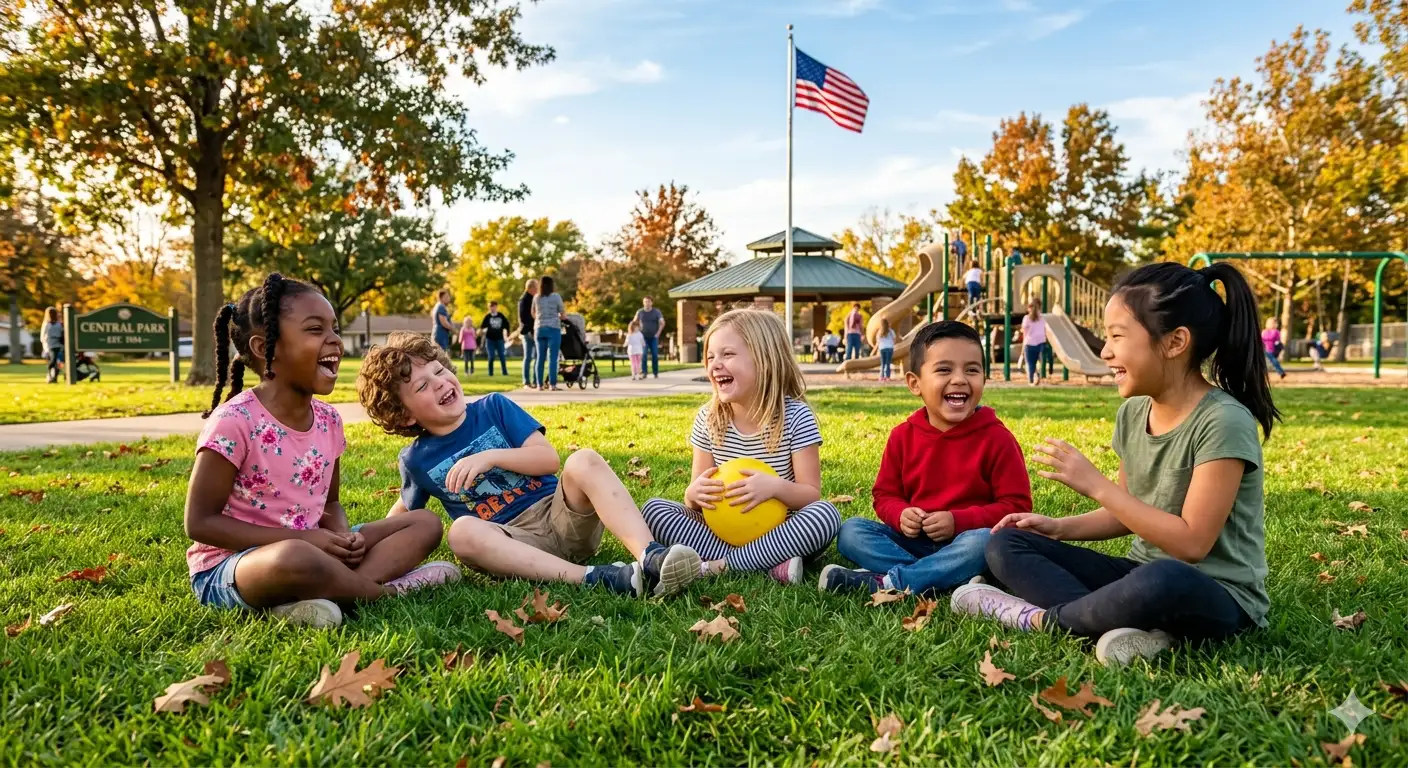
A growing body of research suggests that laughter is not just a moment of joy for children—it may actually play a crucial role in shaping brain development, emotional balance, and long-term learning ability, reports The New York Post.
According to Jacqueline Harding, Ph.D., an early childhood expert at Middlesex University in London, laughter and play are essential building blocks of healthy childhood development.
In her book, “The Brain That Loves to Laugh,” Harding highlights how joy is deeply tied to biology and learning outcomes in children. The findings were reported by news agency SWNS.
“Brilliance of the Brain in Action”
Harding emphasizes that laughter is a sign of active learning in the developing brain. “When we see children laugh, we witness the brilliance of the brain in action: learning, connecting and growing,” Harding told SWNS.
She adds that emotional experiences like humor are not secondary, but central to development: “Hope and humor, it seems, are not just the seasoning of life, but foundational to a recipe for healthy development.”
How Laughter Affects the Brain
Researchers note that laughter activates multiple brain regions, including motor areas and the prefrontal cortex—even before children fully develop speech.
It helps the brain process conflicting ideas, improves working memory, and encourages creativity, functioning like a kind of “mental workout.”
At a chemical level, laughter reduces stress hormones such as cortisol and epinephrine while boosting dopamine, serotonin, and endorphins—often called “feel-good chemicals.” It also increases oxytocin, which strengthens emotional bonding between parents and children.
Stress vs Joy: Two Opposite Paths for Development
Experts warn that prolonged stress can disrupt healthy development. It may suppress immune function, interfere with learning, and even alter the limbic system, which is responsible for emotion and long-term memory.
“Stated simply, the emotional state of young children directly influences how they navigate their way through the world,” Harding said.
Play, Parenting, and Emotional Safety
Harding believes that everyday playful interactions between parents and children are powerful tools for emotional growth. “Spontaneous, joyful play is an antidote to stress, as it increases levels of endorphins released by the brain,” Harding said. “Creative, happy play does its most brilliant work at a molecular level, especially at a time when the human brain is at its most receptive.”
These shared moments also build “co-regulation,” where children learn to manage stress by absorbing emotional stability from caregivers.
Why Schools Are Being Urged to Rethink Learning
The American Academy of Pediatrics also supports the idea that joyful interaction improves emotional regulation, safety, and cognitive growth.
Harding further suggests that classrooms should actively include humor and play to reduce cognitive overload and improve retention.
“Safe relationships and non-stressful play environments promote learning,” she added. “The curriculum must never be prioritized over those two fundamental factors.”
The research highlights a simple but powerful idea: laughter is not just entertainment—it is part of how children grow, learn, and build resilience. In an increasingly stressful world, experts say, joy may be one of the most underrated tools in early education and parenting.