Get all your news in one place.
100’s of premium titles.
One app.
Start reading
Digital Camera World
Mike Harris

Why I only recommend the 'Big Three’ camera brands for serious wildlife photography

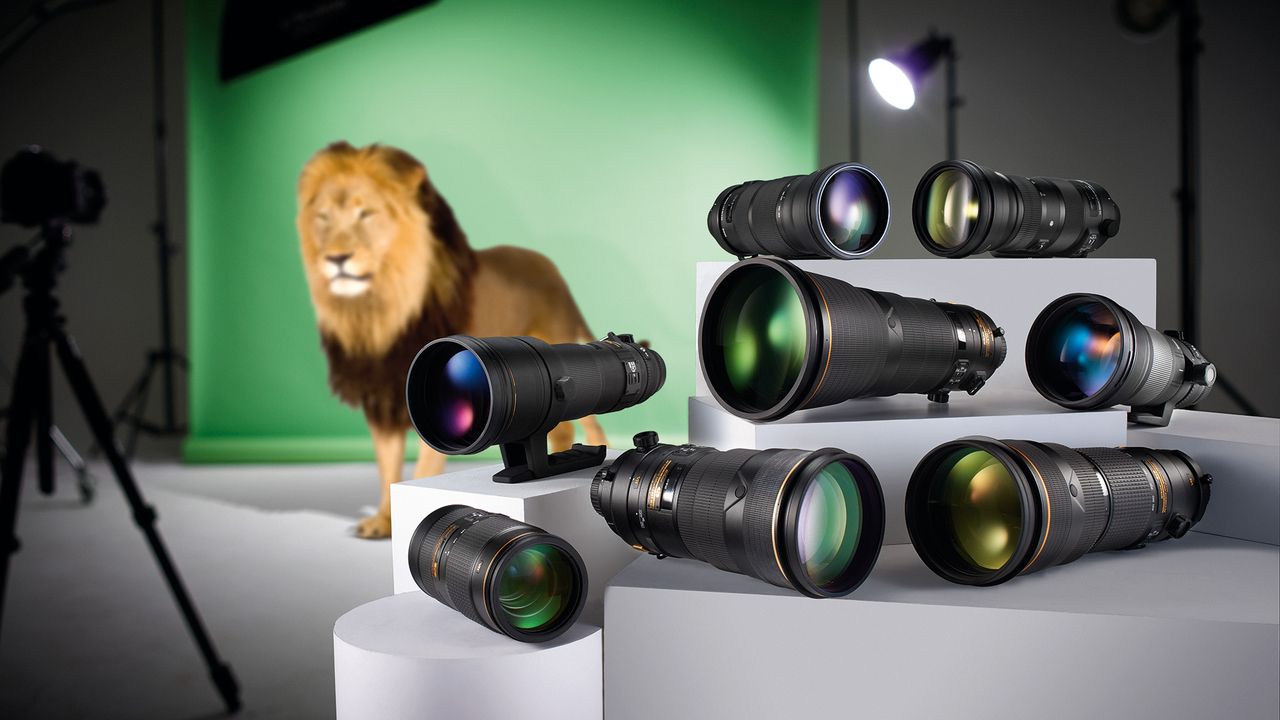
Lion in studio against green background with selection of super-telephoto lenses in the foreground .

I’m a firm believer that you’re hard-pressed to buy a bad camera nowadays. I’m also a firm believer that you buy whatever camera and system speaks to you. However, my beliefs are a little bit more conservative when it comes to buying best wildlife photography camera. If you’re a camera enthusiast who likes to dabble in various genres or are committed to pretty much any genre, buy whatever camera you want, but if you’re determined to make it as a wildlife professional or become an accomplished amateur, I implore you to consider three options: Canon, Nikon, and Sony.

The ‘Big Three’ make fantastic wildlife photography cameras, but the main reason I recommend these systems to prospective wildlife photographers has nothing to do with the cameras at all and everything to do with available lenses. Wildlife is one of the most gear-intensive genres of photography out there. If you want to capture the very best wildlife images, you need long lenses, and the faster they are, the better.

For many wildlife photographers, a 600mm f/4 like this Canon RF 600mm F4L IS USM is the Holy Grail (Image credit: Future)

A long lens gets you closer to skittish subjects, and fast lenses allow you to hit faster shutter speeds at lower ISOs. If you know anything about the reciprocal rule, you’ll know that the longer the lens, the faster your shutter speed has to be to avoid camera shake. Resolution also affects the reciprocal rule, with today's penchant for high-resolution cameras meaning you often have to double or even triple your shutter speed to get sharp shots. But I digress...

Simply put, no other camera manufacturer boasts a line-up of long, fast lenses like Canon, Nikon, and Sony. That’s not to say that other manufacturers don’t make suitable wildlife photography lenses – they absolutely do – but the ‘Big Three’s’ rosters are unmatched. I’m a realist. I know that newbie wildlife photographers aren’t going to be spending thousands of bucks on lenses to begin with, but Canon, Nikon, and Sony offer you plenty of headroom to grow. And that's important.

If you’re on a tight budget, Canon and Nikon are particularly useful, since you can buy a mirrorless wildlife photography camera and adapt older (and crucially cheaper) DSLR lenses. For example, the Nikon Z 600mm f/4 TC VR S retails for $16,199.95 / £14,999 / AU$27,049.00, but older AF-S models can be found for a fraction of the price.

I got my hands on the Sigma 300-600mm f/4 DG OS Sports at lat year's Photography & Video Show in London (Image credit: Future)

Over the past year, a bit of a curveball has entered play: the Sigma 300-600mm f/4 DG OS Sports. This monstrous optic is expensive at $6,599 / £5,899 / AU$12,995, but when you consider that it essentially combines the usability of a 600mm f/4 prime and a super-telephoto zoom, it suddenly seems much more palatable. You could possibly carve out a successful wildlife photography career with this lens and nothing else. The problem is that it’s only available in Sony E and L mount. Right now, this makes Sony a very attractive option indeed.

Ultimately, the onus is often placed on the camera, but the system and that system’s lenses are the most important thing to think about. You can always upgrade your camera later down the line, but if the lenses you need don’t exist or they’re simply too expensive, you’re stuck. If you’re looking for a wildlife photography camera, start with the lenses and work backwards.

What next? This brings me neatly to the next part of my wildlife photography gear guide, which is settling on the right wildlife photography camera. Read my follow-up article and join my whistle-stop tour of the top wildlife photography cameras for every budget, from the Nikon D500 to the Canon EOS R1.

You might also like...

On the fence about DSLR lenses? I bought second-hand DSLR lenses and saved a small fortune on lenses for my mirrorless camera. My Nikon Z 180-600mm is my favorite lens, and I’ve just realized it’s manufactured in China. Plus, here are my 10 tips for wildlife photography.

Sign up to read this article
Read news from 100’s of titles, curated specifically for you.
Already a member? Sign in here
Related Stories
Top stories on inkl right now
One subscription that gives you access to news from hundreds of sites
Already a member? Sign in here
Our Picks
Fourteen days free
Download the app
One app. One membership.
100+ trusted global sources.