Get all your news in one place.
100's of premium titles.
One app.
Start reading
The Independent UK
The Independent UK
World
Albert Toth

When do the clocks go forward – and why are they changing?

The UK is set to mark the transition into summer this weekend as clocks go forward.

The annual change will bring lighter evenings but darker mornings, as a shift in the country's time zone means we lose an hour of sleep.


It officially marks the start of British Summer Time.

Here’s everything you need to know about the clocks changing.

When are the clocks going back?

Every year, the clocks go forward an hour at 1am GMT on the last Sunday of March.

This year, the clocks will go forward on 29 March 2026.

Greenwich Mean Time was the default legal time used in Britain before Daylight Saving Time was introduced in 1916 (PA)

When the clocks change, so does the UK’s time zone: it switches from Greenwich Mean Time (GMT) to British Summer Time (BST).

It is also known as moving from standard time to Daylight Saving Time.

What does this mean for our sunlight?

Turning the clocks forward moves an hour of sunlight from the mornings to the evenings because sunrises and sunsets occur an hour later.

The shift marks the beginning of longer days as the UK moves towards the summer solstice, the longest day of the year. As spring progresses, sunrises get earlier and the amount of daily sunlight increases.

By June, London will experience well over 16 hours of daylight, with the sun rising before 5am and setting after 9pm.

Turning the clocks forward moves an hour of sunlight from the morning to the evening (PA)

What is the difference between British Summer Time and Greenwich Mean Time?

Greenwich Mean Time is the UK’s standard time during autumn and winter.

British Summer Time is one hour ahead and is used during the lighter months to make better use of evening daylight.

Was the time-jump introduced to benefit farmers?

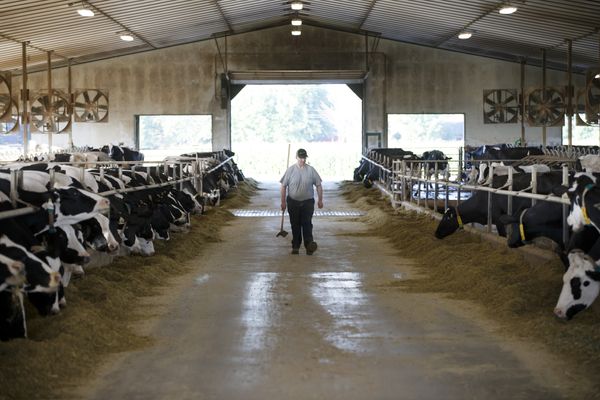
No, this is a common myth. Farmers were never consulted about adopting the change. In fact, altering the clocks can disrupt farming routines and unsettle animals that rely on consistent schedules.

Where did the idea come from?

In Britain, the idea was proposed by builder William Willett in a 1907 pamphlet titled The Waste of Daylight.

He reportedly came up with the concept during early morning horse rides, noticing how many people were still asleep despite the daylight.

Mr Willet was unable to experience his idea when it came to fruition, but his great-great-grandson and singer of Coldplay, Chris Martin, has.

The idea was proposed by builder William Willet, the great-great-grandfather of Coldplay’s Chris Martin (PA)

When did the clocks start changing?

The Summer Time Act was introduced in 1916 and stated that from spring to autumn, legal time would be an hour ahead of Greenwich Mean Time.

The act was adopted during the First World War when the country needed to make use of as much daylight as possible to conserve coal.

Has Britain ever changed the concept?

Since the Summer Time Act of 1916 was established, the British time zone has changed twice.

During the Second World War, British Double Summer Time was introduced to maximise productivity. In the summer, clocks went forward two hours and in the winter clocks remained an hour ahead of Greenwich Mean Time.

British Double Summer Time occurred from 1939 to 1945.

The Harold Wilson government adopted British Standard Time as a trial from 1968 to 1971 (PA)

Moreover, the Harold Wilson government adopted British Standard Time as a trial from 1968 to 1971, which saw the clocks go forward but not back.

However, after a free vote, the House of Commons chose to end the experiment because they found it impossible to assess the advantages and disadvantages.

What are the benefits of the clocks going forward?

The main advantage is lighter evenings, which can boost leisure time, outdoor activity and retail spending. Longer daylight hours are also linked to improved mood for many people.

What are the negatives of the clocks going forward?

Losing an hour of sleep can temporarily disrupt body clocks and sleep patterns. Darker mornings may also make early travel feel less safe for some people.

What does the UK think?

In a YouGov poll published in October 2024, it showed that if our current system were to be scrapped, 59 per cent of Britons would prefer the country to stay permanently on British Summer Time.

Surprisingly, there was a clear age divide in the polls, showing younger Britons are more in favour of keeping the current system compared with over-65s.

In 2019, the European Parliament voted in favour of ending seasonal clock changes, with member states expected to choose a permanent time zone. However, the reform has not been implemented and remains on hold.

Sign up to read this article
Read news from 100's of titles, curated specifically for you.
Already a member? Sign in here
Related Stories
Top stories on inkl right now
One subscription that gives you access to news from hundreds of sites
Already a member? Sign in here
Our Picks
Fourteen days free
Download the app
One app. One membership.
100+ trusted global sources.