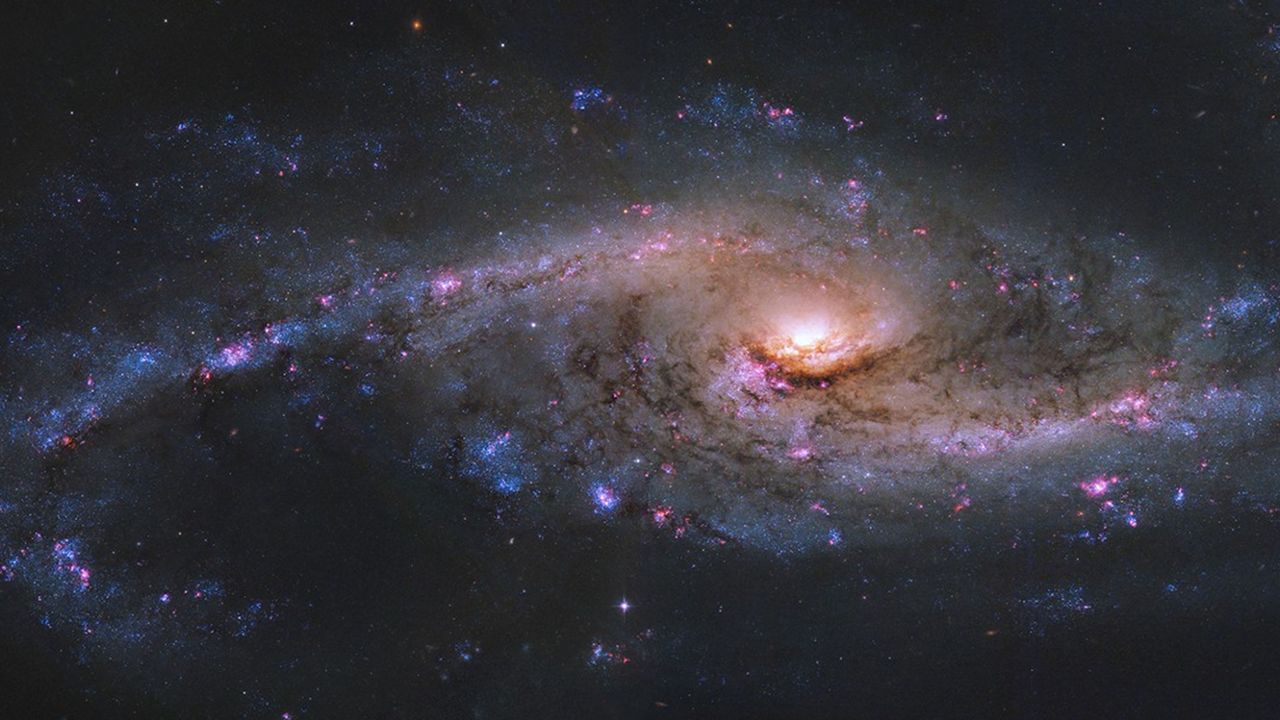
A galaxy dying is not a gentle thing. Its star-making factories, once churning out millions of suns, grind to a halt. Rather than a slow fade, it's a sudden, striking shutdown, a phenomenon astronomers call rapid quenching.
Such phenomena are the mysteries of what we call post-starburst galaxies, which present some of the most compelling, yet often overlooked, stories unfolding across the universe. For astronomers, such systems are like cosmic crime scenes. They recently had a massive burst of star formation — a party of epic proportions — but now show almost no new stars being born. It's like finding a ballroom where the music just stopped, the lights went out, and everyone left in a hurry. The scene leaves us wondering about the sudden emptiness. And about the astonishing speed of their exit.