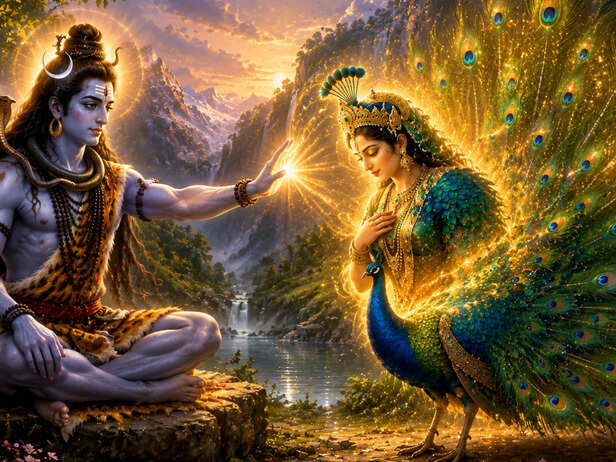
What if one of the most unusual stories of Lord Shiva and Goddess Parvati was never simply about a curse? According to the traditional story shared in the prompt, Goddess Parvati once became so captivated by a dancing peacock that her attention moved away from Shiva while he was revealing profound cosmic knowledge. Shiva then gave her a seemingly harsh curse, asking her to take the form of a peacock. But the story takes an unexpected turn. Parvati did not remain separated from Shiva. Instead, she performed intense devotion and ultimately reunited with him. Beneath this dramatic tale lies a deeper message about attention, devotion and the journey toward spiritual understanding.
The Moment That Changed Everything
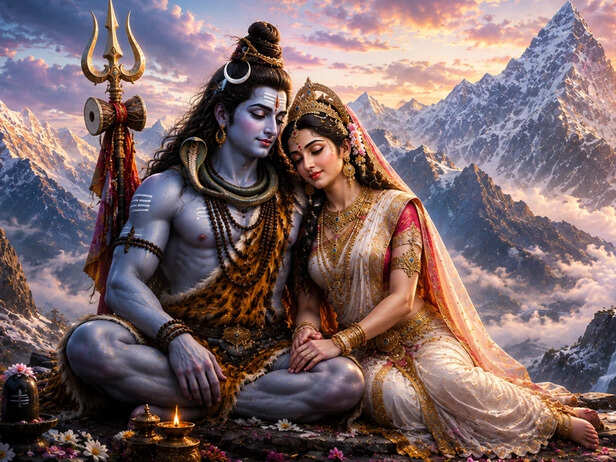
According to the traditional account, Shiva and Parvati were together on Mount Kailash while Shiva was explaining deep mysteries of the universe. During this moment, Parvati noticed a beautiful peacock dancing nearby. Her attention shifted toward the bird, and Shiva noticed that she was no longer fully focused on him. What followed was unexpected. Shiva cursed Parvati to take the form of a peacock. On the surface, the episode may appear harsh, but the story does not end with separation. Her transformation becomes the beginning of a spiritual journey.
Why Did Parvati Become a Peacock?
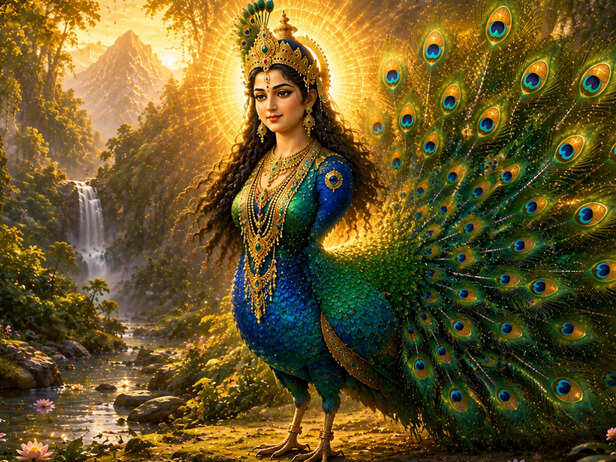
The peacock is not an ordinary choice in this story. It is traditionally associated with beauty, colour, pride and transformation. Parvati's transformation can therefore be understood symbolically as a lesson about where attention is placed. The story suggests that even when the mind becomes fascinated by something beautiful, spiritual awareness can be lost if attention becomes scattered. Rather than viewing the episode only as punishment, devotees may see it as a reminder that the journey toward higher knowledge requires focus. The peacock becomes part of that larger spiritual symbolism.
The Hidden Lesson Behind the Curse
The most important part of the story comes after the curse. Parvati does not simply wait for the situation to change. She turns toward devotion and begins worshipping Shiva. Her actions show determination, patience and unwavering faith. This gives the story a powerful human connection. In everyday life, people can also lose focus because of distractions, emotions or attractive opportunities. The lesson is not that every distraction is wrong. Instead, it is about recognising when something is pulling us away from what truly matters. Parvati's journey represents the return from distraction to deeper purpose.
Why Does the Peacock Matter?
The colourful feathers of a peacock can be seen as a striking symbol of the many attractions surrounding human life. Beauty can capture attention instantly, but spiritual traditions often encourage people to look beyond appearances. In this interpretation, the peacock becomes more than a beautiful bird. It represents the colourful world that constantly attracts the mind. The deeper message is about learning where to direct one's awareness. For devotees, the story can therefore be understood as a reminder that external beauty may attract the eyes, while inner wisdom requires a different kind of focus.
Parvati’s Devotion Brings Her Back
After taking the peacock form, Parvati is described as performing devotion and worshipping Shiva. Her sincere tapasya eventually pleases him. Shiva appears before her and restores her original form, allowing her to return to Kailash. This part of the story changes the meaning of the entire episode. What began with a curse ends with reunion. The journey highlights the power of sincere devotion and perseverance. It also suggests that temporary setbacks do not necessarily define a person's spiritual path. With patience and dedication, one can find the way back to one's purpose.
What This Ancient Story Teaches Today
The story has a surprisingly modern lesson. Our attention is constantly being pulled in different directions by screens, social media, entertainment and everyday pressures. Like Parvati watching the dancing peacock, we can become absorbed by something beautiful or exciting and forget what deserves our attention most. The message is not to reject the world. Instead, it is to remain aware of where our focus goes. When attention becomes scattered, returning to our values, responsibilities and spiritual practices can help restore balance. That is perhaps the most relatable lesson hidden inside this ancient tale.
The Deeper Meaning of Shiva’s Test
The story ultimately moves beyond a simple curse-and-blessing narrative. Shiva represents consciousness, while Parvati represents divine energy and Shakti. Their reunion symbolises harmony between these forces. Parvati's journey through the peacock form can be viewed as a symbolic movement from distraction toward awareness and devotion. That is why the story continues to fascinate devotees. Its deeper message is not about fear of punishment but about the importance of returning to one's spiritual centre. Sometimes the greatest lesson begins with an unexpected interruption, and the journey back can reveal what truly deserves our attention.
Unlock insightful tips and inspiration on personal growth, productivity, and well-being. Stay motivated and updated with the latest at My Life XP.