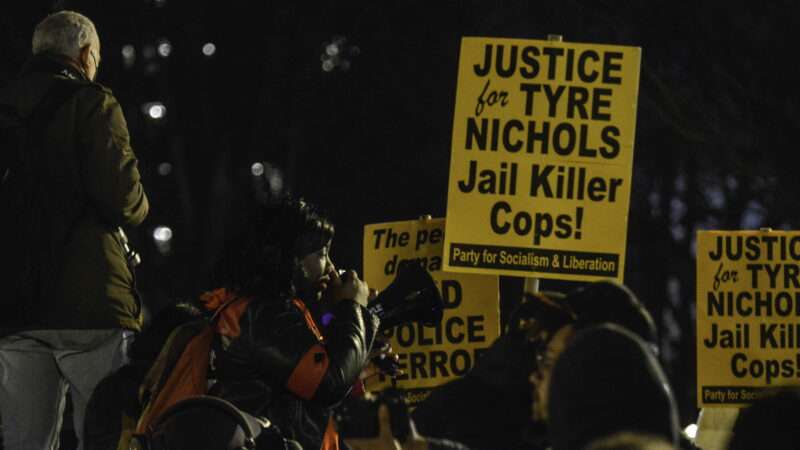
The Memphis, Tennessee, police officers who lethally beat, pepper-sprayed, and tased Tyre Nichols after a January 7 traffic stop were clearly out of control, delivering punishment for what they perceived as "contempt of cop" in the guise of making an arrest. Yet during the 13 minutes that elapsed between the stop and the police radio report that Nichols had been taken into custody, no one else who was present intervened to stop the blatantly illegal use of force.
That sort of failure is familiar from other notorious cases of police abuse, including the 2020 death of George Floyd in Minneapolis. Even when officers recognize that a colleague is using excessive force, they do not necessarily act on that knowledge. Given the strong social and institutional pressures against second-guessing a fellow officer, that problem cannot easily be remedied through legal reforms. But there is reason to think that training in "active bystandership," which builds on psychological research that illuminates the barriers to intervention in situations like these, can make a difference.